Ch'oe Sejin: The Joseon Dynasty Linguist Who Shaped Hangul
During the Joseon Dynasty, when Chinese characters served as the primary writing system, the survival and practical application of Hangul—the Korean alphabet—depended on innovative scholars. Among these figures, Ch'oe Sejin (1465–1542) stands out as a brilliant linguist, translator, and interpreter whose work bridged the gap between Chinese literacy and Korean identity.
A member of the Goesan Choe clan, Ch'oe dedicated his life to the study of language. While he achieved great professional success as an official interpreter for Korean embassies in Beijing, his most enduring legacy lies in his research into the structure and ordering of the Korean alphabet.
Key Facts
- Lifespan: 1465 – February 10, 1542 (aged 77).
- Primary Occupation: Translator, interpreter, and linguist.
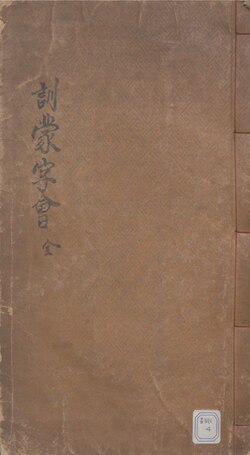
- Most Famous Work: Hunmong chahoe (1527).
- Major Contribution: Devised the modern order of Hangul characters and provided early attestation for letter names.
- Linguistic Impact: Promoted Hangul usage by integrating it into Chinese character textbooks.
A Life of Resilience and Scholarship
Born in Seoul to a middle-class family, Ch'oe Sejin followed in the footsteps of his father, Ch'oe Chungbal, who was also a government translator. Ch'oe demonstrated early academic prowess, passing the Translating and Interpreting Government Exam at age 21 and placing second in the prestigious "Bong Se Ja Byul Shi" Exam at age 38.
Despite his talents, Ch'oe’s career was frequently hindered by the rigid social stratification of the Joseon era. As a middle-class official, he often faced the jealousy of the nobility. His career suffered setbacks due to political factionalism; for instance, his exam acceptance was nullified following a trial involving the Minister of Culture and Education, Lee Sejwa. He was even falsely accused of writing anonymous criticisms of the National Court in 1507. However, his talent was undeniable. After successfully serving as an interpreter for a Chinese envoy, the King recognized his expertise, restoring his reputation and career.
The Revolutionary Impact of Hunmong chahoe
Ch'oe's most significant contribution to education was his 1527 masterpiece, Hunmong chahoe (Collection of Characters for Training the Unenlightened). At a time when literacy in Chinese was essential for social advancement, Ch'oe recognized that Hangul could serve as a vital tool for learning.
Unlike contemporary textbooks like the "Thousand Character Classic," which was often criticized for being too conceptual or tedious, Hunmong chahoe was designed for practical use. It contained 3,360 characters and grouped them by similar meanings to facilitate easier memorization. Most importantly, Ch'oe used Hangul to annotate the Chinese characters, effectively making Hangul a prerequisite for mastering Chinese.
Advancements in Phonetics and Vowels
Ch'oe Sejin was a pioneer in Korean phonetics. In Hunmong chahoe, he established a specific order for Hangul characters. He categorized the first eight characters as sounds used for both initial and final positions, and the next eight as sounds used only for initial positions. He categorized these based on articulation points, such as the "Molar," "Tongue," and "Lip." While some subsequent orders changed, his initial sequence for these eight characters remains in use today.
Furthermore, Ch'oe organized the Hangul vowels based on the sequence in which the mouth opens to articulate them. This logical, physiological approach to vowel ordering is the same system utilized in present-day Korea.
Linguistic Legacy and Notable Works
Over a 40-year career, Ch'oe composed seven original works and published ten translations and research pieces. His influence was so profound that Prime Minister Yoo Soon petitioned the King to have talented individuals trained by Ch'oe to ensure his linguistic expertise was not lost.
| Title | Year | Description |
|---|---|---|
| Sasŏng t'onghae | 1517 | Marks intonations and correct pronunciations of Chinese characters in Hangul. |
| Hunmong chahoe | 1527 | A practical textbook for learning Chinese characters using Hangul annotations. |
| Sohak p'yŏnmong | 1537 | A Chinese language textbook dedicated to the King. |
| Unhoe okp'yŏn | 1537 | Supplementary material to the Sasung Tonghae. |
| Kyŏngsŏngji | 1541 | A work regarding the city of Nanjing, China. |
Even after his death in 1542, Ch'oe's impact was felt. His friend, the scholar Kim An Gook, wrote a moving eulogy titled "Ch'oedongjisejinman," which preserved vital details of Ch'oe's life and highlighted his status as a master of diplomatic translation and a benefactor to future generations.
Frequently Asked Questions
What was the primary purpose of Hunmong chahoe?
It was a practical textbook designed to help children learn Chinese characters by using Hangul annotations to explain meanings and pronunciations.
How did Ch'oe Sejin help promote the use of Hangul?
By integrating Hangul into his Chinese character textbooks, he made the Korean alphabet an essential tool for anyone wishing to achieve literacy in the dominant language of the time.
Why did Ch'oe Sejin face difficulties in his career?
Due to his middle-class social status, he was often a target of jealousy from the nobility and was frequently caught in the crossfire of political factionalism during the Joseon Dynasty.
What is the significance of his vowel ordering?
Ch'oe ordered vowels based on the physical movement of the mouth during articulation, a system that remains the standard in modern Korean today.
How do we know about Ch'oe Sejin's personal life?
Much of what is known about his character and hardships comes from a poem written by his friend, Kim An Gook, following Ch'oe's death in 1542.