Central Intelligence Agency: History, Structure, and Global Operations
The Central Intelligence Agency (CIA) serves as a primary independent component of the United States Intelligence Community. Established to provide national security intelligence to senior policymakers, the agency operates under the Office of the Director of National Intelligence and reports to the Office of the President of the United States. Headquartered at the George Bush Center for Intelligence in Langley, Virginia, the CIA manages a vast network of global intelligence gathering and analysis.
Key Facts
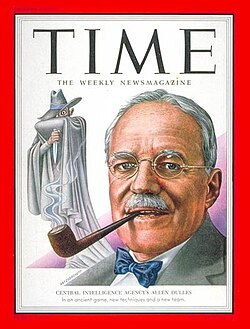
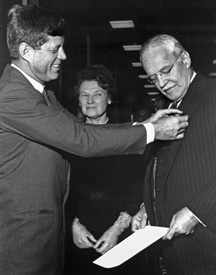
- Founded: September 18, 1947.
- Headquarters: George Bush Center for Intelligence, Langley, Virginia.
- Estimated Workforce: 21,575 employees.
- Budget: Approximately $15 billion (as of 2013).
- Primary Mission: Counterterrorism, nonproliferation of weapons of mass destruction, and cyber intelligence.
Organizational Structure
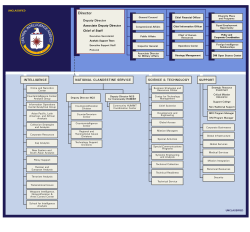
The CIA is organized into an executive office and five specialized directorates, each handling a distinct aspect of intelligence work. In 2015, under Director John Brennan, the agency underwent its most significant restructuring since its inception in 1947 to modernize its capabilities.
![In 2015, under the tenure of John Brennan, the CIA underwent its largest organizational restructuring since its founding in 1947.[10]](/images/0c/d9/0cd972f9d1a48cf20d353c6b0f81781866b8ffe63911864c674f076fd06ea1c1.jpg)
The Five Major Directorates
- Directorate of Analysis: Responsible for processing raw intelligence into finished reports for policymakers.
- Directorate of Operations: Manages the clandestine collection of foreign intelligence.
- Directorate of Science and Technology: Develops technical tools and methods for intelligence gathering.
- Directorate of Support: Handles administrative functions, including the Office of Security, Communications, and Information Technology.
- Directorate of Digital Innovation: A newer division focused on integrating cyber capabilities and digital intelligence.
Congressional Oversight
The Office of Congressional Affairs serves as the bridge between the agency and the U.S. Congress. Its primary duties include facilitating responses to congressional inquiries, tracking legislation that impacts the agency, and ensuring personnel adhere to the responsibility of keeping Congress informed.
Historical Evolution and Global Operations
![Sam Giancana (pictured), Santo Trafficante, and others, who were recruited by the CIA to assassinate Fidel Castro in Cuba[123]](/images/dc/73/dc733c23c77f43a4f2d168ff13268eb3bc5217e16a65eb6dfa308ed3f117f99f.jpg)
The CIA was formed from several preceding entities, including the Office of Strategic Services (OSS) and the Central Intelligence Group. Over the decades, it has evolved from a Cold War-era espionage hub into a modern counterterrorism organization.
Cold War Interventions
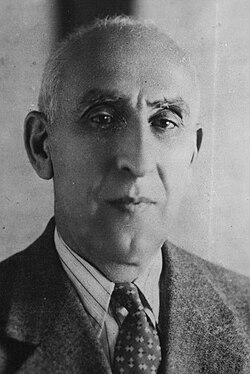
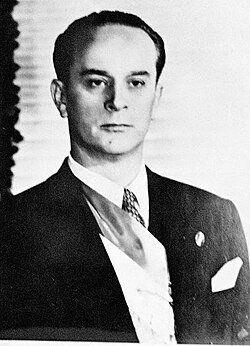
During the mid-20th century, the CIA was heavily involved in regime changes and covert operations to counter Soviet influence. Notable actions include the 1953 Iranian coup d'état to overthrow Prime Minister Mohammad Mosaddegh and the 1954 Guatemalan coup d'état against President Jacobo Árbenz.
Aviation and Technical Espionage
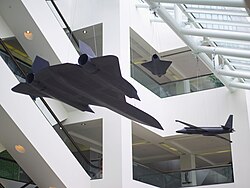
The agency pushed the boundaries of aerospace technology to conduct surveillance. The U-2 plane was one of the first dedicated espionage aircraft, followed by the record-setting Lockheed A-12 and the D-21 drone, one of the first crewless aircraft ever built.
The War on Terror and Modern Era
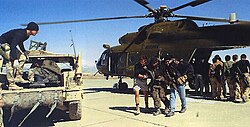
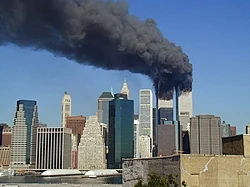
Following the September 11 attacks, the CIA shifted its focus toward Al-Qaeda and the Taliban. This era saw the use of drones, the funding of the Afghan mujahideen through Operation Cyclone, and the eventual execution of Operation Neptune Spear, which resulted in the death of Osama bin Laden.
Controversies and Accountability
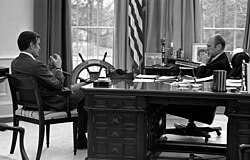
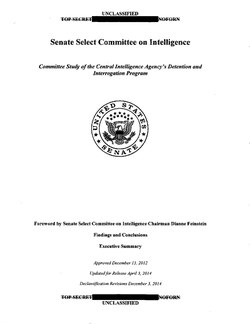
The agency's history is marked by significant controversies, ranging from assassination plots against Fidel Castro to the use of "enhanced interrogation techniques" (torture) during detention and interrogation processes.
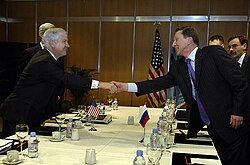
Additionally, the agency has faced criticism for intelligence failures, such as the erroneous assessments regarding Iraq's weapons of mass destruction (WMD) programs, for which former deputy director Michael Morell later apologized to Colin Powell.
![Former CIA deputy director Michael Morell apologized to Colin Powell for the CIA's erroneous assessments of Iraq's WMD programs.[227]](/images/f2/07/f207e632c261facf382428029e63e4e0049f043019e85e1c5e04f6dc4d980fba.jpg)
Agency Summary Table
| Category | Details |
|---|---|
| Parent Agency | Office of the Director of National Intelligence |
| Key Priorities | Counterterrorism, Cyber Intelligence, Nonproliferation |
| Major Predecessor | Office of Strategic Services (OSS) |
| Key Infrastructure | George Bush Center for Intelligence |
| Public Resource | The World Factbook |
Frequently Asked Questions

What is the primary purpose of the CIA?
The CIA's primary purpose is to collect, analyze, and disseminate foreign intelligence to assist senior U.S. policymakers in making informed national security decisions, with current priorities including counterterrorism and cyber intelligence.
How is the CIA different from the FBI?
While both are intelligence agencies, the CIA focuses primarily on foreign intelligence and clandestine operations outside the U.S., whereas the FBI is a domestic law enforcement and security agency.
What are the five major directorates of the CIA?
The five directorates are Analysis, Operations, Science and Technology, Support, and Digital Innovation.
Who oversees the CIA's activities?
The CIA is overseen by the Office of the Director of National Intelligence and is subject to oversight by the U.S. Congress through the Office of Congressional Affairs.
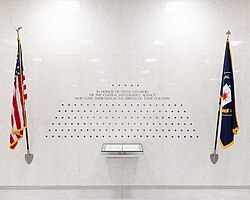
What is the CIA Memorial Wall?
The CIA Memorial Wall is located at the agency's headquarters and features stars representing CIA officers who were killed in action.