Cavalry Corps of the British Army in World War I
During the First World War, the Cavalry Corps served as a specialized mobile force within the British Army. Operating as part of the British Expeditionary Force (BEF), this corps played a distinct role on the Western Front, adapting to the grueling conditions of early 20th-century warfare.
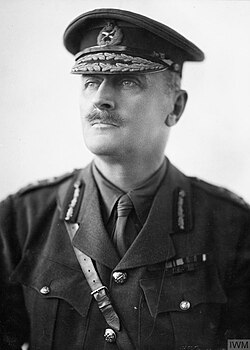
The corps was first established in France in October 1914 under the leadership of General Sir Edmund Allenby. While it was temporarily disbanded in March 1916, it was re-established in September of that same year, continuing its service through 1919.
Key Facts
- Active Periods: October 1914 – March 1916 and September 1916 – 1919.
- Primary Theater: The Western Front.
- Composition: Comprised of the 1st, 2nd, and 3rd cavalry divisions.
- Armament: Equipped with rifles, providing a range advantage over French and German carbines.
- Artillery Support: Each division utilized 24 13-pounder guns and two machine guns per regiment.
Organization and Equipment
The structure of the Cavalry Corps was built around three primary cavalry divisions. These divisions were further organized into brigades containing various cavalry regiments.
Weaponry and Firepower
A defining characteristic of the British Cavalry Corps was its choice of weaponry. Unlike their counterparts in the French and German armies, who utilized shorter-range carbines (short-barreled rifles), British cavalrymen were armed with full rifles. This gave them a significant advantage in engagement distance.
In terms of heavy support, the corps maintained a high allocation of artillery compared to other foreign cavalry units. Each division was supported by two brigades of 13-pounder guns, totaling 24 pieces, alongside two machine guns assigned to every regiment.
Operational Limitations
Despite their firepower, the corps faced limitations when forced to fight on foot. When dismounted, a cavalry division's strength was roughly equivalent to two weakened infantry brigades, possessing less artillery support than a standard infantry division.
Major Engagements and Command
The Cavalry Corps participated in several pivotal battles on the Western Front, ranging from the early clashes of 1914 to the massive offensives of the later war years.
Notable Battles
- Battle of La Bassee
- Battle of Messines (1914)
- Battle of Arras (1914)
- Battle of Cambrai (1917)
- The Battles of the Hindenburg Line
Leadership Timeline
The corps was led by a series of high-ranking officers, beginning with Lieutenant-General E. H. H. Allenby. The command structure shifted several times due to illness and strategic rotations, eventually concluding with Lieutenant-General C. T. McM. Kavanagh.
| Commander | Rank | Term of Command | Notes |
|---|---|---|---|
| E. H. H. Allenby | Lieutenant-General | Oct 10, 1914 – Apr 19, 1915 | Initial Commander |
| Sir J. H. G. Byng | Major-General | Apr 19 – May 4, 1915 | Acting |
| E. H. H. Allenby | Lieutenant-General | May 4 – May 7, 1915 | Brief return |
| Sir J. H. G. Byng | Lieutenant-General | May 7 – Aug 16, 1915 | Full command |
| H. D. Fanshawe | Lieutenant-General | Aug 16 – Oct 23, 1915 | - |
| Sir C. E. Bingham | Lieutenant-General | Oct 23, 1915 – Mar 12, 1916 | - |
| C. T. McM. Kavanagh | Lieutenant-General | Sep 4, 1916 – 1919 | Final Commander |
Frequently Asked Questions
Which divisions made up the Cavalry Corps?
The corps consisted of the 1st, 2nd, and 3rd cavalry divisions serving in France.
How did British cavalry armament differ from other nations?
British cavalry were armed with rifles, whereas French and German cavalry used shorter-range carbines.
What was the artillery strength of a cavalry division?
Each division had 24 13-pounder guns organized into two brigades, as well as two machine guns per regiment.
Was the Cavalry Corps active for the entire war?
It was active from October 1914 to March 1916, and then again from September 1916 through 1919.
How did the corps perform when dismounted?
When fighting on foot, a cavalry division was equivalent to two weakened infantry brigades and had less artillery than a standard infantry division.