Cause Célèbre: The History and Impact of Notorious Public Cases
In the realm of law and public discourse, few terms capture the intersection of justice and spectacle as precisely as cause célèbre. Borrowed directly from French, the term literally translates to "famous cause." In modern English, it refers to an issue or incident that sparks widespread controversy, triggers outside campaigning, and ignites heated public debate.
While the term can be used positively to describe legal cases celebrated for their precedent value (serving as a locus classicus, or a classic case-in-point), it is more frequently applied to infamous events. These are cases marked by scale, outrage, scandal, or the proliferation of conspiracy theories. Interestingly, while the phrase is a staple of English vocabulary and is no longer italicized in most dictionaries, it is no longer used in this specific way in modern French.
Key Facts
- Definition: An incident or legal case that attracts intense public interest and controversy.
- Origin: Derived from 17th and 18th-century French collections of famous court decisions.
- Evolution: Originally limited to legal cases, the term now encompasses any notorious person, thing, or event.
- Psychological Effect: High public attention can sometimes obscure the actual facts of a case rather than clarify them.
The Etymology and Evolution of the Term
The phrase cause célèbre originated from the titles of report collections detailing well-known French court decisions from the 17th and 18th centuries. The first series, spanning 22 volumes, was compiled by François Gayot de Pitaval, followed by a second series of 15 volumes titled Nouvelles Cause Célèbres by Nicolas-Toussaint Des Essarts. Together, these were published in 37 volumes in 1763.
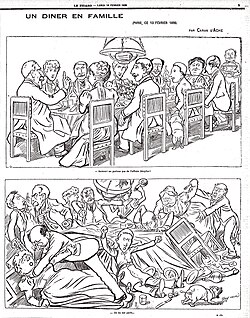
The term entered common global usage following the 1894 wrongful conviction of Alfred Dreyfus, a Jewish French army officer accused of espionage. This event, known as the Dreyfus affair, became a catalyst for international attention, exposing deep-seated antisemitism and dividing French society.
As noted by historian John F. Neville, the Dreyfus case demonstrated to a cynical post-war world that individuals could be victims of government conspiracy and prejudice. When a government agency is accused of "framing" a citizen, the event tends to remain embedded in the public consciousness for generations.
The Distortion of Truth
A recurring theme in the study of these cases is the tension between public perception and evidence. John Humffreys Parry observed that the true story of many a cause célèbre is often hidden from the evidence presented in court or the orations of advocates. He suggested that the truth is often only recoverable from old papers long after the "dust of ages" has removed the sting of scandal.
Notable Examples Through History
Over the centuries, various cases have transitioned from simple legal proceedings to global symbols of social or political struggle.
| Era | Case/Incident | Location |
|---|---|---|
| 19th Century | The Mortara case | Papal States |
| 19th Century | The Dreyfus affair | France |
| 20th Century | The Beilis case | Russian Empire |
| 20th Century | O. J. Simpson murder case | United States |
| 21st Century | The Amanda Knox trials | Italy |
| 21st Century | The Julian Assange extradition | United Kingdom |
Regional Highlights
- Asia: The 1946 Bhawal case in British India.
- Europe: The 1985 Đorđe Martinović incident in Yugoslavia and the 2012 Pussy Riot trial in Russia.
- United States: The 1991 Rodney King beating and the 2021 trial of Kyle Rittenhouse.
- Global Events: The 2010 self-immolation of Mohamed Bouazizi in Tunisia and the 2012 Delhi gang rape in India.
Fictional Representations
The concept of the cause célèbre is also a powerful narrative tool in fiction. Examples include the death of General Lamarque in Victor Hugo's Les Misérables and the prison riot depicted in the film Natural Born Killers.
Frequently Asked Questions
What is the literal meaning of cause célèbre?
Literally translated from French, it means "celebrated case" or "famous cause."
Is the term still used in France today?
No, the phrase is no longer used in this manner in modern French; it has been fully adopted into the English language.
Can a cause célèbre be a positive thing?
Yes. While often associated with scandal or conspiracy, the term can be used positively to describe legal cases that are celebrated for establishing important legal precedents.
How has the meaning of the term changed over time?
Initially, it referred specifically to legal cases that gained public notoriety. Over time, the meaning expanded to include any person, event, or thing that becomes famous or notorious.
Is it correct to use cause célèbre to describe any famous ideal?
No, using the term to describe a general famous cause or ideal is considered a misuse of the phrase.