Catalonia National Football Team: A Legacy of Passion and Identity
The Catalonia national football team (Catalan: Selecció de futbol de Catalunya), also known as the Catalan XI or Selecció Catalana, serves as the official representative football team of Catalonia. Managed by the Catalan Football Federation—an organization founded in 1900—the team embodies the region's deep-rooted footballing culture. While not a member of FIFA or UEFA, the team has a storied history of playing nearly 200 matches against national, regional, and club sides.
Key Facts
- Governing Body: Catalan Football Federation (founded 1900).
- Most Capped Player: Sergio García (16 caps).
- Top Goalscorer: Sergio García (9 goals).
- Current Head Coach: Gerard López.
- Current Captain: Oriol Romeu.
- Biggest FIFA-recognized Win: 6–0 against Jamaica (2022).
- Biggest Defeat: 7–0 against France (1912) and Spain (1924).
Early History and the First Internationals
The team made its debut in 1905, initially focusing on matches against club sides such as FC Barcelona, Madrid CF, Club Espanyol, and Irún Sporting Club. The team's first international foray occurred on July 24, 1910, in a 3–1 loss to a Paris XI, where Carles Comamala scored Catalonia's lone goal.
The first official international friendly took place on February 20, 1912, resulting in a 7–0 defeat against France in Paris. However, Catalonia quickly rebounded, securing a 1–0 victory over France in Barcelona on December 1, 1912, thanks to a goal by Genaro de la Riva. The early 20th century also saw the beginning of a regional rivalry with the Basque Country XI, with the first recorded match between the two occurring in 1915.
The Copa Príncep d'Astúries Era
Between 1915 and 1926, the Catalan XI competed in the Copa Príncep d'Astúries, an inter-regional competition. Catalonia emerged as a dominant force, winning the trophy three times (1916, 1924, and 1926). The 1924 victory was particularly dramatic, requiring a replay against a Castile/Madrid XI after a 4–4 draw in the first match, eventually winning 3–2.
During the 1920s, the team featured legendary players such as Josep Samitier, Paulino Alcántara, and Ricardo Zamora. This era also saw high-profile friendlies, including a 2–1 victory over Czechoslovakia in 1925 and a challenging 7–0 loss to Spain in 1924.
Resilience Through the Franco Era
Following the Spanish Civil War, the regime of Francisco Franco imposed strict restrictions on Catalan identity, banning the official use of the Catalan language and flag. Despite this, the Catalan XI continued to play. A highlight of this period was a 3–1 victory over Spain on October 19, 1947.
The team often featured world-class guest players who played for local clubs. Notable figures included László Kubala and Alfredo Di Stéfano, the latter of whom helped Catalonia to a 6–2 win over Bologna in 1955. The Franco era concluded symbolically with a 1–1 draw against the Soviet Union in 1976, featuring Dutch legends Johan Cruyff and Johan Neeskens.
The Modern Era and the Influence of Johan Cruyff
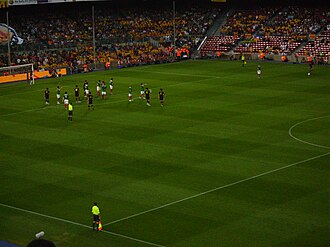
With the restoration of democracy, Catalonia resumed regular international friendlies against nations such as Nigeria, Bulgaria, and Chile. In 2002 and 2004, the team hosted Brazil at the Camp Nou, though both matches ended in Brazilian victories.
A significant turning point occurred in 2009 when Johan Cruyff was appointed head coach. Under his guidance, the team achieved notable results, including a 4–2 win over Argentina in 2009 and a 4–0 victory over Honduras in 2010. Cruyff's tenure ended in 2013 with a 1–1 draw against Nigeria.
Recent Performance and Results
Following Cruyff, Gerard López took the helm, leading the team through various friendly fixtures. Recent years have seen a mix of results, including a dominant 6–0 win over Jamaica in 2022 and a 2–0 victory over Costa Rica in 2025.
| Date | Opponent | Result | Score | Venue |
|---|---|---|---|---|
| May 25, 2022 | Jamaica | Win | 6–0 | Estadi Montilivi |
| May 29, 2024 | Panama | Draw | 2–2 | Estadi de la Nova Creu Alta |
| May 28, 2025 | Costa Rica | Win | 2–0 | Johan Cruyff Stadium |
| Nov 18, 2025 | Palestine | Win | 2–1 | Lluís Companys Olympic Stadium |
Guest Players and Eligibility
Because the team is not a member of FIFA or UEFA, it does not follow strict birthplace eligibility rules. This has allowed several non-Catalan players to appear as guest players, typically those playing for FC Barcelona or RCD Espanyol. Notable guests have included Andrés Iniesta, Gerard Piqué, and Pepe Reina, many of whom spent significant portions of their professional careers in the region.
Frequently Asked Questions
Is the Catalonia national team a member of FIFA?
No, the Catalonia national team is not a member of FIFA or UEFA because it represents a region of Spain rather than a sovereign state. Consequently, it only plays in unofficial friendly matches.
Who is the most successful player in the team's history?
In terms of statistics, Sergio García holds the record for both the most caps (16) and the most goals scored (9) for the selection.
Which stadiums does the team use?
The team utilizes several venues, including the Camp Nou, Estadi Olímpic Lluís Companys, Estadi Montilivi, Johan Cruyff Stadium, and Nova Creu Alta.
What was the significance of Johan Cruyff's tenure?
Johan Cruyff brought immense prestige to the team as head coach from 2009 to 2013, leading them to victories over teams like Argentina and Honduras, and further cementing the team's international visibility.
What is the Copa Príncep d'Astúries?
It was an inter-regional football competition held between 1915 and 1926. Catalonia was one of the most successful participants, winning the title in 1916, 1924, and 1926.