Carrie Mae Weems: A Legacy of Power, Memory, and Identity
Carrie Mae Weems is a transformative figure in contemporary art, utilizing photography, text, and performance to challenge historical narratives and explore the complexities of human relationships. Her work transcends simple documentation, instead creating staged representations that interrogate power dynamics, race, and gender. By centering the experiences of Black women—subjects often marginalized in popular media—Weems has carved out a vital space for identity and visibility in the global art canon.
Key Facts
- First Black Woman to receive the prestigious Hasselblad Award (2023).
- Education: Holds a BFA from the California Institute of the Arts and an MFA from the University of California, San Diego.
- Core Themes: Power, memory, the construction of history, and the role of the Black family.
- Signature Style: Integration of text with images, using diptychs (two-panel works) and triptychs (three-panel works).
- Notable Series: The Kitchen Table Series, Family Pictures and Stories, and Slow Fade to Black.
Early Life and Artistic Foundations
Born in Portland, Oregon, in 1953, Weems was the second of seven children. Her creative journey began early with dance and street theater in 1965. By 1970, she moved to San Francisco to study modern dance under Anna Halprin, an experience that introduced her to the idea of using movement as a vehicle for multicultural expression and peace.
While her early years were rooted in dance, Weems' academic pursuits expanded into the visual arts. She earned a BFA from the California Institute of the Arts and an MFA from the University of California, San Diego, and furthered her studies in folklore at the University of California, Berkeley.
Weems' entry into photography was sparked by her political activism as a union organizer in her early twenties. After discovering The Black Photographers Annual, she was inspired by the work of African-American photographers such as Roy DeCarava and Ming Smith. This passion led her to New York City and the Studio Museum in Harlem, where she studied under Dawoud Bey and assisted Anthony Barboza, eventually becoming a teacher at the museum.
The Evolution of a Visual Narrative
Throughout the 1980s, Weems shifted away from traditional documentary photography. Instead, she began creating staged images that appeared to be documents but were actually carefully constructed narratives. She frequently employed text and multi-image formats to guide the viewer's understanding.
Exploring Family and Race
In 1983, she completed Family Pictures and Stories, using her own family as a model to explore the broader migration of Black families from the American South to the North. This was followed by Ain't Jokin' (1988) and American Icons (1989), both of which confronted internalized racism and racial stereotypes.
The Kitchen Table Series
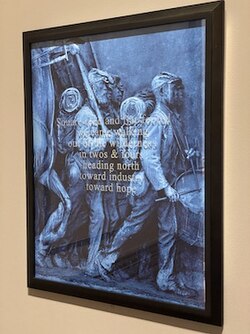
Between 1989 and 1990, Weems produced one of her most influential bodies of work: The Kitchen Table series. Casting herself as the central character, she used the domestic setting to question the nature of monogamy, polygamy, and the intricate relationships between women, men, and children. This series served as a critical vehicle for addressing the exclusion of Black women from popular media.
Later Works and Multimedia Expansion
Entering the 21st century, Weems expanded her practice into installation, mixed media, and video. Her work continued to probe the intersection of memory and visibility.
In Slow Fade to Black (2010), Weems utilized the cinematic concept of the "fade" to explore the disappearing memory of 20th-century African-American female entertainers, such as Billie Holiday and Marian Anderson. The blurred imagery serves as a metaphor for the ongoing struggle of these artists to remain visible in the collective consciousness.

Her more recent project, Grace Notes: Reflections for Now, is a multimedia performance that examines the role of grace within the pursuit of democracy. Her lifelong commitment to artistic excellence was recognized in 2023 when she became the first Black woman to win the Hasselblad Award.
Summary of Major Works
| Year/Period | Project Title | Primary Focus/Theme |
|---|---|---|
| 1983 | Family Pictures and Stories | Migration of Black families from South to North |
| 1988 | Ain't Jokin' | Racial jokes and internalized racism |
| 1989–1990 | The Kitchen Table series | Gender roles, family, and domestic power dynamics |
| 2010 | Slow Fade to Black | Memory of African-American female entertainers |
| Recent | Grace Notes: Reflections for Now | Grace and the pursuit of democracy |
Frequently Asked Questions
What is the significance of the Hasselblad Award for Carrie Mae Weems?
In 2023, Carrie Mae Weems became the first Black woman to receive this prestigious award, marking a historic recognition of her contributions to photography and visual art.
How does Weems differ from traditional documentary photographers?
Unlike traditional documentary photographers who capture candid reality, Weems creates staged representations. She uses these constructed images, often paired with text, to build narratives and question social structures rather than simply recording them.
What was the purpose of The Kitchen Table series?
The series used a constructed image of Weems herself to explore themes of tradition, family, and the relationships between men and women. It specifically aimed to represent Black women, who were largely excluded from popular media at the time.
What does the "fade" represent in Slow Fade to Black?
The cinematic fade and blurred images serve as a metaphor for how African-American female entertainers, such as Marian Anderson and Billie Holiday, have faded out of collective memory and the struggle to remain visible.
How did dance influence Carrie Mae Weems' art?
Weems studied modern dance with Anna Halprin, which taught her about using movement for multicultural expression. This early connection to the body and movement resurfaced decades later in her 2008 project, Constructing History: A Requiem to Mark the Moment.