Cardinalidae: The Vibrant World of Cardinals, Grosbeaks, and Buntings
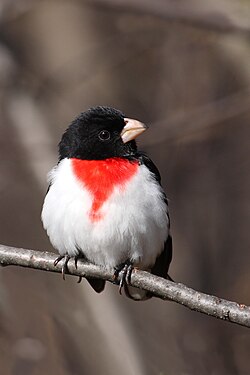
The Cardinalidae family, commonly known as cardinals or cardinal-grosbeaks, comprises a diverse group of New World passerine birds. This family includes not only the iconic red cardinals but also various grosbeaks, buntings, and other specialized genera such as the warbler-like Granatellus and the tanager-like Piranga. While they vary in appearance, these birds are widely recognized for their stout features and, in many species, the brilliant red, yellow, or blue plumage of the breeding males.
Unlike many bird families, Cardinalidae is not defined by a single physical trait. Instead, modern molecular research has been the primary tool for defining its membership. These birds range from average to relatively large in size, with many species possessing heavy, powerful bills designed for seed-crushing.
Key Facts
- Distribution: Endemic to the New World, ranging from Canada to northern Argentina and Uruguay.
- Diversity: Includes 53 recognized species across 14 genera.
- Plumage: Highly sexually dichromatic, with males often displaying vivid colors and females appearing drabber.
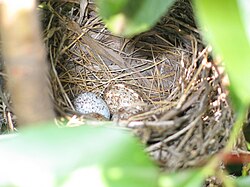
- Nesting: Most are monogamous and build open-cup nests.
- Classification: Defined primarily through molecular DNA work rather than physical morphology.
Physical Characteristics and Plumage
The physical appearance of Cardinalidae varies significantly across genera. Grosbeaks, seedeaters, and cardinals typically possess large, heavy bills. In contrast, buntings and the genus Granatellus have smaller bills. The cardinalid tanagers (genus Piranga) feature stout, nearly pointed bills, some of which have serrations along the upper edge.
Body sizes range from 11 to 28 cm (4.5 to 11 inches), characterized by medium-to-large heads and medium-pointed wings. A distinct anatomical marker is the presence of nine visible primary feathers, with the tenth being shorter than the rest.
One of the most striking features of this family is sexual dichromatism—where males and females of the same species exhibit different colors. In temperate species, males undergo a complex molt cycle. For example, the indigo bunting (Passerina cyanea) transitions through four plumage stages in its first year: juvenile, supplemental, first basic (non-breeding), and first alternate (breeding). Tropical species, however, generally maintain their bright coloration year-round.
Molting Patterns
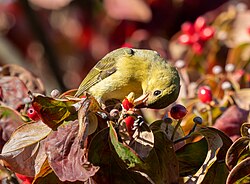
Cardinalids often exhibit delayed plumage maturation, meaning first-year males may look like females or exist in an intermediate state. There are two primary types of preformative molts: a partial molt replacing only body feathers, and an eccentric preformative molt, which replaces only the outer primary and inner secondary feathers.
Systematics and Evolution
Historically, these birds were classified as a tribe within the finch family (Fringillidae) due to their seed-crushing bills. However, a landmark 2007 mitochondrial DNA study revealed that several genera previously thought to be finches or tanagers actually belonged to the cardinal lineage. Conversely, some former cardinalids were moved to the tanager family (Thraupidae).
Current research divides the family into six distinct subclades:
- Pheucticus lineage: The grosbeaks.
- Granatellus lineage: The chats.
- Blue lineage: Including Spiza, Cyanoloxia, Amaurospiza, Cyanocompsa, and Passerina.
- Habia lineage: Including Habia and Chlorothraupis.
- Masked lineage: Including Caryothraustes, Periporphyrus, and Cardinalis.
- Piranga lineage: Including Piranga and Driophlox.
Distribution and Habitat
Cardinalids are found throughout the Americas, with the highest species diversity located in Central America. Their habitats are varied, spanning forests, grasslands, and arid scrublands. While most North American species migrate south for the winter, the northern cardinal and pyrrhuloxia remain year-round residents. The western tanager (Piranga ludoviciana) holds the record for the northernmost breeding range, extending into the Northwest Territories.
Conservation Status
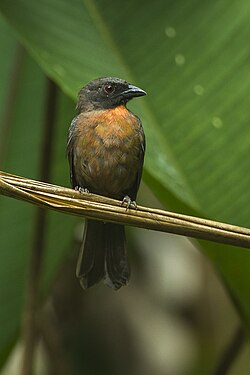
While approximately 82% of the family is listed as "Least Concern" by the IUCN Red List, several species face significant threats due to habitat loss and restricted ranges. The Carrizal seedeater is critically endangered, found only in remote bamboo thickets in Venezuela. The black-cheeked ant-tanager is threatened and endemic to Costa Rica's Osa Peninsula.
Climate change is an emerging threat. Research suggests that if global temperatures rise by 3.0 degrees Celsius, species in the Piranga and Pheucticus genera may be particularly vulnerable, potentially losing substantial portions of their range or being forced to migrate further north.
Additionally, the status of Townsend's bunting (Spiza townsendi) remains a mystery. Known only from a single specimen collected in 1834, scientists are unsure if it was a distinct extinct species, a hybrid, or a rare color variant of the dickcissel.
| Category | Details |
|---|---|
| Temporal Range | Miocene to Holocene (12–0 Ma) |
| Total Species | 53 (as of July 2024) |
| Total Genera | 14 |
| Primary Distribution | North and South America (New World) |
| Key Genera | Cardinalis, Piranga, Passerina, Pheucticus |
Frequently Asked Questions
What makes a bird part of the Cardinalidae family?
Membership is primarily determined by molecular DNA analysis rather than physical traits, as the family includes birds with varying bill shapes and sizes, from the heavy bills of grosbeaks to the smaller bills of buntings.
Why are male and female cardinals different colors?
This is known as sexual dichromatism. Males often possess bright colors to attract mates during breeding seasons, while females have drabber plumage, which likely provides better camouflage while nesting.
Are all members of this family red?
No. While many are red, others are brilliant blue (like the indigo bunting), yellow, or black. Some species, such as the dickcissel, are more muted in color.
Which Cardinalidae species are most at risk?
The Carrizal seedeater is critically endangered, while the black-cheeked ant-tanager and rose-bellied bunting are also of conservation concern due to habitat loss and limited geographic ranges.
How do these birds build their nests?
Most species in the Cardinalidae family are monogamous and construct open-cup nests, with both parents sharing the responsibilities of incubation and caring for the young.