Capital One: The Evolution of a Financial Services Giant
From its origins as a corporate spin-off to becoming one of the largest credit card issuers in the United States, Capital One has redefined the intersection of banking and technology. Headquartered in the Capital One Tower in Tysons, Virginia, the company has grown through a strategic mix of aggressive acquisitions, digital innovation, and a bold approach to marketing.
Today, Capital One operates as a public entity traded on the NYSE under the symbol COF and is a component of both the S&P 100 and S&P 500. Its reach extends across the United States, Canada, and the United Kingdom, serving millions of customers through a diverse portfolio of brands including CreditWise, Discover, Diners Club, and Pulse.
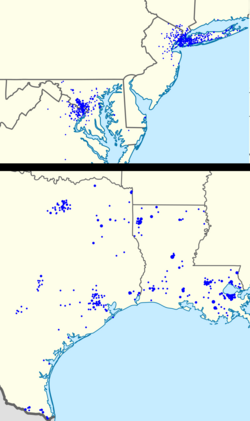
Key Facts
- Founded: 1994 as a spin-off from Signet Financial.
- Leadership: Richard Fairbank serves as Chairman, President, and CEO.
- Financial Scale: Reported revenue of US$ 53.4 billion (2025) and total assets of US$ 669.009 billion (2025).
- Workforce: Employs approximately 76,300 people as of 2025.
- Major Milestone: Completed the US$ 35.3 billion acquisition of Discover Financial in May 2025.
Corporate History and Growth
Founding and Early Years (1994–2005)
Capital One began in July 1994 when Signet Financial announced its spin-off. Initially named OakStone Financial, the company was renamed Capital One following its initial public offering in October 1994. The transition was fully completed by February 1995, with Richard Fairbank as CEO and Nigel Morris as COO.
Strategic Expansion and Crisis Management (2005–2012)
The mid-2000s marked a period of rapid expansion. In 2006, Capital One acquired North Fork Bank and GreenPoint Mortgage for $13.2 billion. However, the subprime mortgage crisis forced the company to close GreenPoint Mortgage in 2007, resulting in 1,900 job losses and $860 million in charges.
During the 2008 financial crisis, Capital One received a $3.56 billion investment from the U.S. Treasury via the Troubled Asset Relief Program (TARP)—a government initiative designed to stabilize the financial system. By June 2009, the company repurchased this stock for $3.67 billion, yielding a profit of over $100 million for the U.S. Treasury.
The company continued to scale through significant acquisitions, including Chevy Chase Bank in 2009 and the U.S. credit card operations of HSBC in 2011 for $31.3 billion. Another pivotal move occurred in 2011 with the $9 billion purchase of ING Direct, which was later rebranded as Capital One 360 in 2012.

Modern Era and Fintech Integration (2013–Present)
In recent years, Capital One has pivoted toward fintech (financial technology) to enhance its digital offerings. This includes the acquisition of the price-tracking service Paribus in 2016 and the travel software company Hopper in 2025. In April 2026, the company further expanded its capabilities by acquiring Brex for $5.15 billion.
The most significant recent shift occurred in May 2025, when Capital One completed its $35.3 billion all-stock acquisition of Discover Financial. This move solidified its position as the largest credit card issuer in the U.S., despite initial antitrust scrutiny and legal challenges.

Financial and Operational Overview
Capital One maintains a robust financial profile, balancing high-volume credit operations with strategic equity management. The following table summarizes the company's key financial metrics.
| Metric | Value | Period/Year |
|---|---|---|
| Revenue | US$ 53.4 Billion | 2025 |
| Operating Income | US$ 5.91 Billion | 2024 |
| Net Income (Before Tax) | US$ 4.747 Billion | 2024 |
| Total Assets | US$ 669.009 Billion | 2025 |
| Total Equity | US$ 94.552 Billion | 2025 |
| Capital Ratio | 12.9% | 2023 |
Legal Challenges and Settlements
Like many large financial institutions, Capital One has faced various legal hurdles. In 2013, the company paid $3.5 million to settle SEC allegations regarding the understatement of auto loan losses during the 2008 crisis. In 2019, the company dealt with a significant data breach affecting 100 million credit card applications.
More recently, the company faced a lawsuit from the State of New York regarding misleading interest rates on "360 Savings" accounts. While customers were promised some of the country's highest rates, many only received 0.30%, as the higher rates applied only to "360 Performance Savings" accounts. This resulted in a $425 million settlement approved in April 2026.
Frequently Asked Questions
When did Capital One acquire Discover Financial?
The acquisition of Discover Financial was initiated in February 2024 and officially completed in May 2025 following regulatory approval.
Who are the founders of Capital One?
Capital One was founded by Richard Fairbank and Nigel Morris as a spin-off from Signet Financial in 1994.
What is Capital One 360?
Capital One 360 is the rebranded version of ING Direct, which Capital One acquired for $9 billion in 2011 and rebranded in November 2012.
How did the U.S. Treasury assist Capital One during the financial crisis?
Under the Troubled Asset Relief Program (TARP), the U.S. Treasury invested $3.56 billion in Capital One in 2008. Capital One repurchased this stock in 2009 for $3.67 billion, resulting in a profit for the Treasury.
What was the result of the New York lawsuit regarding 360 Savings accounts?
Capital One agreed to a $425 million settlement in April 2026 to resolve claims that it misled depositors about the interest rates offered on its 360 Savings accounts.