Cannabis Legalization and Drug Policy Trends Worldwide
Global approaches to controlled substances are shifting. From strict prohibition to nuanced decriminalization—the removal of criminal penalties for personal drug possession—many nations are redefining the boundary between criminal law and public health. While some countries focus exclusively on medical applications, others have moved toward fully regulated recreational markets.
Key Facts
- Thailand was the first Asian country to legalize medical cannabis (2018) and later decriminalized recreational use (2022).
- Portugal pioneered the abolition of criminal penalties for all personal drug possession in 2001, focusing on therapy over incarceration.
- Canada legalized recreational cannabis nationwide on October 17, 2018, via the Cannabis Act.
- Uruguay became a global leader in Latin America by legalizing state-controlled production and sale of marijuana in 2013.
- The United States maintains a complex dual system where cannabis is illegal federally but legal for medical or recreational use in numerous states.
North American Developments
Canada
Following a shift in public opinion and a 2015 campaign promise by Prime Minister Justin Trudeau, Canada passed the Cannabis Act on June 19, 2018. This legislation legalized marijuana across the country on October 17, 2018, establishing a framework for online sales and physical brick-and-mortar stores selling herbs, oils, and extracts.
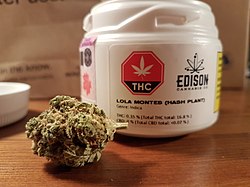
Recent trends in Canada have moved toward broader decriminalization. In May 2022, the federal government approved a proposal for British Columbia to decriminalize "hard drugs" (including fentanyl, cocaine, and methamphetamine). As of January 1, 2023, adults in British Columbia can possess up to 2.5 grams of these substances without risk of arrest, though trafficking remains illegal.
United States
The U.S. landscape is characterized by a conflict between federal law and state autonomy. As of 2024, 38 states and Washington, D.C. allow medical cannabis, with 24 of those states also permitting recreational use. While the Supreme Court ruled in Gonzales v. Raich (2005) that cannabis remains illegal federally, state-level legalizations prevent state-level prosecution.
Beyond cannabis, some jurisdictions have targeted psilocybin (the active compound in "magic mushrooms"). Denver became the first city to decriminalize it in 2019, and Oregon later became the first state to legalize its supervised use.
European Policy Shifts
Portugal
In 2001, Portugal implemented Law 30/2000, abolishing criminal penalties for personal drug possession in favor of therapeutic support. Data indicated that in the five years following this shift, teenage drug use declined, HIV infection rates among users dropped, and heroin-related deaths were reduced by more than half.
Czech Republic
The Czech Republic has historically maintained liberal possession limits. Under Regulation No. 467/2009 Coll., possession of small amounts of various drugs is treated as a misdemeanor subject to a fine similar to a parking ticket. Medical cannabis has been legal via prescription since 2013.
Starting in 2026, the country will legalize the cultivation of up to three plants and the possession of 100g of marijuana at home. Possession of up to 200g at home is treated as a civil infraction.
Germany and Ireland
Germany's approach has evolved from a 1994 court ruling that addiction is not a crime to the implementation of the Cannabis Act in 2024. Previously, the government approved legal cannabis for seriously ill patients with no therapeutic alternatives in 2017. In contrast, Ireland's Health Committee rejected a medical cannabis legalization bill in 2017, though the government has discussed supervised injection rooms.
Asia and Oceania
Thailand
Thailand made history on December 25, 2018, becoming the first Asian nation to legalize medical cannabis. This was driven by interest in treating specific diseases. On June 9, 2022, the country further decriminalized cannabis, making recreational use legal, although public smoking remains penalized as a public nuisance.
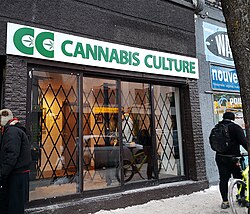
New Zealand
New Zealand held a non-binding referendum on the legality of cannabis for personal use during the 2020 general election. The results showed a narrow opposition to legalization, with 50.7% voting against and 48.4% in favor.
Latin American Reforms
Uruguay
Uruguay led the region by legalizing the production, distribution, and consumption of marijuana in 2013. The state controls the growth of cannabis, ensuring THC concentrations remain at 15% or lower, and distributes the product through pharmacies.
Other Regional Policies
- Argentina: The Supreme Court ruled in 2009 that prosecuting adults for personal drug use that does not affect others is unconstitutional.
- Mexico: In 2009, the government decriminalized the possession of small amounts (e.g., 5g of marijuana) for immediate personal use, provided the user is not near schools or police stations.
- Ecuador: The 2008 Constitution views drug consumption as a health concern rather than a crime.
Summary of Drug Possession Thresholds and Status
| Country/Region | Legal Status (Cannabis) | Key Thresholds/Notes |
|---|---|---|
| Canada | Legal (Recreational & Medical) | Nationwide legalization since Oct 2018. |
| Portugal | Decriminalized | All personal possession is non-criminal since 2001. |
| Czech Republic | Mixed/Liberal | Up to 15g marijuana is a misdemeanor; 3 plants legal from 2026. |
| Thailand | Decriminalized | Medical legal (2018); Recreational decriminalized (2022). |
| Uruguay | Legal (State-Controlled) | State-grown; THC limit ≤ 15%. |
| Mexico | Decriminalized (Small Amounts) | Up to 5g marijuana for personal use. |
| USA | State-Dependent | Illegal federally; legal in 24+ states for recreational use. |
Frequently Asked Questions
What is the difference between decriminalization and legalization?
Legalization removes all prohibitions and often creates a regulated legal market for production and sale. Decriminalization removes criminal penalties (like prison time) for personal possession, often replacing them with fines or mandatory treatment, but does not necessarily make the sale or production legal.
Which was the first Asian country to legalize medical cannabis?
Thailand became the first Asian country to legalize medical cannabis, completing the legislative process on December 25, 2018.
How does Portugal's drug policy differ from others?
Unlike many countries that target specific drugs, Portugal abolished all criminal penalties for the personal possession of any drug in 2001, shifting the focus from the justice system to health services and therapy.
Is cannabis legal in the United States?
It is illegal under federal law. However, many states have passed their own laws allowing medical or recreational use, and federal authorities generally do not prosecute state-level legal activities, as seen in the context of Gonzales v. Raich.
What are the possession limits in the Czech Republic?
Under Regulation No. 467/2009 Coll., possession of up to 15 grams of marijuana is considered a small amount and is treated as a misdemeanor rather than a criminal offense.