Canada Goose: Biology, Distribution, and Human Interaction
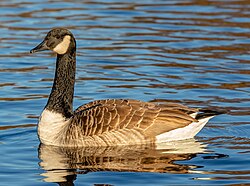
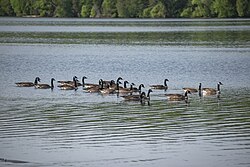
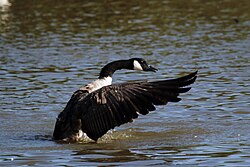
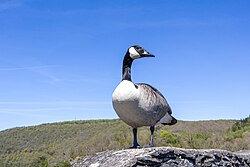
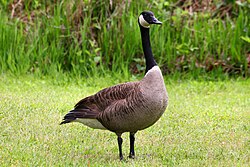
The Canada goose (Branta canadensis) is one of the most recognizable waterfowl in the world. Belonging to the family Anatidae and the order Anseriformes, these birds have a history stretching back to the Pleistocene epoch. Known for their distinctive black heads and white cheek patches, they have become a ubiquitous presence in both wild landscapes and urban environments across the globe.
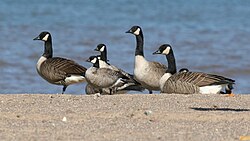
Key Facts
- Scientific Name: Branta canadensis
- Conservation Status: Least Concern (IUCN 3.1)
- Size Range: 75 to 110 cm in length with a wingspan of 127–185 cm
- Largest Subspecies: B. c. maxima (Giant Canada goose)
- Vocalizations: Ten different types, including the male's "honk" and the female's "hrink"
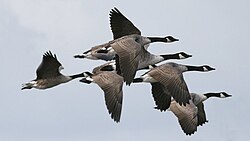
- Flight Pattern: Distinctive V-shaped formations
Physical Characteristics and Taxonomy
Canada geese exhibit significant variation in size depending on their subspecies. While most fall within standard measurements, the Giant Canada goose (B. c. maxima) represents the upper limit of the species. An exceptionally large male of this subspecies was once recorded weighing 10.9 kg (24 lb) with a massive wingspan of 2.24 m (7 ft 4 in), making it the largest wild goose ever recorded.
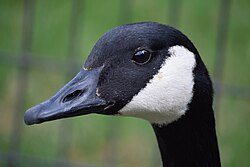
Conversely, the Lesser Canada goose (B. c. parvipes) is the smallest subspecies. The species is divided into several recognized subspecies, including the Atlantic, Interior, Moffitt's, Vancouver, and Dusky Canada geese. Some taxonomists also distinguish the cackling goose as a separate entity from the Canada goose.
Sexual Dimorphism and Communication
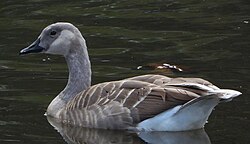
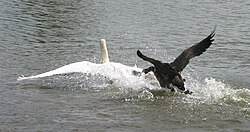
Males and females are visually similar, though females are generally about 10% smaller in linear dimensions and slightly lighter in weight. They also utilize different vocalizations: the male produces a "honk," while the female produces a shorter, higher-pitched "hrink." When threatened or defending territory, they may emit a high-pitched hiss.
Distribution and Habitat
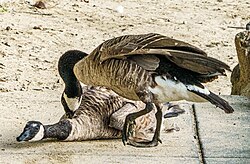
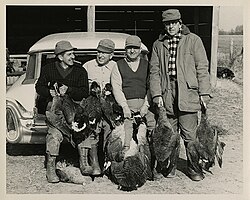
Originally native to North America, Canada geese have a vast distribution. In the early 20th century, populations declined due to overhunting and habitat loss. However, dedicated restoration efforts—such as the program started in North Dakota in 1964—have helped rebuild numbers. In some areas, like Ohio, populations have surged due to an abundance of water and manicured lawns in urban areas, leading many geese to become non-migratory.
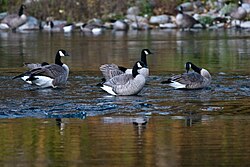
Beyond North America, these geese have established themselves in Europe and New Zealand. They were introduced to Great Britain in the late 17th century and have since spread from private estates to widespread use in wetlands and countryside. In New Zealand, they were introduced in 1905 as a game bird, though they are now managed as a species that can damage crops.
Nesting and Reproduction
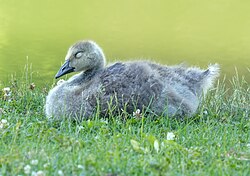
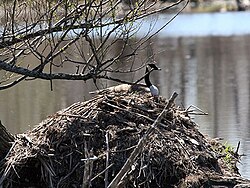
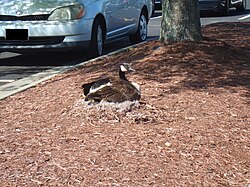
Canada geese instinctively seek higher ground near water for nesting. They are highly protective of their young, known as goslings. In some instances, they have been observed nesting in unconventional locations, such as parking lots or even on beaver lodges.
Behavior and Migration
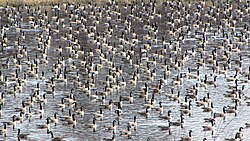
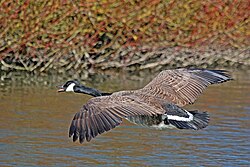
During migration, Canada geese are famous for their V-shaped flight formation. They typically fly at an altitude of approximately 1 km (3,000 feet), though they have been recorded at much higher altitudes of up to 9 km (29,000 feet). This formation is an efficient way for the flock to travel long distances.
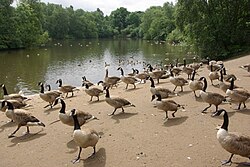
In social settings, geese can be quite bold. In urban parks, they may approach humans to beg for food, a behavior that has become learned over time.
Human Interaction and Aviation Safety
While Canada geese are a common sight in parks, they can present challenges to aviation. They are the second-most damaging bird strike species in the United States. Large flocks can be ingested into aircraft engines, leading to significant mechanical failure.
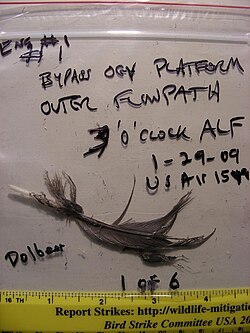
Notable incidents include the 1995 crash of a U.S. Air Force E-3 Sentry in Alaska and the 2009 US Airways Flight 1549 incident, where a flock of geese forced a successful ditching in the Hudson River. These events have prompted increased efforts in habitat modification and flock relocation to improve aviation safety.
Summary of Species Data
| Feature | Details |
|---|---|
| Scientific Name | Branta canadensis |
| Average Male Weight | 3.9 kg |
| Average Female Weight | 3.6 kg |
| Wingspan Range | 127–185 cm |
| Primary Habitat | Wetlands, lakes, and urban parks |
Frequently Asked Questions
What is the difference between a Canada goose and a cackling goose?
The relationship between the two is a subject of taxonomic discussion; the cackling goose is often considered a smaller group within or related to the Canada goose species.
Why do Canada geese fly in a V-formation?
They fly in a V-shape during migration, which is a distinctive pattern used when traveling long distances at high altitudes.
Are Canada geese dangerous to aircraft?
Yes, they are a significant cause of bird strikes. Their large size and tendency to fly in flocks can lead to engine ingestion, which has caused several notable aviation incidents.
How do Canada geese communicate?
They use ten different vocalizations to respond to various situations, including the male's "honk" and the female's higher-pitched "hrink" call.
What is the largest subspecies of the Canada goose?
The B. c. maxima, also known as the Giant Canada goose, is the largest subspecies.