Calliope: The Powerful Sound of Steam and Air
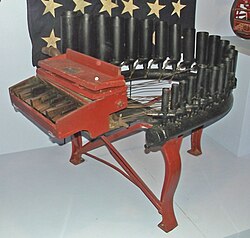
The calliope is a distinctive American musical instrument known for its immense volume and piercing tone. Unlike traditional organs, it produces sound by forcing a gas—originally steam and later compressed air—through a series of large whistles, which were originally derived from locomotive whistles. Because of its sheer power, even small calliopes can be heard for several miles.
Musically, the calliope is limited in expression; it cannot vary its volume or tone. The performer can only manipulate the pitch, rhythm, and duration of the notes. This creates the iconic, bold sound associated with the golden age of steam.
Key Facts
- Mechanism: Uses steam or compressed air pushed through whistles.
- Volume: Extremely loud, often audible for miles.
- Tuning: Tuned to a chromatic scale, though steam temperature makes perfect tuning difficult.
- Capacity: Typically contains 25 to 67 whistles, with 32 being the traditional number for steam models.
- Common Uses: Historically found on riverboats and in traveling circuses.
Types and Terminology
While often grouped together, there are different versions of the instrument based on the power source used:
- Steam Calliope: Also known as a steam organ or steam piano. These were common in the 19th century.
- Calliaphone: A term coined by Norman Baker for air-driven calliopes. This name was later registered by the Miner Company for Tangley instruments.

Historical Development
The calliope was patented on October 9, 1855, by Joshua C. Stoddard of Worcester, Massachusetts. While Stoddard's design was the official patent, it echoed earlier concepts like the 1832 "steam trumpet." Stoddard initially envisioned the instrument as a signaling device for coastal and river steamboats and railroads.
The instrument evolved from a mechanical system—using a pinned metal roller similar to a music box—to a keyboard-operated system, allowing it to be played like an organ. By the early 1900s, many calliopes adopted music rolls, similar to player pianos, though many retained keyboards for live musicians.
The Era of Riverboats and Circuses
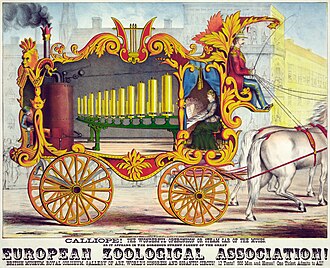
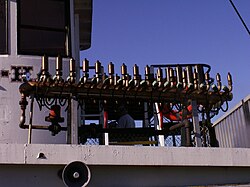
The calliope flourished where steam power was already available. Riverboats used their propulsion boilers to power the instrument, while circuses utilized traction engines or steam-driven carousels. Some circus calliopes were self-contained units on ornate, gilded wagons pulled by horses.
To withstand the intense heat and moisture of the steam, keyboards were often crafted from brass, which also provided a polished, golden aesthetic.
Notable Builders and Modern Resurgence
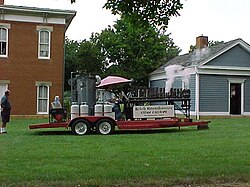
Thomas J. Nichol of Cincinnati, Ohio, was a prominent builder from 1890 to 1932. He used rolled sheet copper for the resonant tubes (bells), which produced a sweeter tone than the standard cast bronze or brass. In 1985, David Morecraft began building authentic Nichol-style steam calliopes in Peru, Indiana, helping to preserve the craft until his death in 2016.
Technical Specifications and Operation
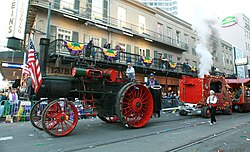
Operating a calliope requires significant technical expertise. Because the pitch of the notes is heavily influenced by the temperature of the steam, maintaining accurate tuning is nearly impossible. This slight off-pitch quality, especially in the upper register, has become a trademark of the instrument's sound.
Modern versions may include MIDI interfaces for digital control, but traditional models rely on manual keyboards or mechanical rolls.
| Instrument | Power Source | Key Characteristic |
|---|---|---|
| Steam Calliope | Steam | Traditional, very loud, temperature-sensitive tuning. |
| Calliaphone | Compressed Air | Easier to transport and operate. |
| Pyrophone | Internal Combustion | Uses propane ignition within resonant cavities. |
| Lustre Chantant | Gas Heat | Glass pipes that produce sound as they cool. |
Calliopes in Popular Culture
The calliope's association with the circus has made it a favorite for filmmakers and musicians wanting to evoke a carnival atmosphere. Henry Mancini used it in "Baby Elephant Walk" (1961), and The Beatles used tapes of calliope music for "Being for the Benefit of Mr. Kite!" on the Sgt. Pepper's Lonely Hearts Club Band album.
Frequently Asked Questions
How is "calliope" pronounced?
Pronunciation is often disputed. While the Greek muse is pronounced kə-LY-ə-pee, musicians who play the instrument traditionally pronounce it KAL-ee-ohp.
What is the difference between a calliope and a fairground organ?
A calliope uses whistles powered by steam or compressed air, whereas a fairground organ (or orchestrion) uses organ pipes to produce sound.
Why are calliopes so rare today?
Most disappeared in the mid-20th century as steam power was replaced by electricity and internal combustion. The loss of specialized boiler technicians made maintaining the instruments difficult.
Can a calliope be played automatically?
Yes, many models use music rolls to operate the keys mechanically, and some modern versions can be played via a MIDI interface.
What is a pyrophone?
A pyrophone is a similar instrument that uses internal combustion (such as igniting propane) inside its whistles to create sound, rather than using steam or air pressure.