California History: From Indigenous Roots to Statehood
The story of California is one of dramatic transformations, shifting from a land of diverse indigenous cultures to a strategic outpost of the Spanish Empire, and finally to a powerhouse of the United States. Spanning millennia, the region's history is marked by exploration, conflict, and an unprecedented migration triggered by the allure of gold.
Key Facts
- Indigenous Arrival: First human inhabitants arrived approximately 11,000 BC.
- Spanish Influence: Colonization began in earnest in the 18th century with a chain of missions.
- Political Shifts: Transitioned from New Spain to Mexico (1821), then to the United States (1848).
- The Gold Rush: Began in 1848, bringing roughly 300,000 "Forty-Niners" by 1855.
- Statehood: California joined the Union as a free state via the Compromise of 1850.
Pre-Columbian Era and Early Exploration
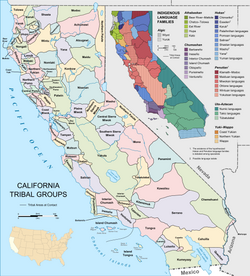
Human history in the region began around 11,000 BC when indigenous Americans first arrived. For thousands of years, these native tribes developed complex societies adapted to the diverse landscapes of the coast and inland valleys.
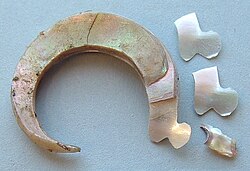
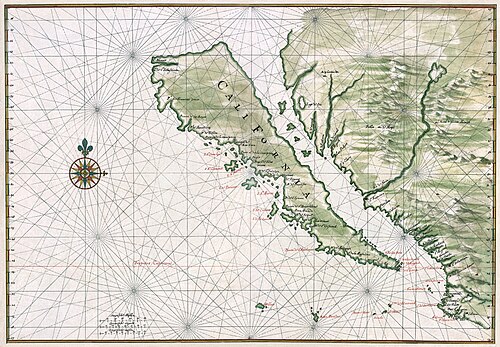
European interest peaked in the 16th century. Spanish explorers like Juan Rodríguez Cabrillo began coastal exploration, though early cartography often struggled with the geography; for instance, Baja California was frequently misrepresented as an island in maps from the 1600s.
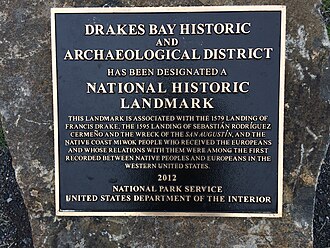
Other European ventures also touched the coast, including the English explorer Sir Francis Drake, whose landing at Point Reyes is commemorated today.
Spanish Colonization and the Mission System
While Spain claimed the coast as early as 1542, settlement remained slow until the late 17th century. In 1697, settlements were established in Loreto, Baja California Sur. However, it was the threat of Russian fur traders moving south from Alaska in 1765 that prompted King Charles III to accelerate the development of Alta California (Upper California).
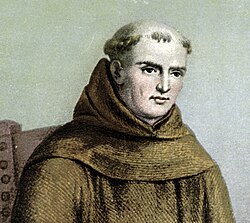
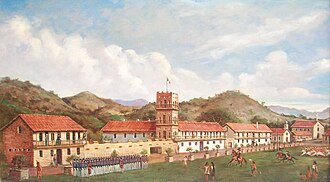
The colonization effort was led by Franciscan Friars, most notably Junípero Serra, who established a chain of missions. These missions, protected by military presidios (forts), stretched from San Diego to the San Francisco Bay Area. By 1820, this influence extended 25 to 50 miles inland, though between 200,000 and 250,000 Native Americans continued to live traditional lives outside this zone.
The Transition to Mexican and American Rule
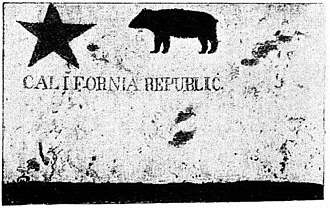
When the kingdom of New Spain dissolved in 1821, California became part of Mexico. This era saw the rise of the Californios (Spanish-speaking Californians) and a shift in land ownership through ranchos. However, internal instability and the growing interest of the United States led to the Bear Flag Revolt and the eventual outbreak of the Mexican-American War (1846–1848).
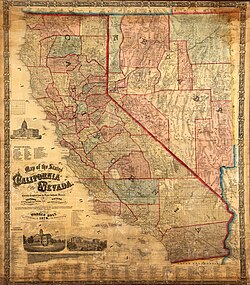
The conflict ended with the Treaty of Guadalupe Hidalgo on February 2, 1848. Under this agreement, Mexico ceded California and other northern territories to the U.S. in exchange for $18,250,000. The border was carefully drawn to ensure the U.S. secured the strategic San Diego Bay.
The Gold Rush and Statehood
Almost simultaneously with the treaty, gold was discovered in January 1848. This sparked the Gold Rush, a global migration event that saw 300,000 people arrive by 1855. This sudden population explosion accelerated California's path to statehood, and it joined the Union as a free state in 1850.
| Year | Population | Percentage Increase |
|---|---|---|
| 1840 | 8,000 | — |
| 1850 | 120,000 | 1,400.0% |
| 1860 | 379,994 | 216.7% |
| 1870 | 560,247 | 47.4% |
Darker Chapters: The California Genocide
The rapid American expansion had devastating consequences for the indigenous population. Between 1849 and 1870, a period known as the California Genocide occurred. It is estimated that American colonists murdered approximately 9,500 Native Americans, while state-tolerated acts of enslavement, kidnapping, and displacement led to a precipitous decline in the indigenous population.
Frequently Asked Questions
When did California become a U.S. state?
California joined the Union as a free state in 1850 as part of the Compromise of 1850.
What was the Treaty of Guadalupe Hidalgo?
Signed on February 2, 1848, this treaty ended the Mexican-American War, resulting in Mexico ceding California and other northern territories to the United States for $18,250,000.
Who were the "Forty-Niners"?
The Forty-Niners were the approximately 300,000 migrants from around the world who flocked to California following the discovery of gold in 1848.
What role did the missions play in early California?
Established primarily by Franciscan Friars like Junípero Serra, the missions were intended to colonize Alta California, spread Christianity, and secure the region against other European powers like Russia.
How did the population change after the Gold Rush?
The population grew exponentially, jumping from roughly 8,000 in 1840 to over 120,000 by 1850, and reaching over 560,000 by 1870.