Cajun Music: The Soul and Sound of Louisiana
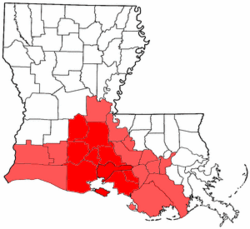
Cajun music (French: Musique cadienne) is a vibrant traditional genre hailing from the heart of Louisiana. Rooted in the ballads of the French-speaking Acadians who migrated from Canada, this music serves as an emblematic expression of the Cajun people. While often mentioned alongside zydeco—a related Creole-based genre—Cajun music maintains its own distinct identity, though both share deep French and African influences from southwest Louisiana.
Over the decades, these unique sounds have permeated American popular music, leaving a significant mark on country music and appearing frequently in global pop culture and mass media.
Key Facts
- Origins: Derived from Acadian ballads and French folk songs called complaintes.
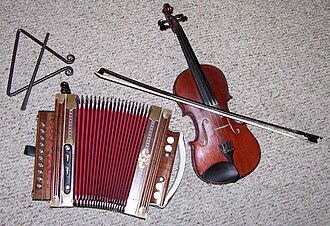
- Core Instruments: The diatonic accordion, fiddle, and triangle.
- Key Venues: Traditionally played at bals de maison (house dances) and fais do-dos (public dance halls).
- Musical Range: Typically limited to one octave, rising a fifth above the tonic and descending a fourth below.
- Cultural Influence: Heavily influenced by French, African, and later, American country and swing styles.
Musical Theory and Instrumentation
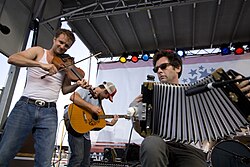
Cajun music is characterized by an infectious beat and a strong forward drive. The diatonic accordion—an instrument tuned to a natural major scale—sits at the center of the sound. Because it is diatonic, it can only play in a few keys; for instance, a "C" accordion provides the full C scale but may lack certain notes (like Bb) when playing in the key of F.
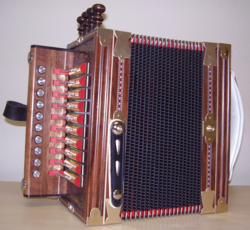
The melodic structure is simple, usually featuring only the accordion and fiddle, often accompanied by the high, clear tones of a metal triangle. To add energy, accordionists frequently repeat notes to emphasize the vocal melody. Because instruments must match the singer's range, much of the singing is performed in the upper register.
The Evolution of the Cajun Sound
Origins and Early Ballads
Before the introduction of instruments around 1780, Cajuns sang complaintes—traditional French songs adapted to their frontier life. These unaccompanied ballads often dealt with themes of solitude, death, and ill-fated love, reflecting the hardships of exile. The first recorded instruments in the region were the violin (1780) and the clarinet (1785). The diatonic accordion arrived in the mid-to-late 1800s, becoming a staple due to its volume, which was essential for dance music.
Traditional Cajun (Pre-1930)
Early Cajun dance music relied on a basic rhythm with staccato notes and fiddle double stops. The waltz and two-step became the dominant dances of this era. A milestone occurred on April 27, 1928, when Joe Falcon and Cléoma Breaux recorded "Lafayette (Allon au Laufette)," the first commercial Cajun recording.
Country and Texas Swing (1934–1941)
During the pre-war era, the influence of Texas country and the swing style of Bob Wills and his Texas Playboys led to a shift. The accordion took a backseat to the fiddle and piano, and the steel guitar was introduced. This era popularized dances like "the jig."
The Fais Do-Do Era (1946–1960)
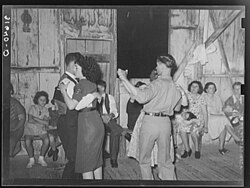
Post-war music moved from house parties to large public dance halls known as fais do-dos (a French term meaning "go to sleep," referring to the practice of bringing children to the dances). The introduction of electrical amplification allowed the music to cut through crowd noise and enabled a smoother fiddle style. Bands added bass guitars, drum kits, and rhythm guitars to their ensembles.
The Cajun Renaissance and Contemporary Era
Starting in the 1970s, a "renaissance" occurred, blending traditional sounds with folk, blues, jazz, and swamp pop. A pivotal moment was the 1964 Newport Folk Festival, which brought national attention to the genre. Modern Cajun music now incorporates rock, R&B, and soul, with some artists experimenting with "Heavy Cajun Psych" by mixing traditional instruments with cutting-edge technology.
Dance, Festivals, and Cultural Preservation
Cajun music is inseparable from dance. Common styles include the Cajun one-step (jig), the two-step (jitterbug), and the Cajun waltz. This differs from zydeco dancing, which is more syncopated and typically performed in a smaller area of the dance floor.
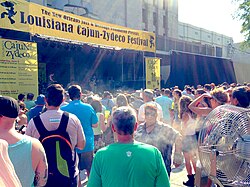
To combat negative stereotypes and preserve the culture, CODOFIL (the Council for the Development of French in Louisiana) was established in 1968. In 1974, they launched the Festival de Musique Acadienne to inspire younger generations to embrace their heritage.

| Era | Primary Influence | Key Instruments | Common Dance |
|---|---|---|---|
| Traditional (Pre-1930) | Acadian Ballads | Accordion, Fiddle, Triangle | Waltz, Two-step |
| Texas Swing (1934-1941) | Western Swing | Fiddle, Piano, Steel Guitar | The Jig |
| Dancehall (1946-1960) | Country Music | Electric Guitar, Bass, Drums | Two-step |
| Renaissance/Modern | Blues, Jazz, Rock | Amplified instruments, Keyboards | Various |
Frequently Asked Questions
What is the difference between Cajun music and zydeco?
While both originate from southwest Louisiana and share French and African roots, Cajun music is rooted in Acadian ballads and typically features the diatonic accordion and fiddle. Zydeco is Creole-based and generally features a more syncopated rhythm and different dance styles.
What does "fais do-do" mean?
In French, "fais do-do" means "go to sleep." It refers to the public dance halls where parents would bring their children, who would eventually fall asleep while the adults danced.
Why is the diatonic accordion important to Cajun music?
The diatonic accordion provided the necessary volume to accompany dancing in loud environments. Its specific tuning creates the characteristic "bluesy" or natural major sound associated with the genre.
What was the first commercial recording of Cajun music?
The first commercial recording was "Lafayette (Allon au Laufette)," recorded by Joe Falcon and Cléoma Breaux for Columbia Records on April 27, 1928.
What is the role of the triangle in a Cajun band?
The triangle provides a high, clear percussive tone that serves as a traditional rhythmic accompaniment to the accordion and fiddle.