Louisiana French
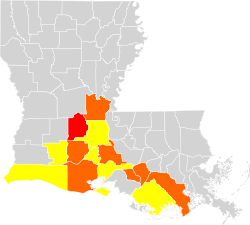
Louisiana French (français louisianais) is a distinct regional variety of the French language spoken in the United States, primarily within the state of Louisiana and parts of southeastern Texas. Rooted in the colonial history of French Louisiana, it encompasses various dialects, most notably those associated with Cajun and Creole ethnicities. While it remains a powerful symbol of regional identity, the language is currently classified as Severely Endangered by the UNESCO Atlas of the World's Languages in Danger.
The language evolved from a complex blend of Old and Middle French, influenced by the diverse populations that settled in the Gulf Coast region. Today, it serves as a linguistic bridge to the past, reflecting the intersection of European, African, and Native American cultures.
Key Facts
- Native Speakers: Approximately 77,000 people (1.6% of the population) as of 2022.
- Status: Official language of Louisiana; classified as Severely Endangered by UNESCO.
- Language Family: Indo-European > Italic > Romance > Gallo-Romance > Oïl.
- Primary Regions: Southern coastal parishes of Louisiana and southeastern Texas.
- Key Influences: Standard French, English, Louisiana Creole, and Native American languages (particularly Choctaw).
Linguistic Characteristics
Louisiana French differs from Standard French in its phonology, grammar, and vocabulary. One of the most striking differences is the use of code-switching—the practice of alternating between two or more languages in a single conversation—often blending French and English.
Grammar and Syntax
The grammar of Louisiana French retains certain archaic forms and has developed unique structures. For example, contractions differ significantly from Standard French. Where a Standard French speaker would say "des grand-parents", a Louisiana French speaker might say "de les grand-parents." Similarly, "la lumière du ciel" (the skylight) becomes "la lumière de le ciel."
Vocabulary and External Influences
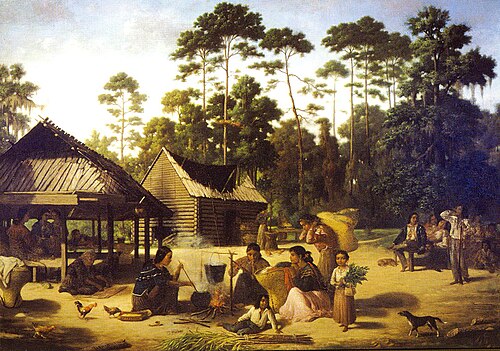
The lexicon is a rich tapestry of cultural exchange. Many terms are borrowed from Native American languages, particularly the Choctaw and Mobilian dialects. Examples include bayou (from Choctaw bayuk) and chaoui (raccoon).
English has also left a mark on the language, while Louisiana Creole—a contact language—has influenced the regional French spoken by both Cajuns and Creoles. Some common vocabulary differences include:
| English | Louisiana French | Standard French |
|---|---|---|
| Car | Un char | Une voiture / auto |
| Courthouse | Une maison de cour | Un tribunal |
| Now | Asteur / Drette-là | Maintenant |
| Shrimp | Une chevrette | Une crevette |
| Dollar | Un piastre | Un dollar |
Preservation and Education
After a period of decline during the early 20th century and World War II, there has been a concerted effort to revitalize the language. The Council for the Development of French in Louisiana (CODOFIL) leads these efforts, partnering with a consortium of universities and colleges—including Louisiana State University and Tulane University—to integrate French into higher education.
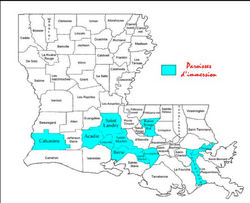
French immersion programs have been established in numerous parishes to ensure the language is passed to younger generations. These programs span from elementary schools in parishes like Acadia and Assumption to high schools in New Orleans.
Cultural Institutions and Media
The language lives on through music, festivals, and media. Events such as the Festival International de Louisiane and the Rendez-vous des Cajuns celebrate the Francophone spirit. Additionally, radio stations like KBON (Mamou) and KRVS (Lafayette) continue to broadcast in French, while podcasts like LACréole Show bring the language into the digital age.
Frequently Asked Questions
Is Louisiana French the same as Cajun French?
While often used interchangeably, Louisiana French is a broader term that includes Cajun French (spoken by descendants of Acadians) and the French spoken by Creole populations, as well as other regional variations.
Why is the language considered endangered?
Due to historical pressures to assimilate into English-speaking society, particularly during the early 20th century, fewer native speakers passed the language to their children, leading to a sharp decline in fluency.
What is the role of CODOFIL?
CODOFIL is the state-mandated agency responsible for the preservation and promotion of the French language in Louisiana, coordinating immersion programs and university curricula.
How did Native American languages influence Louisiana French?
Native American groups, such as the Choctaw, provided essential terms for local geography and wildlife, such as "bayou" and "choupique" (bowfin), which became integrated into the local French dialect.
Where can I still hear Louisiana French spoken today?
The language is most prevalent in the southern coastal parishes of Louisiana, particularly in the Acadiana region, and in some pockets of southeastern Texas.