Buzkashi and Kokboru: The High-Stakes Equestrian Sports of Central Asia
Across the vast steppes and mountain valleys of Central Asia, a tradition of fierce equestrian competition endures. Known as Buzkashi in Afghanistan and Tajikistan, and Kokboru in Kyrgyzstan, these sports are more than mere games; they are tests of strength, skill, and endurance. At its core, the objective is simple yet grueling: riders must compete to seize a carcass—typically a goat or calf—and carry it to a designated goal.
The intensity of the competition is legendary. Historically, the sport operated on informal codes of honor, such as avoiding intentional whipping of fellow riders or deliberately knocking opponents off their mounts. Today, while official bodies like the Afghan Olympic Federation have established formal rules, the spirit of the game remains raw and competitive.
Key Facts
- The Players: Skilled riders in Afghanistan are called chapandaz, with peak proficiency often reached in their forties.
- The Equipment: Riders wear heavy clothing and head protection, sometimes using salvaged Soviet tank helmets, and high-heeled boots to lock into the saddle.
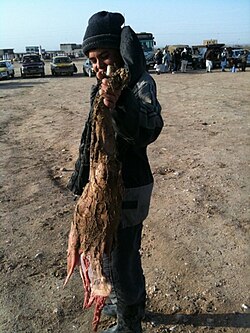
- The Carcass: A calf or goat is beheaded, disembowelled, and soaked in cold water for 24 hours to toughen it for the game.
- The Horses: These animals undergo severe training and are typically owned by wealthy patrons rather than the riders themselves.
The Mechanics of the Game
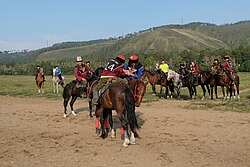
The physical demands on both rider and horse are immense. To maintain control while wrestling for the carcass, riders often wedge the animal under one leg to free their hands. Whips are used to fend off opponents and are frequently carried in the rider's teeth when both hands are occupied.
Variations in Gameplay
In Afghanistan, the sport generally manifests in two primary forms:
- Tudabarai (meaning "emerging from a mass"): A simpler version where the goal is to grab the carcass and move in any direction until clear of other players.
- Qarajai (meaning "black place"): A more complex version where players must carry the carcass around a marker and throw it into a scoring circle known as the "Circle of Justice."
Regional Rules and Regulations
While the essence of the sport is consistent, the rules vary significantly by country.
Afghanistan (Kabul Rules)
In the capital of Kabul, matches are strictly regulated. The game is played on a 400m by 400m square field. Each team consists of ten riders, though only five may play per half. The match consists of two 45-minute halves separated by a 15-minute break, all overseen by a referee.
Kyrgyzstan (Kokboru)
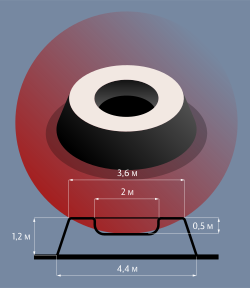
Modern Kokboru is highly structured. Two teams of twelve participants compete, with only four players per team on the field at once. The field measures 200 meters by 70 meters, featuring two kazans (large goals 4.4m in diameter and 1.2m high) at opposite ends.
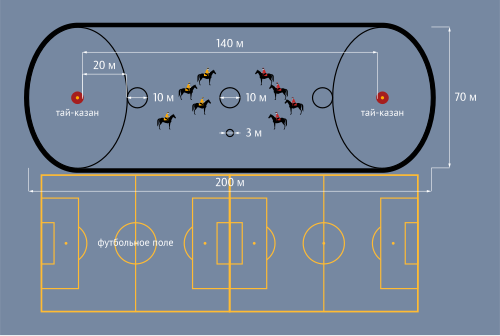
The game lasts 60 minutes across three periods, with 10-minute breaks. A goal is scored when the ulak (goat carcass) is placed in the opponent's kazan. Players must take an oath to play justly and are prohibited from riding toward spectators or receiving outside assistance.
Tajikistan
Tajikistan favors a more free-form approach. Games are often held in natural arenas like mountain valleys. Rather than team-based play, it is primarily an individual competition where dozens of riders scramble simultaneously to seize the buz (carcass) and carry it to a goal. These events typically consist of many short matches with prizes awarded for each single point scored.
Comparison of Regional Formats
| Feature | Afghanistan (Kabul) | Kyrgyzstan (Kokboru) | Tajikistan |
|---|---|---|---|
| Field Size | 400m x 400m | 200m x 70m | Natural arenas/valleys |
| Team Structure | 10 players (5 active) | 12 players (4 active) | Primarily individual |
| Goal Type | Circle of Justice | Kazan (Large goal) | Variable goal |
| Match Duration | Two 45-min halves | Three periods (60 min total) | Many short matches |
Frequently Asked Questions
What is a chapandaz?
A chapandaz is a professional Buzkashi player. In Afghanistan, it is widely believed that the most skillful chapandaz are those in their forties, as the role requires years of physical practice and observation.
How is the carcass prepared for the game?
The calf or goat is beheaded, disembowelled, and has two limbs removed. It is then soaked in cold water for 24 hours to toughen the skin, preventing it from disintegrating during the intense struggle. Sometimes sand is added to increase the weight.
Who owns the horses used in these games?
Horses are typically owned by wealthy individuals who can afford the specialized training and facilities required. Master chapandaz often ride these horses, as a winning horse brings significant pride to its owner.
What is the difference between Tudabarai and Qarajai?
Tudabarai is a simpler form of the game where the goal is simply to break away from the pack with the carcass. Qarajai is more complex, requiring the rider to navigate around a marker and score in a specific circle.
Are there penalties in Kokboru?
Yes. In Kokboru, it is strictly prohibited to ride toward the spectators, receive assistance from the crowd, or begin a match without first swearing an oath to play justly.