Buenos Aires Western Railway: The Dawn of Argentina's Rail Network
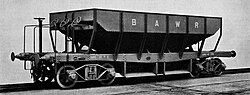
The Buenos Aires Western Railway (BAWR), known in Spanish as the Ferrocarril Oeste de Buenos Aires, stands as a landmark of South American engineering. Inaugurated on August 29, 1857, it was the first railway ever built in Argentina, sparking a massive expansion of rail infrastructure that would transform the nation's economy and connectivity for nearly a century.
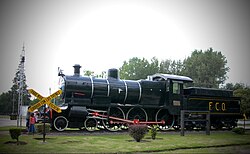
The line was pioneered by the locomotive La Porteña, a machine built by the British firm EB Wilson & Company in Leeds. This engine hauled the very first train, establishing a precedent for the use of British expertise and broad gauge technology in the region.
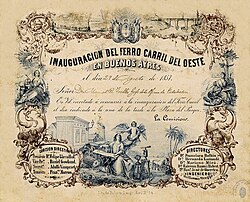
Key Facts
- Inauguration: August 29, 1857.
- First Locomotive: La Porteña (built by EB Wilson & Company).
- Track Gauge: 1,676 mm (5 ft 6 in), known as broad gauge.
- Original Terminus: Del Parque station (now the site of Teatro Colón).
- Final Terminus: Once de Septiembre station.
- Ownership: Transitioned from the Province of Buenos Aires to British investors in 1890, and finally to the Argentine State in 1948.
Foundations and Early Controversies
The vision for a railway was championed by intellectual figures such as Juan Bautista Alberdi, Domingo Faustino Sarmiento, and Justo José de Urquiza. In 1853, the Railway Society—a group of forward-thinking traders—requested a grant to build a passenger and cargo line. Interestingly, in 1854, the Society briefly proposed using horses instead of steam engines, citing the high cost of coal and the abundance of cheap horses in Argentina.
Some historians suggest this request stemmed from a fear among the public that the vibrations from steam locomotives would damage nearby buildings. Ultimately, the company opted for steam power, purchasing the equipment necessary to launch the service.
The Legend of La Porteña
A persistent legend once claimed that La Porteña was originally built for India and used during the Crimean War at the siege of Sevastopol, which supposedly explained the unusual broad gauge of the line. However, modern research has debunked this; records show the locomotive left Leeds in 1856, after the Crimea railway had already been demolished, and its technical specifications were unsuitable for the steep gradients of Balaclava.
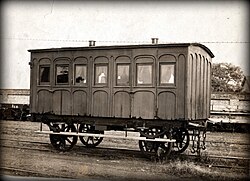
Route Expansion and Urban Impact
The original route began at the Del Parque station, located opposite the Plaza del Parque (now Plaza General Lavalle). This area quickly urbanized due to the railway's presence. The initial 10 km line utilized a 1,676 mm gauge, mirroring colonial English railways.
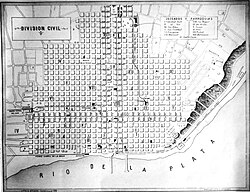
The line progressed westward through several key points:
- Almagro: An unmanned wooden station that served scattered farmhouses.
- Caballito: Named after a horse-shaped weather vane on a local pulperia (general store).
- San José de Flores: A small village consisting of a temple, plaza, and a few businesses.
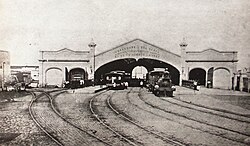
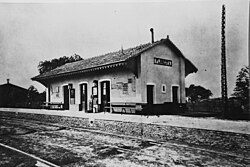
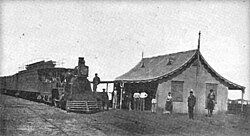
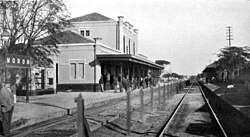
By 1860, the route had extended to 39 km, reaching Moreno. The network continued to grow rapidly under the administration of the Province of Buenos Aires, reaching 177 km by 1870 and eventually spanning 1,210 km by 1889.
The Shift to Once de Septiembre
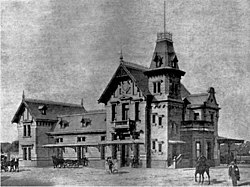
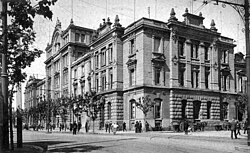
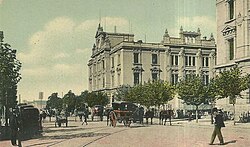
As Buenos Aires grew, the original Del Parque terminus became impractical and dangerous due to urban congestion. In 1883, the terminus was moved to the Once de Septiembre station. The former Del Parque site was eventually demolished to make way for the iconic Teatro Colón.
British Ownership and Electrification
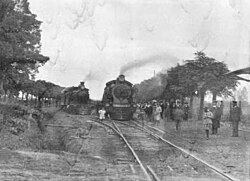
In 1890, the railway was sold to H.G. Anderson on behalf of the Buenos Aires Western Railway Ltd for £8,134,920. Under British management, the network expanded further into La Pampa and south of Mendoza. A notable addition was a branch line to the Basilica of Our Lady of Luján to accommodate thousands of pilgrims.
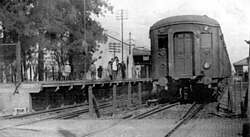
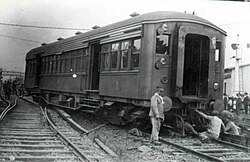
To meet rising suburban demand, the BAWR began electrifying the line from Once de Septiembre to Moreno. Despite delays caused by World War I, the electrified service officially reached Haedo in 1923 and Moreno on May 1, 1924. This system used a third rail energized at 800 volts, making it the second electrified line in Argentina.
Nationalization and Legacy
The economic crash of 1929 and the disruptions of World War II severely impacted the British-owned lines. Between November 1, 1947, and March 1, 1948, the Argentine State, under President Juan Domingo Perón, acquired the railway assets, bringing the BAWR era to a close.
| Period | Owner | Key Milestone | Network Reach |
|---|---|---|---|
| 1857–1863 | Railway Society / Province | Inauguration with La Porteña | 10 km (Initial) |
| 1863–1890 | Province of Buenos Aires | Move to Once de Septiembre (1883) | 1,210 km (by 1889) |
| 1890–1948 | BAWR Ltd (British) | Electrification of Once-Moreno line | Expanded to La Pampa/Mendoza |
| 1948 onwards | Argentine State | Nationalization of rail assets | Integrated into state network |
Frequently Asked Questions
What was the first locomotive used on the line?
The first locomotive was La Porteña, a 0-4-0 saddle tank engine built by EB Wilson & Company in Leeds, England. It could reach speeds of 25 km/h and weighed 15.75 metric tons.
Why was the terminus moved from Del Parque to Once de Septiembre?
The move was necessitated by rapid urbanization. The passage of trains through the city center had become dangerous for pedestrians and vehicles, leading to a municipal decree to relocate the terminus.
Was the railway always owned by the government?
No. It began with a mix of private and provincial support, became solely owned by the Province of Buenos Aires in 1863, was sold to British investors in 1890, and was finally nationalized by the Argentine State in 1948.
What was unique about the electrification of the BAWR?
The line from Once to Moreno used a third rail system energized at 800 volts. This required the elevation of platforms to accommodate new coaches with higher doors.
Where is La Porteña now?
La Porteña is currently on exhibit at the Provincial Transport Museum, part of the Enrique Udaondo Provincial Museographic Complex in Luján.