Buddy Holly: The Pioneering Architect of Rock and Roll
Before the British Invasion and the stadium tours of the modern era, a young musician from Texas redefined the sound of popular music. Buddy Holly (born Charles Hardin Holley) was more than just a singer; he was a songwriter and guitarist who helped establish the blueprint for the modern rock band. By blending rock and roll, rockabilly, pop, and country, Holly created a timeless sound that resonated across generations.
Often credited with defining the traditional rock-and-roll lineup—consisting of two guitars, bass, and drums—Holly's influence is woven into the fabric of music history. From the early recordings of the Beatles to the songwriting of Bob Dylan, his artistic DNA persists in nearly every major act that followed.
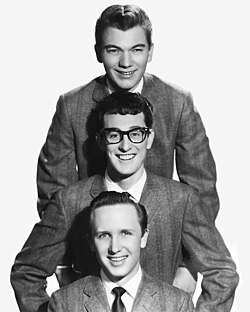
Key Facts
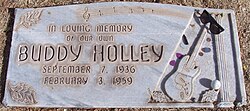
- Birth Name: Charles Hardin Holley (September 7, 1936 – February 3, 1959).
- Musical Legacy: Defined the standard rock band instrumentation (two guitars, bass, and drums).
- Signature Instrument: The Fender Stratocaster.
- Major Influence: Heavily influenced The Beatles, The Rolling Stones, and Bob Dylan.
- Tragic End: Died at age 22 in a plane crash known as "The Day the Music Died."
- Honors: Inducted into the Rock and Roll Hall of Fame in 1986.
Early Life and Musical Roots
Born in Lubbock, Texas, during the Great Depression, Charles Hardin Holley grew up in a musical household. The youngest of four children, he learned to sing and play guitar alongside his siblings. Baptized in the Baptist faith, the family were active members of the Tabernacle Baptist Church.
From a young age, he was known by the nickname "Buddy." His early exposure to various musical styles in Texas provided the foundation for the eclectic sound he would later perfect in the studio.
The Rise of Buddy Holly and The Crickets
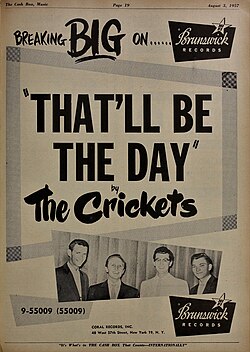
Holly's professional ascent began in earnest with The Crickets. Between 1956 and 1957, the group recorded a series of hits that showcased Holly's innovative approach to songwriting and arrangement. His style was characterized by a unique blend of chunky rhythm and high string lead work.
International Success and Solo Ventures
By 1958, Holly's fame had expanded globally. He joined the "America's Greatest Teenage Recording Stars" tour and made notable appearances on The Ed Sullivan Show. His ambition took him to Honolulu, Hawaii, and on a high-profile tour of Australia—billed as the "Big Show"—alongside Paul Anka, Jerry Lee Lewis, and Jodie Sands.
In March 1958, Holly and the Crickets performed 50 shows in just 25 days across the United Kingdom. This period also saw the release of his debut solo album, Buddy Holly, and the Decca release of That'll Be the Day, which featured sessions recorded in Nashville.
Style and Innovation
Buddy Holly was an early adopter of the Fender Stratocaster, a guitar that became synonymous with his image. He owned several throughout his career, including a 1954 model (which was stolen in Michigan in 1957) and a 1957 replacement purchased in Detroit.
Beyond his gear, Holly was a pioneer in the studio. He worked closely with producer Norman Petty to experiment with sound, creating a polished yet energetic style that set him apart from his contemporaries.
The Winter Dance Party and "The Day the Music Died"
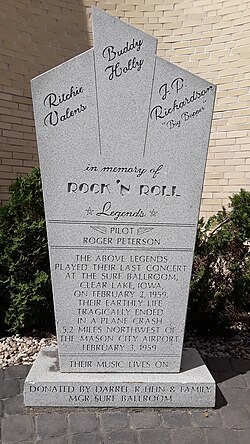
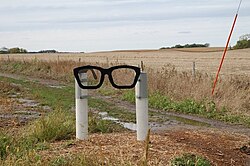
In early 1959, Holly embarked on the "Winter Dance Party" tour. This ill-fated tour ended in tragedy on February 3, 1959. Shortly after takeoff from Clear Lake, Iowa, the aircraft crashed into a cornfield.
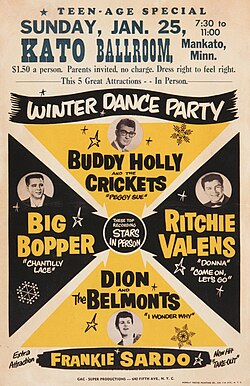
The crash claimed the lives of Buddy Holly, Ritchie Valens, "The Big Bopper" J.P. Richardson, and pilot Roger Peterson. Holly was only 22 years old. This event was later immortalized by Don McLean in the 1971 song "American Pie," which referred to the tragedy as "The Day the Music Died."
Personal Life
On August 15, 1958, Buddy married María Elena Santiago, a receptionist at a New York record company, at the Tabernacle Baptist Church in Lubbock. Their marriage was brief, lasting only six months before his death. Tragically, Santiago suffered a miscarriage shortly after Holly's passing.
Enduring Legacy and Influence
Despite his short career, Holly's impact was immense. Because he recorded so prolifically, his label continued to release new albums and singles for a decade after his death, culminating in the 1969 album Giant.
Impact on Future Legends
- The Beatles: John Lennon and Paul McCartney were devoted fans. The Beatles covered "Words of Love" and Lennon later recorded "Peggy Sue." McCartney currently owns the publishing rights to Holly's catalog.
- Bob Dylan: A 17-year-old Dylan saw Holly perform in Duluth just two days before the crash, an experience Dylan cited as influential during his own career.
- The Rolling Stones & Others: Artists ranging from Eric Clapton to Elvis Costello and Bruce Springsteen have cited Holly as a primary influence.
Commemorations
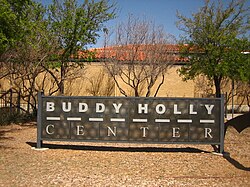
Today, Holly is honored in his hometown of Lubbock through the Buddy Holly Center and the Buddy Holly Hall of Performing Arts and Sciences. He also holds a star on the Hollywood Walk of Fame and a Lifetime Achievement Award from the National Academy of Recording Arts and Sciences.
| Category | Details |
|---|---|
| Active Years | 1952–1959 |
| Primary Genres | Rock and Roll, Rockabilly, Pop, Country |
| Key Bands | The Crickets, Buddy and Bob |
| Major Labels | Decca, Brunswick, Coral |
| Key Albums | Buddy Holly (1958), That'll Be the Day (1958) |
Frequently Asked Questions
How did Buddy Holly influence the Beatles?
The Beatles were deeply influenced by Holly's songwriting and his band structure. They covered his songs, such as "Words of Love," and John Lennon frequently mimicked Holly's vocal style in impromptu sessions.
What is the significance of "The Day the Music Died"?
This phrase, coined by Don McLean in the song "American Pie," refers to the February 3, 1959, plane crash that killed Buddy Holly, Ritchie Valens, and J.P. "The Big Bopper" Richardson.
What guitar was Buddy Holly famous for playing?
Buddy Holly is most famous for playing the Fender Stratocaster. He owned several during his career, and the instrument became a signature part of his visual and sonic identity.
Where is Buddy Holly buried?
Buddy Holly is buried in the City of Lubbock Cemetery in Lubbock County, Texas.
Did Buddy Holly record music after his death?
While he did not record after his death, his label released new albums and singles for ten years using unreleased studio masters, alternate takes, and audition tapes produced by Norman Petty.