British Protected Person Status: Law, Rights, and History
A British protected person (BPP) is a specific legal classification under British nationality law. This status is associated with former British protectorates, protected states, and territories that were once League of Nations mandates or United Nations trust territories under British control. While individuals with this status are considered British nationals, they occupy a unique position: they are neither British citizens nor Commonwealth citizens.
This status was originally designed for residents of areas under British administration that were not formally annexed as Crown possessions (colonies) or Dominions. As of 2025, approximately 1,100 individuals hold valid British passports as BPPs. For many, this status is a remnant of a colonial past, and those who hold it exclusively are effectively stateless, as the status does not grant an automatic right of abode in the United Kingdom.
Key Facts
- Nationality Status: BPPs are British nationals but not British or Commonwealth citizens.
- Right of Abode: BPPs do not have an automatic right to live or work in the UK.
- Consular Protection: BPPs are entitled to British consular protection when traveling abroad.
- Current Population: Roughly 1,100 BPPs hold valid British passports as of 2025.
- Visa Exemption: BPPs can visit the UK for up to six months without a visa.
Historical Background and Legal Evolution
The British Empire included territories that were not annexed as Crown possessions. Instead, these areas were viewed as foreign soil under suzerainty (a situation where a region is under the over-lordship of a more powerful state), often retaining their own local rulers. Because these were foreign territories, birth within them did not automatically confer British subject status.
In the 19th century, the term "British protected person" applied to native populations of protectorates or subjects of rulers in protected states. By 1934, the requirements were codified: the status was granted to those born in protected territories with no other nationality, or children born abroad to a BPP father who would otherwise be stateless. The status was managed by royal prerogative until the British Nationality Act 1948 first defined it in statute law.
As the UK underwent decolonization, the acquisition of BPP status became severely restricted by Parliament in 1978, following the independence of nearly all protected territories.
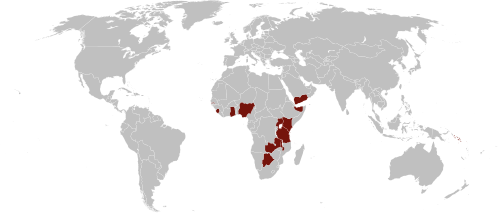
Types of Protected Territories
The administrative structure of a territory determined how BPP status was applied:
- Protected States: Territories with existing internal governments and high autonomy. Britain managed only their external affairs. Examples include Brunei, the Maldives, Tonga, and several Malay states.
- Protectorates: Areas where Britain held administrative jurisdiction, defense, and foreign affairs control, though they lacked formal British sovereignty. Examples include Kenya, Nigeria, Uganda, and the Solomon Islands.
- Mandates and Trust Territories: Territories held under custodianship from the League of Nations (post-WWI) or the United Nations (post-WWII), such as Tanganyika and Togoland. These were treated as protectorates for nationality purposes.
Acquisition and Loss of Status
Today, becoming a BPP is nearly impossible. Registration is limited to individuals who have always been stateless and were born to at least one BPP parent in the UK or an overseas territory. Historically, the status was transferable by descent through the father (but not the mother) until August 16, 1978.
The retention of status after independence varied by territory. Those connected to former protectorates or trust territories could remain BPPs if they did not acquire another citizenship. Conversely, those associated with former protected states or mandated territories had their status automatically revoked upon independence. For the British Solomon Islands, retention required that the individual never possessed any other nationality.
Loss of status occurs automatically if a BPP acquires any other nationality or citizenship after August 16, 1978. It can also be voluntarily relinquished via a declaration to the Home Secretary or deprived if acquired through fraud. Once lost, BPP status cannot be restored.
Rights, Privileges, and Restrictions
While BPPs lack the full rights of citizenship, they do possess certain privileges. They are exempt from visas for UK visits shorter than six months and are eligible to enlist in the British Armed Forces or serve in non-reserved Civil Service posts.
However, the restrictions are significant. BPPs are subject to immigration controls and cannot vote or stand for election in the UK House of Commons, local government, or the House of Lords. Furthermore, those residing in the UK for more than six months must pay a health surcharge to access the National Health Service (NHS).
Path to British Citizenship
BPPs can transition to full British citizenship through registration (which differs from naturalization). This is possible after residing in the UK for over five years and holding indefinite leave to remain for at least one year. Additionally, under the Nationality, Immigration and Asylum Act 2002, BPPs who held no other nationality on or after July 4, 2002, are entitled to register as British citizens to resolve their statelessness.
European Union Status
British protected persons have never been EU citizens and never enjoyed freedom of movement within the EU. However, they remain exempt from obtaining visas when visiting the Schengen Area.
Summary of BPP Status
| Feature | British Protected Person (BPP) | British Citizen |
|---|---|---|
| Right of Abode in UK | No | Yes |
| Commonwealth Citizen | No | Yes |
| Consular Protection | Yes | Yes |
| Voting Rights in UK | No | Yes |
| UK Visa (Short Visit) | Exempt (< 6 months) | Exempt |
Frequently Asked Questions
Can a British protected person live and work in the UK?
No. BPPs are subject to immigration control and do not have the automatic right of abode or the right to work in the United Kingdom.
Are BPPs considered Commonwealth citizens?
No, British protected persons are not members of the Commonwealth citizenship class.
How can a BPP become a full British citizen?
BPPs may register as British citizens if they have lived in the UK for five years and held indefinite leave to remain for one year. Those who were solely BPPs on or after July 4, 2002, may also be eligible for registration under the 2002 Act.
What happens if a BPP acquires another nationality?
If a BPP acquires any other nationality or citizenship after August 16, 1978, they automatically lose their British protected person status.
Do BPPs need a visa to visit the Schengen Area?
No, British protected persons are generally exempt from obtaining visas when visiting the Schengen Area.