British Overseas Territories Citizenship: History, Rights, and Legal Evolution
A British Overseas Territories citizen (BOTC) is a specific category of British nationality for individuals connected to the populated British Overseas Territories (BOTs). These territories represent the remaining non-sovereign remnants of the former British Empire. While BOTCs are British nationals and subjects of the British Crown, this status is distinct from full British citizenship.
The legal framework governing this status has evolved significantly over the decades, moving from a unified colonial citizenship to a multi-tiered system designed to manage immigration and define the relationship between the United Kingdom and its territories.
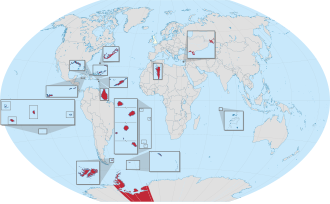
Key Facts
- BOTC stands for British Overseas Territories citizen; it was previously known as British Dependent Territories citizen (BDTC).
- The status does not automatically grant the right of abode (the legal right to live and work) in the United Kingdom.
- Most BOTCs automatically became full British citizens on May 21, 2002, under the British Overseas Territories Act 2002.
- As of 2025, approximately 128,000 individuals hold valid British passports as BOTCs.
- BOTCs are recognized as Commonwealth citizens, though the territories themselves are not members of the Commonwealth.
The Evolution of British Nationality Law
From CUKC to the Multi-Tier System
Before January 1, 1983, individuals connected to the UK and its colonies held a common status known as Citizenship of the United Kingdom and Colonies (CUKC). However, the UK began restricting immigration through the Commonwealth Immigrants Act 1968 and the Immigration Act 1971. The 1971 Act introduced patriality, a concept where only those with strong links to the British Islands (such as birth or parentage) held the right of abode.
This created a practical divide between CUKCs who could live in the UK and those who could not. This divide became official law with the British Nationality Act 1981, which took effect on January 1, 1983. This Act replaced the single tier of citizenship with six distinct categories:
- British citizens
- British Overseas Territories citizens (originally BDTCs)
- British Overseas citizens
- British Nationals (Overseas)
- British subjects
- British protected persons
The Distinction of Gibraltar and the Falkland Islands
Not all inhabitants of the BOTs were treated equally. Residents of Gibraltar and the Falkland Islands were classified as full British citizens rather than solely BOTCs. This distinction was made to recognize those with a more substantial connection to the United Kingdom.
Rights, Privileges, and Restrictions
Right of Abode and Citizenship
Historically, BOTC status did not provide the right to live in the UK. However, the British Overseas Territories Act 2002 changed this for the majority. On May 21, 2002, most BOTCs automatically acquired full British citizenship, granting them the right of abode in the UK.
Certain exceptions remain. Individuals connected solely to the territory of Akrotiri and Dhekelia, or those who obtained BOTC status through naturalization or registration after 2002, may not have automatic British citizenship. These individuals remain subject to standard UK immigration controls.
Consular Protection and Commonwealth Status
Regardless of whether they hold full British citizenship, BOTCs are entitled to consular protection from British diplomatic missions when traveling abroad. Additionally, because the UK is a Commonwealth realm, BOTCs are recognized as Commonwealth citizens, although the 1962 Commonwealth Immigrants Act curtailed the free movement of such citizens into the UK.
| Category | Right of Abode in UK | Consular Protection | Commonwealth Citizen |
|---|---|---|---|
| British Citizen | Yes | Yes | Yes |
| BOTC (without British Citizenship) | No | Yes | Yes |
| British Overseas Citizen | No | Yes | Yes |
Addressing Legal Anomalies and Discrimination
The Campaign for Fairness
Recent efforts have focused on rectifying historical discrimination in how citizenship was passed to children. For years, children born abroad to unmarried BOTC fathers (before July 1, 2006) or BOTC mothers (before January 1, 1983) were denied the right to claim citizenship by descent.
Following a campaign led by advocate Trent Lamont Miller, the UK government announced in March 2021 its intention to amend the British Nationality Act 1981. This legislation aims to provide a retrospective right to register for those who were previously excluded due to the marital status of their parents or the gender of the parent passing on the nationality.
Frequently Asked Questions
Is a BOTC the same as a British citizen?
No. While many BOTCs also hold British citizenship due to the 2002 Act, the statuses are legally distinct. BOTC status alone does not grant the right of abode in the United Kingdom.
Can a BOTC travel on a British passport?
Yes, BOTCs are entitled to British passports that designate their specific status, and they receive consular protection from the UK government while abroad.
Why are Gibraltar and the Falkland Islands different?
Inhabitants of these two territories were granted full British citizenship to reflect their substantial connection to the United Kingdom, unlike other territories where residents were classified as BOTCs.
What happened to the BDTC status?
British Dependent Territories citizenship (BDTC) was the original name for the status created by the 1981 Act. It was renamed British Overseas Territories citizenship (BOTC) in 2002.
Are BOTCs considered Commonwealth citizens?
Yes, all British nationals, including BOTCs, are recognized as Commonwealth citizens because the United Kingdom is a Commonwealth realm.