British Army Other Ranks: Structure, Insignia, and History
In the British Army and Royal Marines, the term Other Ranks (ORs) refers to all personnel serving below the grade of commissioned officer. This broad category encompasses a diverse hierarchy, ranging from the most senior Warrant Officers to the entry-level soldiers. These ranks form the backbone of military operations, providing the essential leadership, technical expertise, and manpower required for service.
The structure of Other Ranks is divided into four primary groups: Warrant Officers, Senior Non-Commissioned Officers (NCOs), Junior NCOs, and ordinary soldiers. Each level is associated with specific responsibilities, NATO rank codes for international standardization, and distinct insignia.
Key Facts
- Other Ranks include everyone from Privates to Warrant Officer Class 1.
- Warrant Officers (WO1 and WO2) are the highest non-commissioned tier.
- NCOs are split into Senior (Staff/Colour Sergeant) and Junior (Sergeant, Corporal, Lance Corporal) categories.
- NATO Codes range from OR-1 (Private) to OR-9 (Warrant Officer Class 1).
- Specialized Titles are used instead of "Private" in various corps, such as "Sapper" in the Royal Engineers.
The Standard Rank Hierarchy
The general rank structure applies to most of the British Army, though specific appointments vary by unit. The progression typically moves from the basic soldier up through the NCO tiers to the Warrant Officer level.
| Rank Group | Rank | Abbreviation | NATO Code | Typical Appointment |
|---|---|---|---|---|
| Warrant Officers | Warrant Officer Class 1 | WO1 | OR-9 | Corps/Command Sergeant Major |
| Warrant Officers | Warrant Officer Class 2 | WO2 | OR-8 | Regimental Sergeant Major |
| Senior NCOs | Staff / Colour Sergeant | SSgt/CSgt | OR-7 | Regimental Quartermaster Sergeant |
| Junior NCOs | Sergeant | Sgt | OR-6 | Squadron/Battery/Company Sergeant Major |
| Junior NCOs | Corporal | Cpl | OR-5 | Section Commander |
| Junior NCOs | Lance Corporal | LCpl | OR-4 | Junior Team Leader |
| Soldiers | Private (or equivalent) | Pte | OR-1 to OR-3 | No command |
While the rank of Private is standard, many units use traditional titles to reflect their specific role or heritage. For example, the Royal Artillery uses Gunner, the Royal Engineers use Sapper, and the Royal Signals use Signaller. Other examples include Trooper in the Special Air Service and Rifleman in The Rifles.
Specialized Rank Variations
Foot Guards
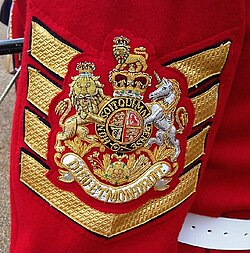
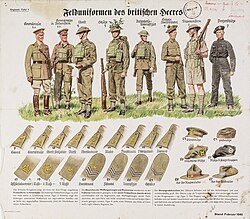
The Foot Guards maintain a distinct structure and set of insignia. While they follow the general hierarchy, their entry-level rank is Guardsman (Gdsm). Notably, Lance Corporals in the Foot Guards are distinguished by wearing a two-bar chevron rather than the standard one-bar chevron.
Appointments in the Foot Guards include the Garrison Sergeant Major London District, a highly prestigious role.
Household Cavalry
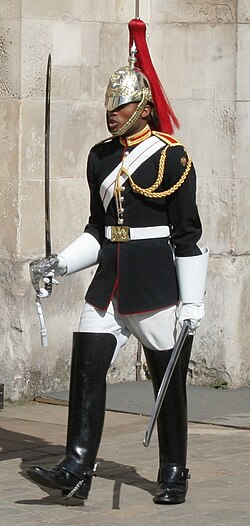
The Household Cavalry utilizes unique terminology and insignia, particularly in full dress. Ranks such as Corporal of Horse (CoH) and Lance Corporal of Horse (LCoH) are used. Their insignia often include shoulder cords and aiguillettes (ornamental braided cords) to denote status.
Historical Evolution of Ranks
The system of Other Ranks has evolved significantly since the 17th century. In the early 1800s, the structure was simpler, consisting primarily of Sergeants, Corporals, and Privates. Over time, more nuanced levels were added to manage larger and more complex military organizations.
Between 1856 and 1881, the system saw the introduction of various "Staff-serjeant" classes and the role of the Conductor of supplies/stores. By 1915, the modern distinction between Warrant Officer Class 1 and Class 2 was firmly established.
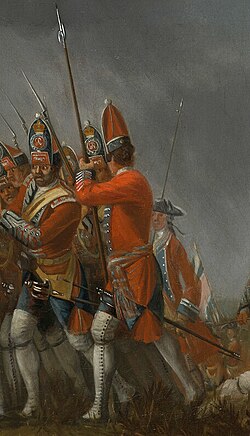
In the mid-19th century, rank insignia became more standardized to allow for quick identification on the battlefield. By the late 1800s, badges of rank were clearly defined across the cavalry, artillery, engineers, and infantry branches.
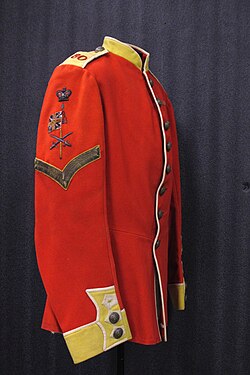
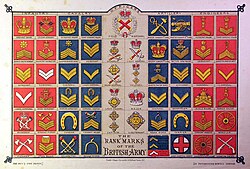
Throughout the 20th century, adjustments continued to align British ranks with international standards, eventually leading to the adoption of the NATO rank codes used today to ensure interoperability with allied forces.
Frequently Asked Questions
What is the difference between a Warrant Officer and an NCO?
Warrant Officers are the highest tier of Other Ranks and hold a warrant rather than a commission. They typically serve in senior advisory or administrative roles, such as the Regimental Sergeant Major, whereas NCOs (Sergeants and Corporals) focus more on direct tactical leadership of smaller units.
Why do some soldiers have titles other than "Private"?
These titles are traditional and reflect the specific function of the corps. For instance, a "Sapper" refers to the engineering roots of the Royal Engineers, while a "Gunner" refers to the artillery role in the Royal Artillery.
What is a NATO rank code?
NATO codes (e.g., OR-1 through OR-9) are a standardized system used by NATO member nations to compare ranks across different militaries, ensuring that a soldier from one country knows the relative authority of a soldier from another.
Do the Foot Guards have different insignia?
Yes, the Foot Guards have specific variations, such as the use of a two-bar chevron for Lance Corporals, which differs from the single bar used in most other infantry regiments.
What was the role of a Sergeant-major historically?
Historically, the Sergeant-major was equivalent to the modern Regimental Sergeant Major (a WO1), serving as the primary link between the commissioned officers and the enlisted soldiers.