Bribery: Legal Definitions, Global Impact, and Prevention Strategies
Bribery is the corrupt solicitation, payment, or acceptance of a private favor—known as a bribe—in exchange for official action. At its core, bribery seeks to influence a person in charge of an official duty to act contrary to their professional obligations and the established rules of honesty and integrity.
It is important to distinguish bribery from legitimate business practices. Gifts or items of value that are available to everyone on an equivalent basis, and not intended for dishonest purposes, do not constitute bribery. For instance, a general rebate or discount offered to all customers is a legal business incentive. However, if that same discount is offered exclusively to a specific official to influence a regulatory decision, it becomes a bribe.A bribe can take many forms beyond cash, including goods, property, privileges, emoluments, or even a simple promise of future advantage. Because of its destructive nature, the United Nations Sustainable Development Goal 16 specifically targets the substantial reduction of all forms of corruption and bribery to ensure global peace, justice, and strong institutions.

Key Facts
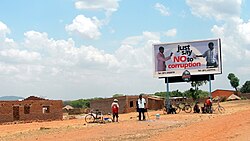
- Active Bribery involves the promising, offering, or giving of an undue advantage to a public official.
- Passive Bribery occurs when a public official requests, receives, or accepts an undue advantage.
- High Returns: Some research suggests bribery can offer an average return of 10 to 11 times the value of the bribe in terms of stock market value increases.
- Global Standards: The ISO 37001 provides an international standard for anti-bribery management systems.
- Legal Consequences: In the U.S., influencing a juror or officer can lead to up to 10 years in prison and/or significant fines.
Forms of Bribery
The international community distinguishes between two primary legal perspectives of bribery to better incriminate and prosecute offenders:
- Active Bribery: Defined by the Council of Europe's Criminal Law Convention on Corruption (ETS 173) as the act of offering or giving an undue advantage to a public official to influence their functions.
- Passive Bribery: Defined as the request or receipt of such an advantage by the public official.
Bribery Across Different Sectors
Government and Taxation
Bribery of government officials undermines the democratic process. Historically, some countries allowed bribes to be tax-deductible. However, in 1996, the OECD Council recommended that member countries stop this practice. This led to the Anti-Bribery Convention, prompting most signatory OECD countries to revise their tax policies to signal that bribery is no longer tolerated in government operations.
Business and Trade
In the corporate world, bribery often manifests as payments to potential clients to secure contracts. A notable example occurred in 2006 when German prosecutors investigated Siemens for paying bribes to win business. Research by academics from Cambridge and Hong Kong Baptist University indicates that bribery is often viewed as a "solid investment," with high returns on the value of the payment made.
Sports Corruption
Bribery in sports often targets referees or judges to guarantee specific outcomes. A prominent example is the 2002 Olympic Winter Games figure skating scandal, where a French judge traded votes with a Russian counterpart to secure advantages for their respective athletes. Additionally, cities may use stadiums, tax benefits, and licensing deals as "bids" to secure athletic franchises or major competitions.
Prevention and Legislation
Legal Frameworks
Different nations have implemented robust laws to combat corruption:
- Foreign Corrupt Practices Act (FCPA): Introduced by the U.S. in 1977, it criminalized the use of rewards or payments to influence foreign officials.
- UK Bribery Act 2010: A more recent and broader piece of legislation that raised the bar for anti-corruption enforcement.
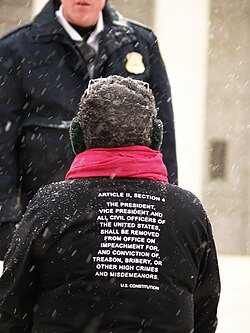
- U.S. Code § 201: Strictly prohibits offering anything of value to a public official (anyone holding a public or elected office).
Corporate Prevention Programs
Businesses are encouraged to implement prevention programs based on international best practices, such as the ISO 26000 norm or TI Business Principles for Countering Bribery. Because companies cannot guarantee that corruption has never occurred, external verification of these programs provides evidence that the organization did everything possible to prevent it.
In the U.S., while there is no single federal statute for private commercial bribery, prosecutors use Honest Services Fraud (Section 1346 of Title 18) to try employees for breaching fiduciary duties. Additionally, the Travel Act (18 USC Section 1952) is used to prosecute bribery that utilizes interstate or foreign commerce.
Notable Instances of Bribery
| Individual/Event | Context | Key Detail |
|---|---|---|
| John William Ashe | UN General Assembly | Charged with receiving bribes from developer Ng Lap Seng. |
| Duke Cunningham | U.S. House of Representatives | Pled guilty to accepting at least $2.4 million in bribes. |
| Tangentopoli | Italian Politics | A massive scandal in the 1990s that collapsed the political party system. |
| Larry Householder | Ohio House Speaker | Accused of taking $60m in bribes for a Firstenergy bailout. |
Frequently Asked Questions
What is the difference between a rebate and a bribe?
A rebate is a discount or refund available to all purchasers on an equivalent basis. A bribe is a payment or favor given specifically to an individual in an official capacity to influence their behavior or decisions.
What is the difference between active and passive bribery?
Active bribery is the act of offering or giving the bribe, while passive bribery is the act of requesting or receiving the bribe.
How does the FCPA differ from the UK Bribery Act?
The FCPA (1977) focused primarily on the bribery of foreign officials by companies. The UK Bribery Act (2010) is considered broader and more robust in its enforcement and scope.
Can businesses be held liable for bribery even if they have a prevention program?
While a company cannot guarantee corruption never occurred, having an externally verified prevention program based on international standards (like ISO 37001) provides evidence that the company took all possible steps to prevent such actions.
What is Honest Services Fraud?
It is a legal theory used by U.S. prosecutors under mail and wire fraud statutes to try individuals for schemes that deprive another of the intangible right to honest services, often used in cases of private commercial bribery.