Brass: Properties, History, and Industrial Applications of the Copper-Zinc Alloy
Brass is a versatile substitutional alloy composed primarily of copper and zinc. In a substitutional alloy, atoms of the two constituent metals replace each other within the same crystal structure. While the proportions can be adjusted to achieve specific mechanical, electrical, acoustic, and chemical properties, the typical composition consists of approximately two-thirds copper and one-third zinc.
Often confused with bronze—which is a copper alloy containing tin instead of zinc—brass is prized for its bright, golden appearance. Because of this aesthetic, it is a staple in decorative hardware like doorknobs and drawer pulls. Beyond its beauty, brass is highly valued in sculpture and tool manufacturing due to its low melting point, high workability, and excellent thermal and electrical conductivity.
Key Facts
- Composition: Primarily copper and zinc; higher copper content results in a softer, more golden metal, while higher zinc content creates a harder, more silvery alloy.
- Physical Properties: Density ranges from 8.4 to 8.73 g/cm with a melting point between 900 and 940 °C.
- Workability: More malleable than bronze or zinc, making it ideal for casting and machining.
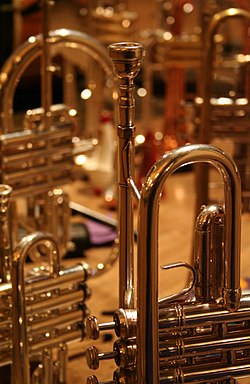
- Versatility: Used in everything from ancient art and musical instruments to modern plumbing and industrial valves.
Material Properties and Classifications
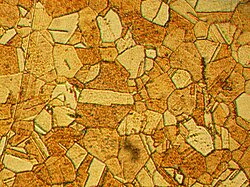
The properties of brass are highly dependent on the ratio of its components. By varying the copper and zinc levels, manufacturers can produce "hard" or "soft" brasses to suit different industrial needs.
Brass Classifications by Weight
Brass is categorized into several classes based on the percentage of zinc present in the alloy:
| Class | Copper (%) | Zinc (%) | Notes |
|---|---|---|---|
| Alpha brasses | > 65 | < 35 | Softer, more golden |
| Alpha-beta brasses | 55–65 | 35–45 | Balanced properties |
| Beta brasses | 50–55 | 45–50 | Harder composition |
| White brass | < 50 | > 50 | Silvery appearance |
| Gamma brasses | 33–39 | 61–67 | Specialized high-zinc alloy |

Industrial Challenges and Regulations
Lead Content and Safety
Lead is sometimes added to brass to improve machinability. However, this has led to significant regulatory scrutiny. In California, the state attorney general sued manufacturers in 1999 after finding that average brass keys exceeded Proposition 65 lead limits by a factor of 19. This resulted in an agreement to reduce lead content in keys to 1.5%.
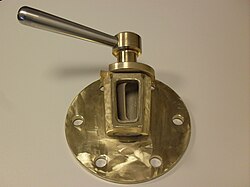
Furthermore, California regulations for plumbing components that contact wetted surfaces became stricter over time. On January 1, 2010, the maximum allowable lead in "lead-free brass" was reduced from 4.0% to 0.25%.
Corrosion and Season Cracking
Brass can be susceptible to season cracking and zinc loss. To combat this in harsh environments, Dezincification Resistant (DZR) brasses are used. For example, C352 brass includes small amounts of arsenic (0.02–0.15%) and lead (1.7–2.8%) to suppress the loss of zinc.
"Red brasses," which contain a high proportion of copper (generally less than 15% zinc), are naturally more resistant to zinc loss. One such variant consists of 85% copper, 5% tin, 5% lead, and 5% zinc.
A History of Brass Production
Ancient Origins
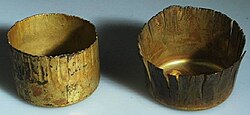
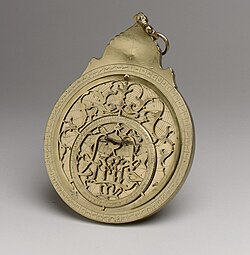
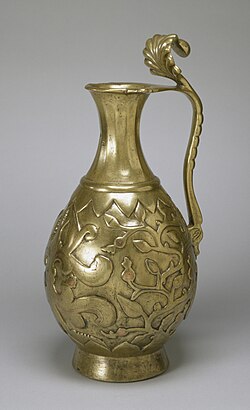
Brass has been used since prehistoric times. Assyrian cuneiform tablets from the 8th–7th century BC mention "copper of the mountains," which likely refers to natural brass. The Greeks called this oreikhalkon, which the Romans adapted to aurichalcum (golden copper). Analysis of 2,600-year-old ingots from a shipwreck off Sicily reveals a composition of 75–80% copper and 15–20% zinc.
Medieval and Renaissance Evolution
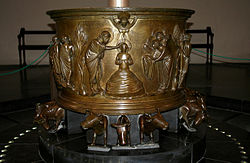
During the Middle Ages, Dinant became a major center for brass making, leading to the French term dinanderie for brass objects. Notable works from this era include the 12th-century baptismal font at St Bartholomew's Church in Liège and various aquamaniles (water vessels) used in both European and Islamic cultures.

By the Renaissance, technical writers like Agricola and Biringuccio documented the cementation process, where copper was heated with calamine (zinc ore). By 1513, metallic zinc ingots from India and China began arriving in London, and by 1550, zinc pellets condensed in furnace flues in Germany were being utilized. In 1723, Nehemiah Champion patented the use of granulated copper, which increased the surface area for reaction and allowed zinc contents to reach 33%.

Global Reach
Brass production was not limited to Europe. In Africa, the "Bronze Head from Ife" (12th century) is actually composed of heavily leaded zinc-brass, demonstrating advanced metallurgical skills in the region.

Frequently Asked Questions
What is the difference between brass and bronze?
The primary difference is the alloying element used with copper. Brass is an alloy of copper and zinc, whereas bronze is an alloy of copper and tin.
Why is brass used for musical instruments?
Brass is favored for instruments due to its acoustic properties, high workability for shaping complex bells and valves, and its durability.
What is "red brass"?
Red brass refers to a family of alloys with a high copper content and typically less than 15% zinc, making them more resistant to corrosion and zinc loss.
Is brass always golden in color?
No. While high-copper brasses are golden, those with a higher zinc content (such as white brass) can appear more silvery.
What is the cementation process?
The cementation process was a historical method of making brass by heating copper with zinc ore (calamine) in a solid-state reaction before the widespread availability of pure metallic zinc.