Bounce Music: The High-Energy Sound of New Orleans
Emerging from the housing projects of New Orleans in the late 1980s and early 1990s, Bounce music (also known as NOLA Bounce) is a high-energy subgenre of hip-hop that blends regional culture with electronic beats. Defined by its infectious rhythms and community-driven energy, Bounce is more than just a musical style; it is a cultural phenomenon that reflects the spirit of Louisiana's unique urban landscape.
Key Facts
- Origin: Developed in New Orleans, Louisiana, and Queens, New York, during the late 1980s to early 1990s.
- Core Sound: Built around the "Triggerman beat," sampled from "Drag Rap" by the Showboys.
- Defining Feature: Heavy use of call-and-response chants and dance call-outs.
- Key Artists: Big Freedia, DJ Jubilee, Magnolia Shorty, and Partners-N-Crime.
- Cultural Impact: Heavily influenced mainstream rap, including the popularization of the term "twerk."
The Anatomy of the Bounce Sound
At its core, Bounce is characterized by a fast, repetitive beat and a call-and-response structure. This style often incorporates party chants and Mardi Gras Indian call-outs, which can be hypersexual or controversial in nature. A hallmark of the genre is the "shouting out" of specific neighborhoods, housing projects, and geographical areas within New Orleans, grounding the music in local identity.
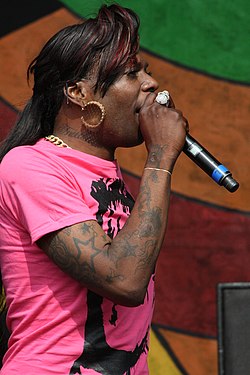
The sonic foundation of the genre is the Triggerman beat. This loop was sampled from "Drag Rap" by the Showboys and "Brown Beats" by Cameron Paul. The original source of the sample was "Rock the Beat" by British rapper Derek B, produced by Simon Harris in 1987. The resulting sound is defined by chromatic tics, the intermittent shouting of "break," the use of whistling, and vocoded vocals.
Technical Instrumentation
To achieve its signature sound, Bounce producers rely on a specific set of tools designed for sampling and rhythmic precision:
- Roland TR-808: The classic drum machine used for heavy bass and percussion.
- Samplers and Turntables: Used to loop the essential Triggerman beat and other vocal snippets.
- Synthesizers and Keyboards: Used to create the melodic elements and electronic textures.
History and Evolution
As hip-hop migrated from the Bronx to the South, New Orleans artists began adapting the genre to fit their local culture. In 1991, Kevin "MC T. Tucker" Ventry helped define the early Bounce sound through his use of chanted refrains and core samples. This paved the way for Take Fo' Records, the first label to specialize in the genre, which launched the careers of artists like Big Freedia, DJ Jubilee, and 5th Ward Weebie.
While Bounce flourished locally, it eventually influenced national powerhouses. In the late 1990s, labels like No Limit Records (led by Master P) and Cash Money Records (led by Birdman and Mannie Fresh) rose to prominence. Although these artists were rooted in Bounce, their connection to the raw local style became less apparent as they achieved global commercial success.
Global Influence and Cultural Reach
Though it remains most popular in the Deep South, Bounce has left a permanent mark on mainstream music. The term twerk first appeared in a bounce track in 1994 with Cheeky Blakk's "Twerk Something." Atlanta's crunk scene, featuring artists like Lil' Jon and the Ying Yang Twins, frequently borrowed Bounce chants and slang.
The genre's influence extends to global superstars. Beyoncé's tracks "Get Me Bodied" and "Formation" draw heavily from Bounce elements. Other artists such as Drake, City Girls, and Mike Jones have also incorporated its rhythmic structures into their work. Furthermore, the genre has a deep intersection with LGBT hip-hop, reflecting New Orleans' long tradition of including gay, trans, and drag performers in its musical fabric.
Media and Academic Recognition
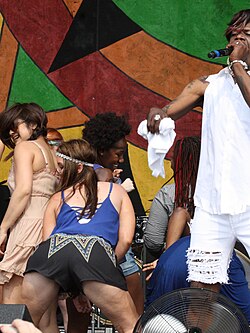
Bounce has transitioned from the streets to the screen and gallery. The HBO series Tremé featured Bounce artists Big Freedia and Sissy Nobby to illustrate the city's post-Katrina recovery. Additionally, the Ogden Museum of Southern Art hosted the exhibition "Where They At," which documented the genre's development. In Houston, the genre saw a resurgence after Hurricane Katrina, evolving into more uptempo versions through artists like C2K Entertainment.
Bounce Music Summary
| Category | Details |
|---|---|
| Stylistic Origins | East Coast hip-hop, electro, jazz |
| Primary Beat | Triggerman beat (sampled from "Drag Rap") |
| Key Regional Scenes | New Orleans, Memphis, Houston |
| Derivative Genres | Crunk, Jersey club, Dirty rap |
| Core Instruments | Roland TR-808, Sampler, Synthesizer |
Frequently Asked Questions
What is the "Triggerman beat"?
The Triggerman beat is the foundational rhythmic loop used in almost all Bounce music. It was sampled from the song "Drag Rap" by the Showboys, which itself was based on a production by Simon Harris for British rapper Derek B.
Who are some of the most influential Bounce artists?
Key figures include pioneers like DJ Jubilee and Magnolia Shorty, as well as modern ambassadors like Big Freedia, who has helped bring the genre to a wider international audience.
How did Bounce music influence mainstream pop and rap?
Bounce introduced the world to "twerking" and influenced the rhythmic structure of Southern rap subgenres like crunk. Mainstream artists like Beyoncé and Drake have used Bounce elements in their hit songs.
What is the connection between Bounce and the LGBT community?
New Orleans has a long history of integrating gay, trans, and drag performers into its music. This has resulted in a significant overlap between Bounce and LGBT hip-hop, with artists like Big Freedia becoming central figures in the scene.
Where can Bounce music be heard outside of New Orleans?
While New Orleans is the "Bounce capital," the genre has strong footprints in Memphis (via DJ Paul and Three 6 Mafia) and Houston, where it saw a resurgence following the displacement of residents after Hurricane Katrina.