Botanical Nomenclature: How Scientists Name the Plant World
Have you ever wondered why a single plant might have dozens of different names depending on where you are in the world? While a gardener might call a plant a "lawn daisy," a scientist uses a precise, formal system to ensure there is no confusion. This system, known as botanical nomenclature, provides a universal language for researchers, horticulturists, and enthusiasts across the globe.
Botanical names are governed by strict rules set by the International Code of Nomenclature for algae, fungi, and plants (ICN). This code ensures that every organism—ranging from algae and fungi to mosses and flowering plants—has a single, accepted name. For plants grown in gardens, a separate set of rules called the International Code of Nomenclature for Cultivated Plants (ICNCP) manages the names of specific varieties or "cultivars."
Key Facts
- Universal Standard: The ICN provides a single, globally accepted name for specific plant groups.
- The Type Specimen: Every botanical name is anchored to a specific physical specimen known as a "type."
- Binary Names: Most plants below the genus rank use a two-part name (e.g., Genus species).
- Cultivars: Names for cultivated plants often include an extra component, such as a cultivar epithet, which is written in single quotation marks.
- Scope: Nomenclature covers algae, fungi, plants, slime moulds, and even certain photosynthetic protists.
The Foundation of Naming: Types and Circumscription
To prevent confusion, a botanical name is not just an arbitrary label; it is fixed by a type. A type is a specific specimen (or group of specimens) that serves as the permanent reference point for that name. It acts as an anchor, centralizing the defining characteristics of that particular taxon (a biological group).
However, naming can sometimes be complex due to circumscription. This refers to the boundaries or size of a taxonomic group. Because different taxonomic systems exist, one scientist might define a group (like the family Malvaceae) broadly, while another might define it narrowly. This means the exact scope of a botanical name can vary depending on the scientific approach being used.
The Structure of Plant Names
The complexity of a plant's name depends on its taxonomic rank. Names can consist of one, two, three, or even four parts.
One-Part Names
At the highest levels of classification, such as Kingdom, Class, or Genus, the name consists of only one part. Examples include Plantae (the plant kingdom) or Betula (the birch genus).
Two-Part (Binary) Names
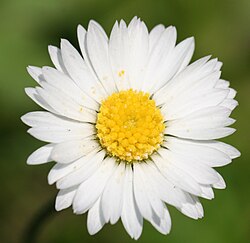
The most common format for species is the binary name. This consists of a genus name followed by a specific epithet. For example, in Bellis perennis, Bellis is the genus and perennis is the specific epithet. This two-part system is used for all taxa from the genus level down to the species level.
Three-Part (Infraspecific) Names
When scientists need to describe groups below the rank of species, they use three parts. These names require a "connecting term" to indicate the rank, such as subsp. (subspecies) or var. (variety). For instance, Calystegia sepium subsp. americana uses three parts to denote a specific subspecies.
Four-Part Names and Cultivars
In horticulture, names can reach four parts when a botanical variety is combined with a cultivar (a plant selected for specific traits). An example is Scilla hispanica var. campanulata 'Rose Queen'. Unlike botanical names, cultivar names are often not in Latin and are never italicized; they are always enclosed in single quotation marks.
Summary of Naming Structures
| Number of Parts | Common Usage | Example |
|---|---|---|
| One Part | Genus or above | Fagaceae |
| Two Parts | Species (Binary name) | Berberis thunbergii |
| Three Parts | Subspecies or Variety | Calystegia sepium subsp. americana |
| Four Parts | Cultivar within a variety | Scilla hispanica var. campanulata 'Rose Queen' |
Frequently Asked Questions
Why are botanical names usually italicized?
While the ICN does not strictly mandate typography, it is a standard scientific tradition to italicize generic, specific, and infraspecific botanical names to distinguish them from surrounding text.
What is the difference between a species and a cultivar?
A species is a natural biological group defined by scientific nomenclature, whereas a cultivar is a plant that has been selected or bred by humans for specific horticultural characteristics.
What is a "connecting term" in plant naming?
A connecting term is an abbreviation like "subsp." or "subg." used to indicate the taxonomic rank below a genus or species. It is not considered part of the formal name itself.
Can a botanical name have more than three parts?
A formal botanical name cannot have more than three parts. If you see a long string of names (e.g., Saxifraga aizoon var. aizoon subvar. brevifolia), you are looking at a full classification hierarchy rather than a single formal botanical name.
Does the same rule apply to fungi and algae?
Yes, the ICN covers all organisms traditionally treated as algae, fungi, or plants, including blue-green algae (Cyanobacteria) and slime moulds.