Botanical Names: The Science of Plant Nomenclature
In the diverse world of botany, a single plant can be known by dozens of different names depending on the region, language, or local tradition. To eliminate this confusion, scientists use a botanical name—a formal scientific identifier that ensures a specific plant or group is recognized globally. This system is governed by strict international standards to maintain accuracy and consistency across the scientific community.
The primary authority for these names is the International Code of Nomenclature for algae, fungi, and plants (ICN). This code covers a vast array of organisms, including algae, fungi, blue-green algae (Cyanobacteria), slime moulds, and photosynthetic protists. For plants that have been bred by humans, known as cultigens, the International Code of Nomenclature for Cultivated Plants (ICNCP) provides additional rules for cultivar or Group epithets.
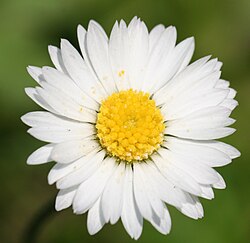
Consider the common daisy. While it is known as the lawn daisy or English daisy in various English-speaking regions, its formal botanical name is Bellis perennis. This single name allows a researcher in Europe and a gardener in Asia to know they are discussing the exact same species.
Key Facts
- Global Standardization: Botanical names provide a single, accepted name for plants worldwide to avoid the ambiguity of common names.
- Governing Bodies: The ICN manages wild species, while the ICNCP manages cultivated plants.
- The Type System: Every scientific name is anchored to a type, which is a specific physical specimen that defines the taxon's features.
- Binary Structure: Most species names are binary, consisting of a genus name and a specific epithet.
- Cultivar Rules: Cultivated plant names can have up to four parts and often include non-Latin terms in single quotation marks.
Type Specimens and Circumscription
A botanical name is not arbitrary; it is fixed by a type. A type is a particular specimen (or group of specimens) of an organism to which the scientific name is formally attached. It serves as the central reference point for the defining characteristics of that particular taxon (a taxonomic group).
However, the scope of these names can shift. This is known as circumscription—the boundaries of what is included within a taxonomic group. Because different taxonomic systems may define these boundaries differently, the size of a group can vary. For example, the family Malvaceae has been expanded in modern systems to include several families that were previously considered separate. While some groups like Magnoliaceae are stable, others, such as Fabaceae or Taraxacum officinale, require careful checking to determine which circumscription is being applied.
The Structure and Forms of Plant Names
Botanical names vary in length depending on their taxonomic rank. While most scientific names are italicized, this is often an editorial choice rather than a strict requirement of the ICN, though it is standard in peer-reviewed journals.
One-Part Names
Names consisting of a single word typically refer to ranks at or above the genus level. Examples include Plantae (plants), Fagaceae (the beech family), and Betula (the birch genus).
Two-Part (Binary) Names
The ICN prescribes a binary name for any taxon from the rank of species down to the genus. This consists of the genus name followed by an epithet. For a species, this is a specific epithet (e.g., Bellis perennis). For subdivisions of a genus, a connecting term is used to indicate rank, such as Paraserianthes sect. Falcataria, where "sect." stands for section.
Three and Four-Part Names
Names for taxa below the species rank (infraspecific names) require a connecting term. For example, Calystegia sepium subsp. americana uses "subsp." for subspecies. Cultivated plants can extend this further; a cultivar within a botanical variety, such as Scilla hispanica var. campanulata 'Rose Queen', can result in a name with four parts.
| Number of Parts | Typical Rank/Type | Example |
|---|---|---|
| One | Genus or above | Betula |
| Two | Species (Binary) | Bellis perennis |
| Three | Infraspecific / Cultivar | Bellis perennis 'Aucubifolia' |
| Four | Cultivar within a variety | Scilla hispanica var. campanulata 'Rose Queen' |
Cultivated Plant Nomenclature
Naming for cultivated plants differs slightly from wild species. Cultivars may use "unambiguous common names" instead of Latin. A cultivar, Group, or grex epithet is often a non-Latin term and is not italicized. For cultivars, the name is always enclosed in single quotation marks.
These names may follow the full botanical species name, the genus alone, or a common name. For instance, the snowdrop 'John Gray' uses a common name for the genus Galanthus combined with a cultivar epithet.
Frequently Asked Questions
What is the difference between the ICN and the ICNCP?
The ICN (International Code of Nomenclature for algae, fungi, and plants) governs the naming of wild organisms, while the ICNCP (International Code of Nomenclature for Cultivated Plants) provides the rules for plants bred or selected by humans, such as cultivars.
Why are some plant names italicized and others not?
Generally, generic, specific, and infraspecific names are italicized. However, cultivar epithets (the names in single quotes) are not. While the ICN suggests italicizing all botanical names, many scientific publications only italicize names at the rank of genus and below.
What is a "connecting term" in botany?
A connecting term is an abbreviation used to indicate the taxonomic rank of a name below the species level. Examples include "subsp." for subspecies and "var." for variety. These terms are not considered part of the formal name itself.
Can a botanical name have more than three parts?
Only cultivated plants can have names with more than three parts (up to four). For wild plants, a formal botanical name never exceeds three parts. Longer strings of names are considered classifications rather than formal botanical names.
What does "circumscription" mean in plant taxonomy?
Circumscription refers to the defined boundaries of a taxonomic group. Because different scientists may include or exclude certain species from a group, the circumscription of a name can change over time or vary between different taxonomic systems.