Botanical Form: Understanding Infraspecific Taxonomic Ranks
In the complex world of biological classification, scientists use a hierarchical system to organize the vast diversity of life. Within the field of botany, researchers often encounter variations within a single species that do not quite warrant a separate species designation. One of the specific terms used to describe these minor variations is the form (Latin: forma).
A form is considered an infraspecific taxon, meaning it is a taxonomic group that exists below the level of species. While species represent the fundamental unit of classification, forms allow botanists to categorize plants that exhibit noticeable morphological deviations—physical differences in appearance—without implying a major evolutionary split.
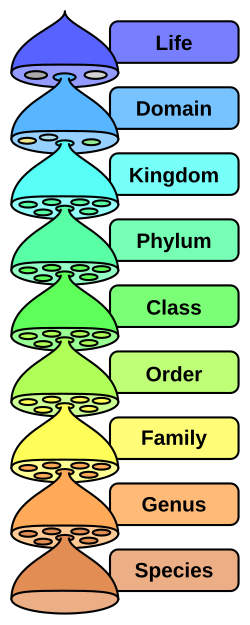
The Hierarchy of Botanical Classification
To understand where a form fits, one must look at the descending order of botanical ranks. In the hierarchy of classification, a form is a "secondary" rank. It sits below the rank of variety, which itself is positioned below subspecies and species.
When describing a taxon, scientists may list several ranks to provide a full classification. However, the formal name of the taxon itself is typically composed of only three parts, known as trinomial nomenclature: the genus name, the specific epithet, and the infraspecific epithet.
Naming Conventions and Notation
Properly writing a botanical name requires specific adherence to rules set by international codes of nomenclature. To indicate that a plant belongs to a specific form, the abbreviation "f." or the full Latin word "forma" is placed before the infraspecific epithet. Notably, neither the abbreviation nor the full word is italicized when used as a connecting term.
For example, the following are valid ways to denote a form:
- Acanthocalycium spiniflorum f. klimpelianum
- Acanthocalycium spiniflorum forma klimpelianum (Weidlich & Werderm.) Donald
In more complex classifications involving multiple ranks, such as a variety, the final name is distilled to its essential components. For instance, while a plant might be classified as Crataegus aestivalis (Walter) Torr. & A.Gray var. cerasoides Sarg. f. luculenta Sarg., its formal name is simply Crataegus aestivalis (Walter) Torr. & A.Gray f. luculenta Sarg.

Characteristics of a Botanical Form
A form is generally designated to group individuals that show a distinct physical difference. It is important to note that individuals within a form are not necessarily closely related in an evolutionary sense; they may not form a clade (a group consisting of a common ancestor and all its descendants).
Common examples of forms include:
- Color variations: White-flowered plants within a species that usually has colored flowers might be grouped as "f. alba."
- Reproductive variations: Formae apomicticae are sometimes named for plants that reproduce asexually through apomixis (the production of seeds without fertilization).
Because minor genetic differences could theoretically create an infinite number of forms, botanists typically only assign formal names to those that hold particular significance.
Key Facts
- Rank: A form is an infraspecific taxon, ranking below variety, subspecies, and species.
- Notation: Use "f." or "forma" before the epithet; do not italicize these terms.
- Purpose: Used to denote noticeable morphological (physical) deviations.
- Relationship: Members of a form do not necessarily belong to the same evolutionary clade.
- Naming: A formal taxon name consists of three parts: genus, specific epithet, and infraspecific epithet.
| Rank Level | Classification Type | Relationship to Species |
|---|---|---|
| Species | Primary Unit | The base level of classification |
| Subspecies | Infraspecific | Below species |
| Variety | Infraspecific | Below subspecies |
| Form (forma) | Infraspecific | Below variety |
Frequently Asked Questions
Is a "form" the same as a "cultivar"?
No. While a form describes a natural morphological deviation in the wild, a cultivar is a name generally used when plants are selectively propagated for the horticulture trade.
How is a form different from a variety?
In the botanical hierarchy, a form is a lower rank than a variety. A variety is a more significant taxonomic grouping than a form.
Do all plants in a form share a common ancestor?
Not necessarily. Taxonomic practice allows for the grouping of individuals based on physical traits, even if they do not form a single evolutionary clade.
What does "f. alba" mean in a scientific name?
The "f." stands for forma, and "alba" is the epithet. This typically indicates a white-colored variation of that specific plant species.
What is a forma specialis?
A forma specialis is an informal botanical grouping used to describe a parasitic form that has adapted to a specific host.