Bossa Nova: The Sophisticated Evolution of Brazilian Samba
Emerging from the vibrant coastal culture of Rio de Janeiro in the late 1950s, Bossa Nova is a relaxed, stylized form of samba that transformed the landscape of Brazilian music. Characterized by its calm, syncopated rhythms and sophisticated harmonies, the genre represents a bridge between traditional Brazilian sounds and modern global influences.
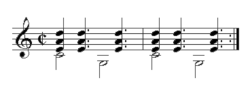
At its core, Bossa Nova is a simplification of the complex percussion found in samba school bands, translated onto the guitar through fingerstyle playing. While often associated with jazz due to its use of unconventional chords and complex progressions, these harmonic structures were actually present in Brazilian samba guitar playing as early as the 1920s, suggesting a parallel evolution of styles.
![Bossa nova rhythm[8]](/images/44/9f/449f5e1edfd5c24873a630516b8105df0f789ee19e2a494a3229bd7298530e00.png)
Key Facts
- Origin: Developed in the South Zone of Rio de Janeiro, Brazil, during the late 1950s.
- Meaning: The term translates literally to "new trend" or "new wave."
- Core Elements: Syncopated guitar rhythms, complex harmonies, and soft vocal delivery.
- Pioneers: Key figures include João Gilberto, Antônio Carlos "Tom" Jobim, and Vinicius de Moraes.
- Global Impact: Influenced American jazz, rock (The Doors), and modern pop artists like Billie Eilish and Laufey.
Etymology and Cultural Roots
In Brazil, the word bossa was historically slang for a particular charm, innate ability, or natural flair. By the late 1950s, within the artistic beach culture of Rio, it referred to any fashionable new trend. Author Ruy Castro notes that musicians used the term to describe a person's idiosyncratic knack for singing or playing.
The specific phrase bossa nova is attributed to journalist Moyses Fuks, who used it to promote a 1957 concert by the Grupo Universitário Hebraico do Brasil, featuring artists such as Sylvia Telles, Carlos Lyra, and Nara Leão.
The History and Rise of the Movement
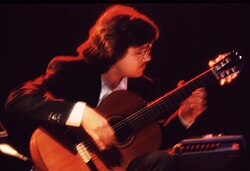
The genre's birth is often linked to the 1959 album Canção do Amor Demais, where singer Elizeth Cardoso recorded compositions by Tom Jobim and Vinicius de Moraes. This recording featured the guitar work of João Gilberto, who innovated the rhythm by accentuating weak beats to synthesize the samba groove on a single instrument.
Gilberto's 1959 solo album, featuring tracks like "Chega de Saudade" and "Desafinado," consolidated the style. His understated singing style, inspired by Dorival Caymmi, combined with Jobim's harmonies and Moraes' lyrics, resonated deeply with musicians seeking a new approach to samba.
International Expansion
Bossa Nova gained global prominence in the early 1960s. A pivotal moment occurred on November 21, 1962, when the style was presented at Carnegie Hall. In 1964, the Grammy Award-winning album Getz/Gilberto, a collaboration between Stan Getz, João Gilberto, and Tom Jobim, brought the sound to a massive American audience.
The influence extended to various genres: Jorge Ben's "Mas que nada" (1963) became a bossa rock hit via Sérgio Mendes & Brazil 66, and Frank Sinatra collaborated with Tom Jobim in 1967. Even the American rock band The Doors drew inspiration from Brazilian sounds for the drum beat in "Break On Through (To the Other Side)."

Musical Structure and Characteristics
Bossa Nova is defined by its instrumentation and thematic focus. The classical guitar is the primary instrument, used to mimic the percussion of a full samba band. The vocals are typically soft and intimate, avoiding the dramatic belting common in earlier samba-canção.
Themes and Lyrics
Lyrically, Bossa Nova focused on themes of love, longing, nature, and the easy life of the middle and upper-class residents of Rio. Because it was largely apolitical, it was eventually eclipsed in the mid-1960s by Música popular brasileira (MPB), which emerged following the 1964 military coup and featured more politically charged lyrics focused on working-class struggles.
The Bossa Nova Dance
Though primarily a listening genre, a corresponding dance fad existed from the late 1950s to the mid-sixties. The dance featured "soft" knees, sideways sways, and hip motions, and could be performed solo or in pairs.
Global Legacy and Modern Influence
Japan has become one of the most significant hubs for Bossa Nova outside Brazil. Introduced in the 1960s and boosted by Sadao Watanabe's 1967 album Jazz & Bossa, the genre became a staple of Japanese café culture starting in the 1990s.
In the 21st century, the influence persists in contemporary pop. Artists such as Billie Eilish ("Billie Bossa Nova"), Laufey ("From the Start"), SZA, and Olivia Dean have integrated bossa nova rhythms into their modern productions.
| Category | Details |
|---|---|
| Stylistic Origins | Samba, Jazz, Choro, Classical |
| Key Instruments | Classical Guitar, Drums, Percussion |
| Derivative Forms | Samba-jazz, Sambalanço, Sambass |
| Primary Themes | Love, Longing, Nature, Urban Life |
| Defining Album | Chega de Saudade (1959) |
Frequently Asked Questions
Is Bossa Nova just a type of jazz?
No. While Bossa Nova shares harmonic complexities with jazz and was influenced by it, its rhythmic foundation is rooted in Brazilian samba. Many of its complex chord structures existed in samba guitar playing since the 1920s, representing a parallel evolution rather than a direct copy of jazz.
Who are the most important figures in Bossa Nova?
The movement was led by the "trinity" of João Gilberto (who innovated the guitar beat and singing style), Antônio Carlos "Tom" Jobim (the primary composer), and Vinicius de Moraes (the lyricist).
What is the difference between Bossa Nova and MPB?
Bossa Nova is characterized by its relaxed, often apolitical themes of love and nature. Música popular brasileira (MPB) emerged later in the 1960s and is generally more politically charged, focusing on social struggles and the working class.
Why is Bossa Nova so popular in Japan?
It gained traction in the 1960s alongside jazz and saw a massive boom after Sadao Watanabe's 1967 recordings. Its popularity was further cemented by the 1990s café culture, where it became the preferred background music for urban coffee shops.
What does the term "Bossa Nova" actually mean?
Literally translated from Portuguese, it means "new trend" or "new wave." The word bossa originally referred to a natural flair or a special way of doing something.