Book of Shadows: The History and Evolution of the Wiccan Grimoire
In the world of modern witchcraft, few objects are as iconic as the Book of Shadows. Described as a personal grimoire—a textbook of magic—this book serves as a repository for spells, rituals, and spiritual wisdom. While often presented as an ancient tradition, the history of the Book of Shadows is a fascinating study of 20th-century occultism, synthesis, and literary evolution.
The Origins of the Book of Shadows
The concept was first introduced to the public in the 1950s by Gerald Gardner, often regarded as the "father of Wicca." Through his Bricket Wood coven, Gardner presented the Book of Shadows as a personal "cookbook" of successful spells. He claimed that the practice of maintaining such a record was an ancient tradition used by the historical Witch-cult. To protect the identity of practitioners, Gardner asserted that these books were traditionally burned upon the owner's death to prevent discovery.
However, historical evidence suggests a more contemporary origin. In Gardner's 1949 novel, High Magic's Aid, there is no mention of a Book of Shadows. High Priestess Doreen Valiente later suggested that Gardner had not yet conceived of the idea while writing the novel.
Valiente theorized that Gardner adopted the name from a 1949 issue of The Occult Observer. In that edition, an advertisement for Gardner's novel appeared opposite an article by palmist Mir Bashir titled "The Book of Shadows," which discussed an ancient Sanskrit divination manual based on the length of a person's shadow. Valiente believed Gardner borrowed this evocative title for his own magical manuscript.
Further evidence emerged after Gardner's death when Aidan Kelly discovered a leather-bound manuscript in Gardner's papers titled Ye Bok of Ye Art Magical. This document, later acquired by the Wiccan Church of Canada, appears to be a first draft of the Book of Shadows. It contained rituals from the Ordo Templi Orientis (OTO), devised by the occultist Aleister Crowley, whose rituals Gardner had gained legal access to in 1946.
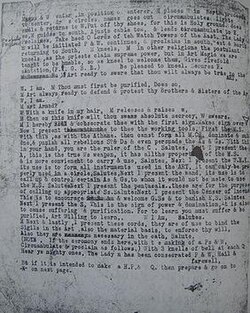
This timeline suggests that Gardner may have invented the concept of the Witches' Grimoire between 1946 and 1949, initially calling it Ye Bok of Ye Art Magical before renaming it the Book of Shadows for his coven.
The Influence of Doreen Valiente
When Doreen Valiente joined the Bricket Wood coven in 1953 and eventually became High Priestess, she began to question the authenticity of the book's contents. While Gardner claimed the texts were ancient, Valiente discovered that much of the material was borrowed from diverse sources, including:
- The works of Aleister Crowley
- Aradia, or the Gospel of the Witches
- The Key of Solomon
- Freemasonry rituals
When confronted, Gardner admitted the original texts he received from a New Forest coven were fragmentary and that he had filled the gaps using various sources. He challenged Valiente to improve the text if she felt she could. Valiente accepted, aiming to remove the "Crowleyanity"—the heavy influence of Aleister Crowley—to create a voice that felt more authentic to witchcraft.
Valiente's contributions were significant. She dramatically rewrote the Charge of the Goddess, composed several poems such as The Witches Rune, and helped integrate the Wiccan Rede into verse. She retained elements from Aradia, which she believed represented genuine witchcraft practice.
Valiente also identified a surprising literary influence: a ritual chant in the book was a direct lift of the final stanza of "A Tree Song" from Rudyard Kipling's Puck of Pook's Hill. This blend of occultism, folklore, and literature formed the basis of the traditional text used in Gardnerian Wicca today.
Key Facts
- Founder: Gerald Gardner introduced the Book of Shadows in the 1950s.
- Original Title: An early draft was titled Ye Bok of Ye Art Magical.
- Naming Source: Likely derived from a 1949 article in The Occult Observer by Mir Bashir.
- Key Contributor: Doreen Valiente rewrote much of the text to remove Aleister Crowley's influence.
- Diverse Sources: The text incorporates elements from Freemasonry, the Key of Solomon, and Rudyard Kipling.
- Purpose: Originally described as a personal "cookbook" of spells and rituals.
| Phase | Key Figure | Primary Characteristics | Influences |
|---|---|---|---|
| Early Draft | Gerald Gardner | Titled Ye Bok of Ye Art Magical | Ordo Templi Orientis (Crowley) |
| Formalization | Gerald Gardner | Renamed "Book of Shadows" | The Occult Observer |
| Refinement | Doreen Valiente | Removal of Crowley; addition of poetry | Aradia, Rudyard Kipling |
Frequently Asked Questions
Who originally created the Book of Shadows?
Gerald Gardner is credited with introducing the Book of Shadows in the 1950s, though evidence suggests he synthesized it from various existing occult and literary sources rather than discovering an ancient text.
What was the original name of the Book of Shadows?
A leather-bound manuscript found among Gardner's papers indicates that an early version was titled Ye Bok of Ye Art Magical.
How did Doreen Valiente change the book?
Valiente rewrote large portions of the text to reduce the influence of Aleister Crowley, wrote the Witches Rune, and significantly revised the Charge of the Goddess to make the language more fitting for Wicca.
Is the Book of Shadows based on ancient witchcraft?
While Gardner claimed it was an ancient tradition, historical analysis shows it was composed of fragments from various sources, including the Key of Solomon, Freemasonry, and even the poetry of Rudyard Kipling.
Why was the book traditionally burned after death?
According to Gardner, the tradition of burning the book upon the owner's death was a security measure to ensure that the person's practice of witchcraft remained a secret.