Bonnie Watson Coleman: A Trailblazing Career in New Jersey Politics
Bonnie Watson Coleman is a historic figure in American politics, serving as the U.S. representative for New Jersey's 12th congressional district since 2015. A dedicated member of the Democratic Party, she holds the distinction of being the first African-American woman to represent the state of New Jersey in the U.S. House of Representatives.
From her early roots in Camden to her leadership roles in state and federal government, Watson Coleman has spent decades advocating for civil rights, women's health, and socioeconomic equality. Her career is marked by a steady ascent through the ranks of New Jersey's legislative and party structures, culminating in her influential tenure in Congress.
Key Facts
- Historic First: First African-American woman elected to represent New Jersey in the U.S. House of Representatives.
- Congressional Tenure: Representing the 12th district since January 3, 2015.
- State Leadership: Former Majority Leader of the New Jersey General Assembly (2006–2010) and former Chair of the New Jersey Democratic Party (2002–2006).
- Legislative Focus: Co-founder of the Congressional Caucus on Black Women and Girls and sponsor of the CROWN Act.
- Retirement: Announced on November 10, 2025, that she will not seek reelection in 2026.
Early Life and Professional Foundations
Born on February 6, 1945, in Camden, New Jersey, Bonnie Marie Watson graduated from Ewing High School in 1963. She pursued higher education at Rutgers University–Camden before earning her Bachelor of Arts from Thomas Edison State College in 1985.
Before entering elected office, Watson Coleman dedicated over 28 years to the New Jersey state government. Her career began in the late 1960s as a field representative for the New Jersey State Division on Civil Rights. She later became the first director of the Office of Civil Rights, Contract Compliance and Affirmative Action within the New Jersey Department of Transportation, serving from 1974 to 1980. She further expanded her administrative experience as an assistant commissioner in the Department of Community Affairs, overseeing divisions related to women, community resources, the public guardian, and aging.
Beyond her government roles, she served on several boards, including the Governing Boards Association of State Colleges and the board of trustees for The Richard Stockton College of New Jersey.
Rise in New Jersey State Politics
Watson Coleman entered the New Jersey General Assembly in 1998, representing the 15th legislative district. This district, which includes Trenton and portions of Mercer and Hunterdon counties, was the same one her father had previously represented. Alongside Reed Gusciora, she won the election and served until 2015.
During her time in the Assembly, she rose to significant leadership positions. On February 4, 2002, she became the first African-American woman to lead the state party as Chair of the New Jersey Democratic State Committee, a role she held until 2006. Subsequently, she served as the Assembly Majority Leader from 2006 to 2010.
Tenure in the U.S. House of Representatives
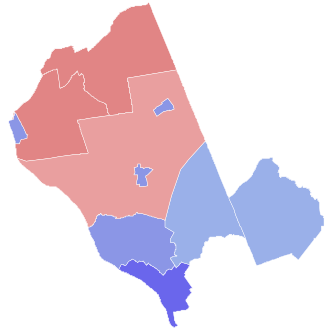
In 2014, Watson Coleman sought the seat for New Jersey's 12th congressional district following the retirement of Representative Rush Holt. After winning a competitive Democratic primary with 43% of the vote, she defeated Republican Alieta Eck in the general election with 60.9% of the vote.
Throughout her tenure, Watson Coleman has been a vocal advocate for progressive causes. She is a member of the Congressional Black Caucus and the Congressional Progressive Caucus. In 2016, she co-founded the Congressional Caucus on Black Women and Girls to address specific socioeconomic challenges facing Black women and girls. She also co-founded the America 250 Caucus to plan for the United States' semiquincentennial (250th anniversary) in 2026.
Legislative Achievements and Activism
Watson Coleman has introduced and sponsored several key pieces of legislation:
- The CROWN Act: Legislation designed to prohibit discrimination based on hair texture and hairstyles.
- Homeland Security Drone Assessment and Analysis Act: A bill focused on researching and mitigating risks associated with drones.
- Healthy MOM Act: A proposal to allow women to adjust health coverage upon becoming pregnant.
- Stop Online Ammunition Sales Act: A bill requiring ID confirmation for internet ammunition purchases.
Her activism extends beyond the House floor. In 2022, she was arrested during an abortion rights rally outside the Supreme Court. She has also co-sponsored ceasefire resolutions regarding the Gaza war and condemned offensive operations in Nagorno-Karabakh.
Electoral History and Personal Life
Watson Coleman maintained strong support in the 12th district across multiple election cycles, consistently winning reelection with margins often exceeding 60% of the vote. Despite various challenges in both primary and general elections, she remained a dominant force in her district until her decision to retire in 2025.
| Year | Democratic Vote % | Republican Vote % | Outcome |
|---|---|---|---|
| 2014 | 60.9% | 36.5% | Won |
| 2016 | 62.9% | 32.0% | Won |
| 2018 | 68.7% | 31.3% | Won |
| 2020 | 65.6% | 32.6% | Won |
| 2022 | 63.1% | 35.9% | Won |
| 2024 | 61.2% | 36.4% | Won |
On a personal note, Watson Coleman resides in Ewing Township and is a member of the Baptist church. She married William Coleman in 1995. Over the years, she has faced several health challenges, including surgery to remove a cancerous tumor in 2018, a positive COVID-19 diagnosis in 2021, and back surgery for lumbar spinal stenosis in 2024.
Frequently Asked Questions
Why is Bonnie Watson Coleman historically significant?
She is the first African-American woman to be elected to represent a New Jersey district in the U.S. House of Representatives.
What is the CROWN Act?
The CROWN Act is legislation introduced by Watson Coleman to prohibit discrimination based on hair texture and hairstyles, specifically targeting biases against Black hairstyles.
When will Bonnie Watson Coleman leave office?
She announced in November 2025 that she will not seek reelection in 2026, meaning her term will end at the conclusion of 2026.
Which caucuses does she lead or co-found?
She co-founded the Congressional Caucus on Black Women and Girls in 2016 and the America 250 Caucus to commemorate the U.S. semiquincentennial.
What was her role in the New Jersey state government before Congress?
She served as the Majority Leader of the New Jersey General Assembly (2006–2010) and as the Chair of the New Jersey Democratic State Committee (2002–2006).