Bohemond VI of Antioch: The Prince Between Mongols and Mamluks
Bohemond VI, known as "the Fair," occupied one of the most precarious positions in the 13th-century Levant. As the Prince of Antioch and Count of Tripoli from 1251 until 1275, his reign was defined by a desperate geopolitical balancing act. Caught between the expanding Mongol Empire from the east and the rising Mamluk Sultanate from the south, Bohemond VI sought survival through strategic alliances that often put him at odds with his own faith and peers.
His rule was a period of dramatic shifts, moving from the height of territorial expansion under Mongol protection to the devastating loss of his ancestral lands to the Mamluks.
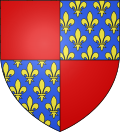
Key Facts
- Titles: Prince of Antioch (1251–1268) and Count of Tripoli (1251–1275).
- Dynasty: House of Poitiers.
- Primary Alliance: Allied with the Mongol Empire and Cilician Armenia against the Mamluks.
- Major Loss: The fall of Antioch to Sultan Baibars in 1268.
- Family: Married Sibylla of Armenia; succeeded by his son, Bohemond VII.
Early Life and Accession
Born around 1237, Bohemond VI was the son of Bohemond V of Antioch and Lucienne of Segni. Following his father's death in January 1252, the 15-year-old Bohemond succeeded to his titles. Initially, his mother served as regent, but her decision to govern from Tripoli and delegate authority to relatives made her unpopular.
With the support of King Louis IX of France, who was then on Crusade, Bohemond VI obtained permission from Pope Innocent IV to assume power early. After being knighted by King Louis in Acre, he took full control of the principality. To stabilize the region, King Louis facilitated a truce with Cilician Armenia, leading to Bohemond's marriage to Sibylla, daughter of King Hetoum I of Armenia, in 1254. This union ended a long-standing power struggle between the two Christian states.
Internal Strife: The War of Saint Sabas
Bohemond's reign was not without internal conflict. He became entangled in the War of Saint Sabas, a brutal conflict between the maritime republics of Genoa and Venice that devastated the Holy Land. As the overlord of the Genoese Embriaco family, Bohemond attempted to push the Genoese toward an alliance with the Venetians.
This move triggered a rebellion by the Embriaco lords of Gibelet (modern Byblos) in 1258, sparking a civil war that persisted for decades. Although Bohemond managed to eliminate the revolt's leader, Bertrand Embriaco, through a targeted assassination by serfs, the bitterness remained, eventually leading to the Embriacos being driven out by Muslim forces during the reign of Bohemond's son.
The Mongol Alliance and Religious Conflict
As the Mongol armies advanced through Central Asia and Georgia, the rulers of the Levant faced a choice: resistance or submission. Following the lead of his father-in-law, King Hetoum I of Armenia, Bohemond VI chose submission. In 1260, Antioch became a tributary state of the Mongols.
This alliance yielded immediate territorial gains. The Mongols returned several lost areas to Bohemond, including Lattakieh, Darkush, Kafr Debbin, and Jabala. Bohemond and Hetoum even participated in the Mongol conquests of Aleppo and Damascus in 1260.
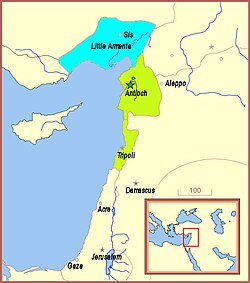
However, this political victory came with a religious cost. To strengthen ties with the Byzantine Empire, the Mongols required Bohemond to replace the Latin patriarch of Antioch with the Greek patriarch, Euthymius. This act of submission to a non-Latin authority led to Bohemond's excommunication by the Patriarch of Jerusalem. While the sentence was later suspended by Pope Urban IV, the move alienated the Latin nobility in Acre.
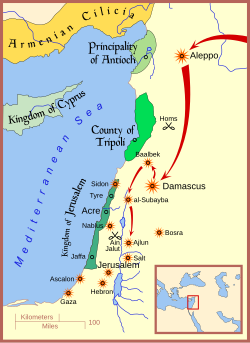
The Mamluk Ascendance and the Fall of Antioch
The geopolitical tide turned in September 1260 at the Battle of Ain Jalut, where the Egyptian Mamluks halted the Mongol westward advance. With the Mongol presence diminished, the Mamluks, led by the formidable Sultan Baibars, began targeting the Crusader states.
Bohemond VI attempted to regain leverage by kidnapping Patriarch Euthymius and replacing him with a Latin patriarch, and by attempting to blockade the timber forests of Lebanon and Anatolia needed for Mamluk shipbuilding. These provocations only incited Baibars further. Despite Bohemond's pleas for help from the Mongol court of Hulagu, the Mongols were displeased by his religious reversals and provided insufficient support.
In 1268, while Bohemond was in Tripoli, Baibars launched the Siege of Antioch. The city fell, and Bohemond became a prince in exile, stripped of all his estates except for the County of Tripoli.
The Final Years and the Siege of Tripoli
The Mamluks did not stop at Antioch. In 1271, Baibars besieged Tripoli, sending a taunting letter to Bohemond VI mocking his reliance on the Mongols. Bohemond's desperation for a truce was only relieved by the arrival of Prince Edward I of England in Acre on May 9, 1271, which signaled the start of the Ninth Crusade and forced a temporary Mamluk withdrawal.
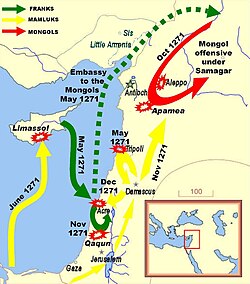
Bohemond VI died in 1275 at the age of 38. He was succeeded by his son, Bohemond VII, who held the title of Prince of Antioch in name only, as the city remained under Mamluk control. The resentment caused by Bohemond VI's Mongol alliance persisted until the final fall of Tripoli in 1289.
| Category | Details |
|---|---|
| Reign Period | 1251–1275 |
| Key Territories | Antioch (lost 1268), Tripoli |
| Major Allies | Mongol Empire, Cilician Armenia |
| Primary Adversary | Sultan Baibars (Mamluk Sultanate) |
| Successor | Bohemond VII |
Frequently Asked Questions
Why did Bohemond VI ally with the Mongols?
Bohemond VI allied with the Mongols primarily for survival and territorial gain. Following the advice of his father-in-law, King Hetoum I of Armenia, he recognized the Mongols' overwhelming military power and chose submission over destruction, which allowed him to recover several lost cities.
What caused Bohemond VI to be excommunicated?
He was excommunicated because he replaced the Latin patriarch of Antioch with a Greek patriarch, Euthymius. This was a requirement imposed by the Mongols to foster an alliance with the Byzantine Empire, but it was viewed as a betrayal of the Latin Church.
Who was Sultan Baibars and how did he affect Bohemond's reign?
Baibars was the leader of the Mamluk Sultanate. He was the primary antagonist of Bohemond VI, eventually capturing the city of Antioch in 1268 and later besieging Tripoli in 1271, effectively ending Bohemond's power in northern Syria.
What was the significance of the War of Saint Sabas for Bohemond?
The War of Saint Sabas was a conflict between Genoa and Venice. For Bohemond, it led to a domestic crisis and a decades-long civil war with the Embriaco family, who rebelled against his authority, draining his resources and destabilizing his rule.
How did the Ninth Crusade impact the Siege of Tripoli?
The arrival of Prince Edward I of England in the Levant in May 1271 provided a strategic deterrent. His presence, along with the combined forces of Bohemond and King Hugh III of Cyprus, contributed to the lifting of Baibars's siege of Tripoli.