Body Plans: The Biological Blueprints of Animal Evolution
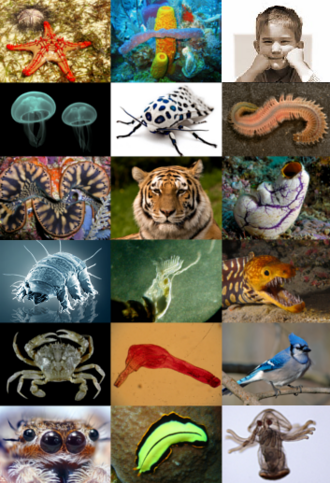
In the study of zoology, a body plan (also known as a Bauplan or ground plan) refers to the set of morphological features common to many members of a specific phylum of animals. Think of it as a biological blueprint that determines the overall structural organization of an organism. While all vertebrates share a single body plan, invertebrates are far more diverse, exhibiting a wide array of different structural arrangements.
These blueprints encompass critical aspects of an animal's design, including its symmetry, the number of tissue layers, segmentation, and the disposition of the gut, limbs, and nervous system. The study of how these diverse plans originated and changed over time is the primary focus of evolutionary developmental biology.
Key Facts
- Definition: A body plan is a shared set of morphological features within an animal phylum.
- Diversity: Modern zoologists recognize approximately 36 phyla, a significant increase from early classifications.
- Origins: 20 of the 36 current body plans emerged during the Cambrian explosion.
- Genetic Control: Homeobox genes act as master switches that lay down the basic body plan during development.
- Evolutionary Shift: The Ediacaran biota possessed body plans that differ from any living organisms today and were largely replaced during the Cambrian period.
The Evolution of Classification
The way scientists define and group body plans has evolved significantly as our understanding of anatomy and evolution has grown.
Early Classifications: Linnaeus and Cuvier
In 1735, Carl Linnaeus grouped animals into broad categories such as quadrupeds, birds, fish, and "insects" (which then included crustaceans and arachnids). He also used a catch-all category called "worms" (Vermes) for everything else, including molluscs and jellyfish.
By 1817, Georges Cuvier shifted the focus to the central nervous system as the primary controlling organ. He identified four embranchements (branches) based on nerve structure:
- Vertebrates: Possessing a brain and spinal cord.
- Molluscs: Organs linked by nerve fibers.
- Articulata: Two longitudinal ventral nerve cords (including insects and annelids).
- Radiata (Zoophytes): A diffuse, non-discernible nervous system.
Haeckel and the Monophyletic View
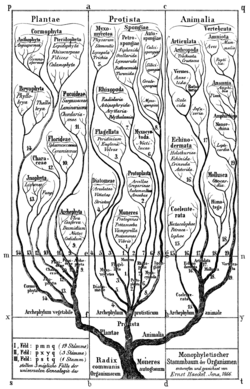
In 1866, Ernst Haeckel proposed that all living things were monophyletic, meaning they shared a single evolutionary origin. He divided life into plants, animals, and Protista. Within the animal kingdom, he established the concept of phyla, identifying groups such as coelenterates, echinoderms, articulates, molluscs, and vertebrates.
| Scientist | Year | Primary Basis for Grouping | Approx. Number of Plans/Phyla |
|---|---|---|---|
| Linnaeus | 1735 | General morphology (e.g., quadrupeds, worms) | 6 main groups |
| Cuvier | 1817 | Central nervous system arrangement | 4 embranchements |
| Haeckel | 1866 | Monophyletic evolutionary origin | 12 (including Protista) |
| Modern Zoologists | Current | Genetic and morphological evidence | 36 phyla |
The Origin and Development of Body Plans
The history of body plans is marked by periods of rapid change. The Cambrian explosion saw the origin of 20 of the 36 recognized body plans. However, this was not the first attempt at complex life; the earlier Ediacaran biota featured body plans entirely different from those seen in modern taxa. This suggests that the Cambrian explosion effectively replaced an earlier range of biological designs.
While some believe these plans evolved suddenly, a more nuanced view suggests a gradual development throughout the early Palaeozoic era. Researchers are currently investigating whether constraints on these structures explain the phylotypic stage—a period during embryogenesis where embryos of different species within a phylum look remarkably similar.
The Genetic Basis of Form
The physical form of an adult organism is determined by the interaction of genes, embryos, and the process of morphogenesis (the biological process that causes an organism to develop its shape).
Developmental biologists have discovered that key genes produce morphogens. These are chemicals that diffuse through the body to create a gradient, acting as a position indicator for cells and triggering other genes to activate. A critical discovery in this field is the homeobox genes. These genes function as master switches that establish the basic body plan.
Remarkably, homeobox genes are highly conserved across diverse species. For example, the same genetic mechanisms that create the segmented pattern in a fruit fly are related to the development of the segmented spine in humans. This deep genetic link is a cornerstone of modern evolutionary developmental biology.
Frequently Asked Questions
What is the difference between a body plan and a species?
A body plan is a high-level structural blueprint shared by an entire phylum (such as the vertebrate plan), whereas a species is a specific group of organisms within that plan with distinct biological characteristics.
What was the Cambrian explosion's role in body plans?
The Cambrian explosion was a pivotal evolutionary period during which 20 of the 36 modern animal body plans first appeared, largely replacing the stranger forms of the Ediacaran biota.
How do homeobox genes affect an animal's shape?
Homeobox genes act as genetic switches that control the layout of the body. They trigger cascades of other genes and morphogens to ensure that organs and limbs develop in the correct positions.
Why did Stephen J. Gould change his view on Baupläne?
Gould initially viewed phyla through the lens of a fixed Bauplan to illustrate their stability, but he later moved toward the theory of punctuated equilibrium to better explain the patterns of evolution.
What are morphogens?
Morphogens are signaling chemicals that spread through an embryo to create a concentration gradient. This gradient tells cells where they are located in the body, which in turn determines what type of cell they become.