Blockades: Military Strategy, History, and International Law
A blockade is the application of military force to prevent the entry or exit of food, supplies, weapons, communications, and people from a specific country or region. While often confused with sanctions or embargoes—which are legal barriers to trade—a blockade is a physical intervention. It also differs from a siege; whereas a siege typically targets a specific city or fortress for conquest, a blockade generally targets an entire region or nation to achieve strategic goals without necessarily occupying the territory.
While most commonly associated with the sea, blockades can also involve land transport. In the modern era, air power is used to halt traffic within blockaded airspace, and electronic warfare is employed to jam radio signals or sever undersea cables to cut off communications.
Key Facts
- Physical Nature: Unlike legal sanctions, blockades use military force to physically stop movement.
- Scope: They typically target entire regions or countries rather than single fortifications.
- Neutral Parties: Ships from neutral nations must submit to inspections for contraband (restricted goods).
- Legal Status: Under modern international law, blockades are considered acts of war.
- Humanitarian Impact: Blockades can lead to civilian starvation, which may be classified as a war crime.
The Evolution of Blockade History
Primitive naval blockades have existed for millennia, but early efforts were limited by the inability of ships to remain at sea for long periods. The British Royal Navy pioneered the first successful full naval blockades during the Seven Years' War (1754–1763). Following the victory at Quiberon Bay in 1759, Britain established a close blockade of the French coast, stretching from Dunkirk to Bordeaux and including Marseille, which severely crippled the French economy.
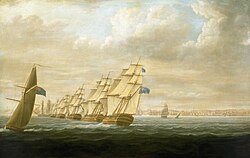
The British also applied these tactics in North America, impeding supplies to New France on the St. Lawrence, which contributed to the French loss of Canada in 1763. The strategic value of the blockade was further cemented during the French Revolutionary and Napoleonic Wars, and later played a critical role in the American Civil War (1861–1865) through the Union blockade of Southern ports.
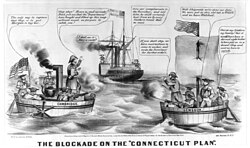
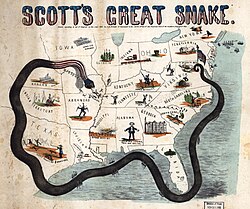
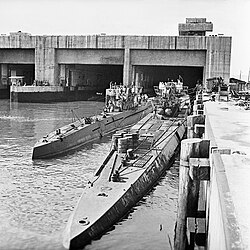
In the 20th century, blockades remained central to global conflict. During World War I, the Allies blockaded the Central Powers to deprive them of strategic materials and food. Germany attempted a counter-blockade using U-boats to target British supplies, a strategy they repeated in World War II, though both German attempts ultimately failed to achieve their primary goals.
Types of Blockades
Close, Distant, and Loose Blockades
The effectiveness of a blockade often depends on the positioning of the military forces:
- Close Blockade: Warships stay within sight of the coast to intercept ships immediately. This is the most effective but most difficult method, as ships are exposed to storms and sudden attacks.
- Distant Blockade: Forces stay far from the coast, intercepting ships in open water. This requires more ships but reduces the risk of raids and allows forces to stay closer to their own bases.
- Loose Blockade: Ships stay just behind the horizon. The goal is to lure the enemy out of port while remaining close enough to strike quickly. A famous example is Admiral Horatio Nelson's 1805 blockade of Cádiz, which led to the Battle of Trafalgar.
Pacific Blockades
Until 1827, blockades were strictly tools of declared war. This changed when France, Russia, and Britain blockaded the Turkish-occupied coast to support Greek rebels, leading to the Battle of Navarino. This is considered the first pacific blockade (peaceful blockade). A truly non-violent pacific blockade occurred in 1837 when Britain blockaded the Republic of New Granada to secure the release of an imprisoned consul.
Legal Status and International Law
Since 1945, the United Nations Security Council has determined the legality of blockades. Under Article 42 of the UN Charter, the Council can apply blockades to maintain international peace. While the Charter allows for self-defense, such actions must be reported to the Security Council immediately.
The San Remo Manual (1994) provides guidelines for maritime warfare, stating that blockading nations must publish a list of what they define as contraband. Neutral ships must obey requests to stop for inspection; failure to do so can lead to capture or, if resisted, lawful attack. However, inspections cannot take place within the territorial waters of a neutral nation.
Crucially, modern law dictates that blockades used to starve civilian populations or as a form of collective punishment are illegal and may be classified as war crimes or crimes against humanity.
Planning and Execution
Successful blockades generally rely on four primary factors:
- Value: The target must be valuable enough to justify the effort. For example, during the 1962 Cuban Missile Crisis, the U.S. established a "quarantine" to stop nuclear-capable medium-range ballistic missiles from reaching Cuba.
- Strength: The blockading force must be equal to or stronger than the opposition to ensure no supplies leak through.
- Geography: Utilizing natural choke points, such as straits or mountain passes, makes a blockade easier to maintain.
- Commitment: Blockades are long-term campaigns. The Battle of the Atlantic lasted nearly as long as the wars themselves, whereas the Imperial Japanese Navy's sporadic efforts in the Pacific War were less effective.
Blockade Running
To counter these measures, some employ blockade running—the use of fast, lightly armored ships to sneak cargo and food into a blockaded area. In the modern era, this is also achieved via aircraft through the creation of airbridges, such as the one established during the Berlin Blockade after World War II.
| Type | Positioning | Primary Advantage | Primary Disadvantage |
|---|---|---|---|
| Close | Within sight of coast | Maximum interception rate | High crew hardship and vulnerability |
| Distant | Far from coast | Lower risk of raids; closer to base | Requires more ships to cover area |
| Loose | Just behind horizon | Lures enemy into the open | Less immediate control than close blockade |
| Pacific | Variable | Used for diplomatic leverage without war | Limited legal precedent prior to 1827 |
Frequently Asked Questions
What is the difference between a blockade and a siege?
A blockade typically targets an entire country or region to restrict movement and supplies, whereas a siege focuses on a specific city or fortress with the goal of capturing that specific location.
Is a blockade the same as an embargo?
No. An embargo is a legal or political barrier to trade, while a blockade is a physical military operation used to stop the movement of goods and people.
Can a blockade be legal under international law?
Yes, if it is applied in self-defense or authorized by the UN Security Council. However, it becomes illegal if it is used as a tool of aggression or to intentionally starve a civilian population.
What is a blockade runner?
A blockade runner is a fast, often lightly armed ship designed to evade military patrols to deliver essential supplies or cargo to a blockaded port.
What is contraband in the context of a blockade?
Contraband refers to goods that a blockading power prohibits from entering a region. The blockading nation must publish a list of these items, though certain items are universally protected from being labeled as contraband under international guidelines.