Blizzards: Definitions, Historic Storms, and Global Impact
A blizzard is more than just a heavy snowfall; it is a violent atmospheric event characterized by a combination of freezing temperatures, high winds, and severely limited visibility. These storms can paralyze entire cities, bury villages, and reshape the geography of a region in a matter of hours. From the frozen plateaus of Antarctica to the urban corridors of New York City, blizzards represent some of the most challenging weather conditions on Earth.
To the casual observer, any intense snowstorm might seem like a blizzard, but meteorologists use specific criteria to distinguish these events from standard winter storms. Understanding these definitions helps in predicting the severity of the impact on infrastructure and human life.
Key Facts
- Standard Definition: Winds over 40 km/h (25 mph) and visibility of 400 meters (0.25 mi) or less for at least four hours.
- Severe Blizzard: Winds exceeding 72 km/h (45 mph), near-zero visibility, and temperatures of −12 °C (10 °F) or lower.
- Deadliest Event: The 1972 Iran blizzard is the deadliest in recorded history, with 4,000 reported deaths.
- North American Record: The 1959 Mount Shasta storm recorded the largest single-storm snowfall in North America at 189 inches (480 cm).
- Antarctic Extremes: Blizzards in Antarctica often feature average wind velocities of 160 km/h (99 mph).
Defining the Blizzard
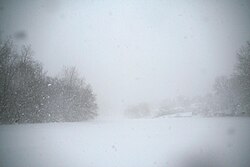
According to Environment Canada, a storm is classified as a blizzard when wind speeds exceed 40 km/h (25 mph) and visibility is reduced to 400 metres (0.25 mi) or less. This reduction in visibility can be caused by falling snow, blowing snow (snow already on the ground being lifted by wind), or a combination of both. These conditions must persist for at least four hours, though this threshold increases to six hours north of the arctic tree line.
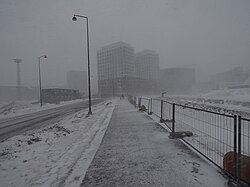
When visibility drops to the point where the horizon disappears and the environment becomes a featureless white void, it is known as a whiteout.
Severe and Regional Variations
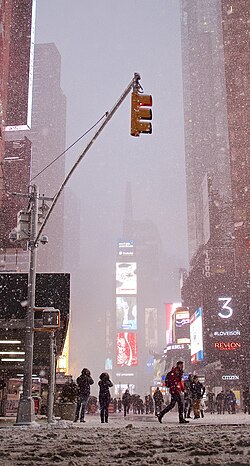
A severe blizzard is marked by even more extreme conditions: winds over 72 km/h (45 mph) and temperatures dropping to −12 °C (10 °F) or lower. In specific regions, such as the U.S. East Coast, these storms often take the form of a Nor'easter, a macro-scale storm system that draws its energy from the temperature contrast between cold continental air and warm ocean currents.
Historic Global Blizzards
Throughout history, several blizzards have left a lasting mark due to their scale and lethality. These events often highlight the vulnerability of human settlements to extreme winter weather.
The 1972 Iran Blizzard
The deadliest blizzard in recorded history struck Iran in 1972. The storm dropped as much as 26 feet (7.9 m) of snow, completely burying 200 villages. An area roughly the size of Wisconsin was entirely covered in snow after a week of continuous precipitation, resulting in 4,000 deaths.
The 2008 Afghanistan Blizzard
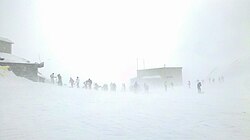
On January 10, 2008, a fierce blizzard hit Afghanistan, with temperatures plummeting to −30 °C (−22 °F). Mountainous regions saw up to 180 centimetres (71 in) of snow. The human toll was severe, with at least 926 people killed, while the agricultural impact was devastating: over 100,000 sheep and goats and nearly 315,000 cattle perished.
Notable North American Events
North America, particularly the United States and Canada, has a long history of catastrophic winter storms that have influenced urban planning and historical narratives.
The Great Blizzard of 1888
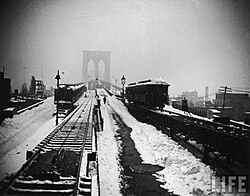
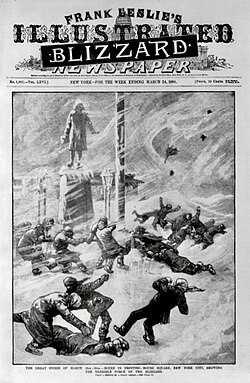
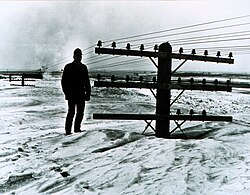
One of the most severe storms in U.S. history, the Great Blizzard of March 1888, hit New England and the mid-Atlantic. It dropped up to 50 inches (130 cm) of snow in three days. In New York City, snowdrifts reached the second story of some buildings, and 400 people died. This event was so disruptive that it directly led to the creation of the New York City subway system to ensure reliable transportation.
The Storm of the Century (1993)
The March 1993 "Storm of the Century" is noted for impacting a wider geographic area than any other recorded blizzard, stretching from Cuba through the southern and eastern United States.
Other Significant U.S. Storms
- The Hessian Storm of 1778: A Revolutionary War-era storm with 15-foot drifts in Rhode Island.
- The Seattle Blizzard of 1880: An estimated 4 feet of snow halted all transportation and collapsed many barns.
- The Cleveland Superbomb (1978): Wind gusts near 100 mph created 25-foot drifts, making roads impassable.
- The 1947 Christmas Blizzard: Brought the Northeast to a standstill with 26 inches of snow in Central Park within 24 hours.
Blizzards in Other Regions
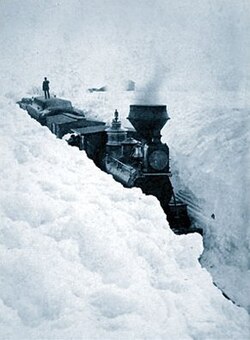
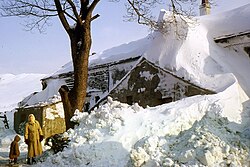
While North America is frequently cited, other regions face similar perils. The United Kingdom has experienced several severe winters, including the Great Frost of 1709 and the harsh winter of 1962–1963. In Canada, the Eastern Canadian Blizzard of 1971 was significant enough to cancel a Montreal Canadiens hockey game for the first time since 1918.
Summary of Blizzard Classifications
| Classification | Wind Speed | Visibility | Duration/Temp |
|---|---|---|---|
| Standard Blizzard | > 40 km/h (25 mph) | ≤ 400 m (0.25 mi) | ≥ 4 hours (6h north of tree line) |
| Severe Blizzard | > 72 km/h (45 mph) | Near Zero | ≤ −12 °C (10 °F) |
| Antarctic Blizzard | Avg 160 km/h (99 mph) | Extremely Low | Varies by plateau edge |
Frequently Asked Questions
What is the difference between a snowstorm and a blizzard?
A snowstorm is a general term for any precipitation of snow. A blizzard is specifically defined by wind speed (over 40 km/h) and visibility (400 metres or less) persisting for a minimum of four hours.
Which was the deadliest blizzard in history?
The 1972 Iran blizzard is the deadliest on record, causing approximately 4,000 deaths and burying 200 villages under up to 26 feet of snow.
What is a Nor'easter?
A Nor'easter is a type of blizzard or winter storm that occurs along the East Coast of North America, named for the northeasterly wind direction associated with the storm system.
How did the Great Blizzard of 1888 change New York City?
The extreme snowfall and drifts of 1888 paralyzed the city's street railcars, proving that surface transportation was unreliable in winter, which led to the development of the NYC subway system.
What is a whiteout?
A whiteout is a weather condition where visibility is severely reduced by snow or fog, causing the horizon to disappear and making it difficult to distinguish the ground from the sky.