Birdsong in Music: From Classical Imitations to Zoomusicology
For centuries, the melodic calls of birds have captivated human ears, bridging the gap between the natural world and artistic expression. Since at least the 14th century, when composers like Jean Vaillant began quoting avian sounds, birdsong has been a recurring motif in Western classical music. From the haunting trill of the nightingale to the rhythmic call of the cuckoo, birds have served as both muses and musical blueprints for some of history's greatest composers.
Musicians interact with birdsong in diverse ways. Some are simply inspired by the sounds, while others employ intentional imitation to recreate specific calls. Modern technology has expanded these possibilities, allowing composers to incorporate actual recordings into their scores or even engage in live duets with wild birds.

Key Facts
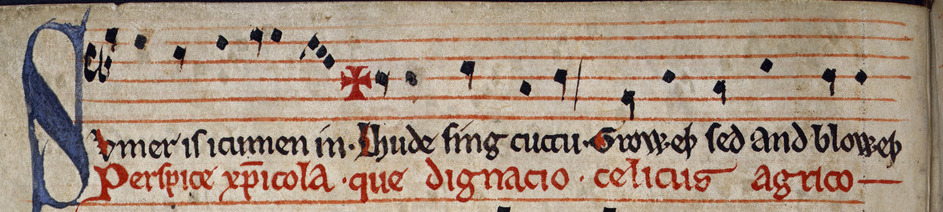
- Earliest Notation: The 13th-century English song "Sumer is icumen in" is likely the first instance of a birdcall in musical notation.
- Pioneering Recordings: Ottorino Respighi was among the first to integrate pre-recorded birdsong into musical compositions.
- Common Subjects: The nightingale and the cuckoo are the most frequently utilized birds in musical history.
- Zoomusicology: This field, credited to François-Bernard Mâche, focuses on the study of animal music.
- Human-Avian Duets: Notable performances include Beatrice Harrison's 1924 BBC broadcast with nightingales.
Imitations of Birdsong in Classical Music
Composers utilize bird sounds through various lenses: literal imitation, symbolic representation, or the creation of a general atmospheric impression. For example, Sergei Prokofiev used an oboe to mimic the quacking of a duck in Peter and the Wolf, while Antonio Vivaldi used orchestral textures to paint a broader picture of birds in The Four Seasons.
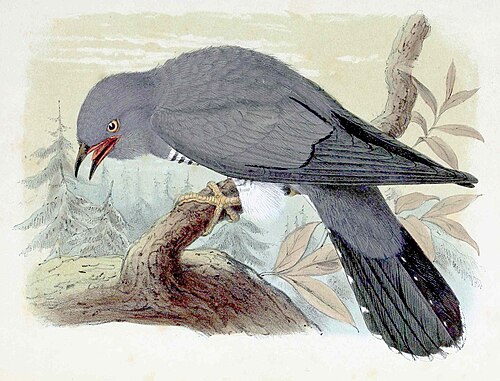
The nightingale and cuckoo hold special prominence. The nightingale appears in the works of Handel, Beethoven, Ravel, and Mendelssohn. Handel specifically quoted the bird in his aria "Sweet bird" and his Organ Concerto "No. 13". The cuckoo's call is equally iconic, appearing in early English music and later in the works of Delius and Saint-Saëns.
Diverse Approaches to Avian Sound
Some composers focused on the technical mimicry of birds. Heinrich Biber's Sonata Representiva (c. 1669) used detuned unisons and string scratching to imitate chickens, cockerels, and nightingales. In the 16th century, Clément Janequin's Le Chant des oiseaux used nonsense syllables to depict various songs. Later, John Walsh's Bird Fancyer's Delight (c. 1715) provided short phrases designed to teach cage birds how to sing.
![Songs of cockerel, chicken, cuckoo, and quail (and the speech of a parrot[a]) in Athanasius Kircher's 1650 Musurgia Universalis](/images/34/cd/34cdb0b6241c6ae34646294fa5a735db38ad1190754c95295e1d1fee055ff6af.jpg)
Modern Classical Interpretations
In the 20th century, Béla Bartók integrated North American birdsong into his Piano Concerto No. 3. Jean Sibelius viewed the crane's call as the "leitmotiv" of his life, utilizing clarinets to imitate it in Scene with Cranes. Other significant works include Ralph Vaughan Williams' The Lark Ascending, praised for its atmospheric solo violin, and Hanna Tuulikki's Away with the Birds (2013), which blends Gaelic songs with imitations of waders, corvids, and wildfowl.
![Nightingales are admired for their unusually rich song.[41]](/images/d3/01/d3017db417723e9aa5eac387daf5e0460ece57671e64721672e57dabe634b306.jpg)
The Use of Recorded Birdsong and Popular Music
The transition from imitation to integration occurred when Ottorino Respighi used pre-recorded birdsong in Pines of Rome (1923–1924). He further explored this in Gli Uccelli ("The Birds"), which featured movements based on the dove, the hen, and the cuckoo.
This trend extended into the Arctic with Einojuhani Rautavaara's Cantus Arcticus, which features the trumpeting of migrating swans. By the 1960s, popular music began adopting these soundscapes. The Beatles included a Eurasian blackbird in their 1968 song "Blackbird," and Pink Floyd utilized bird effects in albums like More and Ummagumma.
More recently, the Royal Society for the Protection of Birds released a charity single, "Let Nature Sing" (2019), consisting entirely of a birdsong collage, which reached number 18 on the UK charts.
Human-Bird Duets and Zoomusicology
Beyond composition, some musicians seek direct interaction. In 1924, cellist Beatrice Harrison performed the BBC's first outside broadcast, playing alongside nightingales in her garden. In 2000, jazz musician David Rothenberg engaged in an impromptu duet with a laughingthrush, exploiting the bird's natural tendency to sing complex duets.
![The pied butcherbird has an elaborate song with musical qualities.[50]](/images/84/87/84879c4ff774f077a8fedbae89e21405db084fdc2e62e46e194b25c5e2ea3362.jpg)
These interactions feed into zoomusicology—the study of animal music. François-Bernard Mâche pioneered this field, specifically exploring "ornitho-musicology" to connect human art with nature.
The Musical Qualities of Birdsong
A central debate in musicology is whether birdsong is "music" in the human sense. David Rothenberg argues that birds like the hermit thrush use pentatonic scales, while the wood thrush uses diatonic scales. However, this is contested; a 2012 study of the nightingale wren found that very few song samples matched human musical intervals.
Other researchers, such as Luis Felipe Baptista and Robin A. Keister, suggest that birdsong resembles music through its use of rhythm and pitch variation to avoid monotony. Similarly, the European starling's habit of borrowing phrases from other species has long fascinated musicians, including W. A. Mozart.
| Category | Key Examples / Figures | Method of Integration |
|---|---|---|
| Early Classical | Jean Vaillant, "Sumer is icumen in" | Direct quotation and notation |
| Baroque/Romantic | Handel, Vivaldi, Beethoven | Instrumental imitation and symbolism |
| Modern Classical | Béla Bartók, Jean Sibelius | Integration of specific regional species |
| Recorded Sound | Ottorino Respighi, The Beatles | Pre-recorded audio tracks |
| Interactive | Beatrice Harrison, David Rothenberg | Live human-avian duets |
Frequently Asked Questions
Which birds are most common in musical compositions?
The nightingale and the cuckoo are the most frequently used birds in Western music due to their distinctive and recognizable calls.
What is zoomusicology?
Zoomusicology is the study of the music of animals, a field credited to French composer François-Bernard Mâche, which includes the specific study of bird music known as ornitho-musicology.
Do birds actually sing in musical scales?
This is a subject of debate. While some musicians like David Rothenberg claim birds use pentatonic or diatonic scales, scientific studies, such as those on the nightingale wren, suggest that birds do not consistently follow human musical intervals.
Who was the first composer to use recorded birdsong?
The Italian composer Ottorino Respighi is credited as one of the first to use pre-recorded birdsong, notably in his work Pines of Rome.
How did Beatrice Harrison contribute to music history?
In 1924, she performed the BBC's first-ever outside broadcast, where she played her cello in a duet with wild nightingales.