Bird-Window Collisions: Causes, Impact, and Prevention Strategies
Bird-window collisions, often referred to as bird strikes, represent a significant global threat to avian populations in both rural and urban environments. These incidents occur because birds cannot perceive transparent or reflective glass, leading them to fly directly into surfaces they believe are open air or natural habitats. While early estimates suggested between 100 million and 1 billion deaths annually in the United States, a 2024 study indicates that these figures were vastly underestimated, with the actual death toll exceeding 1 billion birds per year in the U.S. alone. Similarly, Canada sees an estimated 16 to 42 million bird deaths annually from these collisions.
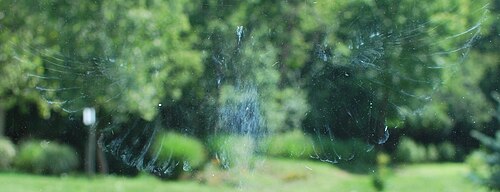
Key Facts
- Annual Mortality: Over 1 billion birds die from window collisions in the U.S. every year.
- Primary Cause: Reflective and transparent glass is invisible to birds or creates deceptive illusions of vegetation.
- High-Risk Zones: Buildings within 50 to 100 meters of natural green spaces are significantly more prone to collisions.
- Light Impact: Artificial light at night disorients nocturnal migrants, increasing the risk of fatal entrapment.
- Effective Solutions: Exterior-mounted patterns, such as a 5 cm grid of dots, can reduce mortality by up to 95%.
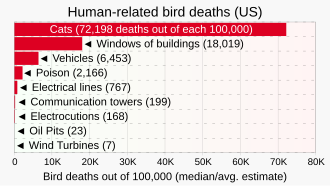
Factors Influencing Collision Rates
Susceptible Species and Behavior
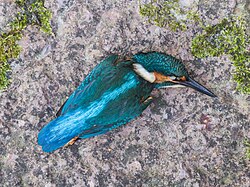
Not all birds are equally at risk; mortality patterns often correlate with specific flight behaviors and building types. For example, Wood Thrushes are frequently found at residences, while Worm-eating Warblers are more susceptible to high-rise collisions. Conversely, species with high urban abundance, such as House Sparrows, show relatively low collision rates, suggesting that population density does not necessarily dictate mortality risk.
Building Properties and Urban Planning
The environment surrounding a building plays a critical role. Highly reflective windows often mirror nearby trees, sky, or water, creating an illusion of a clear path or habitat. This is particularly dangerous in areas with dense vegetation, as birds foraging during the day may fly into these reflections.
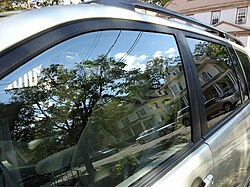
Urban planning also contributes through "channeling effects," where architectural corridors guide bird flight paths directly toward high-risk glass surfaces. Buildings located within 50 to 100 meters of urban greenspaces—which birds use for breeding, foraging, and migratory stopovers—are at the highest risk. During the low-visibility hours of dawn and dusk, birds fly at lower altitudes to locate these spaces, making them more likely to strike reflective glass.
The Role of Light Emissions
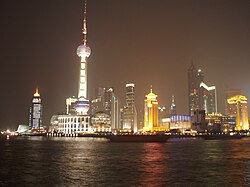
Artificial light at night is a major driver of mortality for nocturnal migrants. These birds rely on celestial cues, such as the stars, for navigation. Bright urban lights can conceal these cues, leading to disorientation and "fatal entrapment" within light-emitting structures. Additionally, birds possess extra-retinal photoreceptors that can be disoriented by light reflections from glass surfaces.
Proven Prevention and Mitigation Solutions
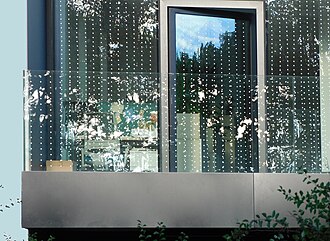
Effective mitigation requires making glass visible to birds. While ultraviolet (UV) signals were once common, they are no longer recommended because not all bird species can perceive UV light. Current expert-recommended solutions include:
- Ceramic Frit Glass: Glass manufactured with permanent frit dots.
- Exterior Window Film: Films applied to the outside of the glass to reduce reflections.
- Strategic Decals: Markers spaced no more than 5 cm horizontally or 10 cm vertically.
It is important to note that interior treatments and predatory bird silhouettes are largely ineffective. Interior treatments do not eliminate exterior glare, and silhouettes leave too much open glass for birds to attempt a flight through.
Case Study: McCormick Place, Chicago
The Lakeside Center at McCormick Place, featuring 120,000 square feet of exterior windows, historically suffered hundreds of bird deaths during migration seasons. After a single night in 2023 resulted in nearly 1,000 deaths, the facility implemented a 2-inch (5 cm) grid of small white dots across all windows in 2024. This simple change reduced bird deaths by approximately 95%.
Monitoring and Legislation
Volunteer-led organizations, such as the Chicago Bird Collision Monitors, Toronto's Fatal Light Awareness Program (FLAP), and New York City Audubon's Project Safe Flight, have documented thousands of collisions to drive policy change. In 2024, these groups joined forces with the Cornell Lab of Ornithology and the American Bird Conservancy to form the Bird Collision Prevention Alliance (BCPA).
Governments are increasingly codifying bird-safe standards into law:
- United States: The Federal Bird-Safe Buildings Act of 2011 mandates bird-safe materials for GSA-managed public buildings.
- New York City: Legislation requires the lowest 75 feet of new buildings and structures above green roofs to use patterned glass.
- Canada: Toronto has implemented Bird-Friendly Development Guidelines to mitigate urban avian loss.
| Treatment Method | Effectiveness | Reasoning |
|---|---|---|
| Exterior Grid/Dots (5cm) | High | Breaks up reflections and creates a visible barrier. |
| Ceramic Frit Glass | High | Permanent visibility integrated into the glass. |
| Interior Decals | Low | Does not diminish exterior glare or reflections. |
| Predator Silhouettes | Low | Leaves too much transparent glass exposed. |
| UV Signals | Variable | Not all bird species can see UV light. |
Frequently Asked Questions
Why do birds fly into windows if they can see?
Birds do not perceive glass the way humans do. They either see the glass as transparent (an open path) or see a reflection of the sky or vegetation, which they mistake for a real environment.
Do bird silhouettes on windows actually work?
No, they are generally ineffective because they leave large gaps of exposed glass. Birds often attempt to fly through these gaps rather than being deterred by the silhouette.
How does light pollution contribute to bird deaths?
Nocturnal migrants use stars for navigation. Artificial lights disorient them, drawing them into urban centers where they become trapped by light-emitting buildings and eventually collide with glass.
What is the most effective way to make a home bird-safe?
The most effective methods involve applying visible markers—such as films or decals—to the exterior of the glass, ensuring they are spaced closely enough (5 cm horizontally or 10 cm vertically) to prevent birds from seeing a clear flight path.
Which areas are most dangerous for birds in a city?
Buildings located within 50 to 100 meters of green spaces, parks, or water are high-risk zones because they overlap with natural flight patterns and often reflect the surrounding nature.