Bird Extinction: Causes, Case Studies, and Conservation Risks
Bird extinction refers to the complete elimination of every member of a species within the taxonomic class Aves. While the natural world has always seen species come and go, the current rate of avian loss is a growing concern for scientists. Out of approximately 11,154 known bird species, 159 (1.4%) have already vanished, and another 226 (2%) are currently classified as critically endangered.
Ornithologists warn that if anthropogenic activities—human-driven environmental changes—continue at their current pace, one-third of all bird species could be extinct by the end of the 21st century. For those already critically endangered, the window for survival is narrow, with many facing total extinction within a few decades without aggressive conservation efforts.
Key Facts
- Current Loss: 1.4% of known bird species are extinct; 2% are critically endangered.
- Island Vulnerability: 95% of bird extinctions since the late 15th century occurred among island-native species.
- Primary Drivers: Habitat loss, exploitation, and invasive species are the leading causes of decline.
- Habitat Impact: Deforestation is linked to declines in roughly 70% of all known avian taxa.
- Future Risk: Up to one-third of all bird species could vanish by 2100 if current trends persist.
The Primary Drivers of Avian Extinction
Bird species are rarely impacted by a single factor; usually, a combination of pressures leads to their collapse. However, three main influences stand out.
Habitat Loss
The destruction of natural environments is a primary catalyst for extinction. Deforestation, in particular, has devastated approximately 70% of avian taxa. Smaller bird species are often more susceptible to habitat destruction, as they may rely on very specific niches that disappear quickly when forests are cleared.
Exploitation
Human exploitation includes hunting for meat, feathers, and taxidermy, as well as the illegal collection of eggs. While regulated harvesting is not always detrimental, excessive exploitation can lead to extirpation (local extinction) or total species loss. This remains a modern problem; for example, the ortolan bunting is still illegally hunted in France as a delicacy. Additionally, the pet trade has devastated parrot populations, serving as the primary cause for the Spix's macaw's extinction in the wild.
Invasive Species
Birds with limited distributions, particularly those on islands, are highly vulnerable to introduced species. Invasive mammals like rats, cats, pigs, and stoats often prey on ground-nesting birds that have no evolved defenses. The kākāpō, a critically endangered New Zealand parrot, relies on crypsis (camouflage and remaining still) to hide from native raptors, but this strategy is ineffective against the scent-driven hunting of invasive mammals.
Invasive species also introduce deadly diseases. In Hawaii, the arrival of the southern house mosquito introduced avian malaria, which has severely decimated populations of native Hawaiian honeycreepers.
Notable Examples of Extinct Birds
The Dodo
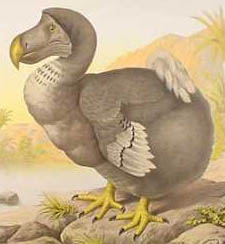
The dodo was a large, flightless relative of the dove endemic to the island of Mauritius. Because it evolved in an environment with abundant food and no natural predators, it lost the ability to fly. When Dutch explorers arrived in the 15th century, the dodo's lack of fear and ample meat made it an easy target. However, invasive pigs likely accelerated their demise by eating eggs and competing for food. The dodo likely vanished in the late 1600s.
The Great Auk
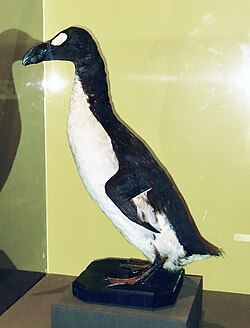
Known as the "Penguin of the North," the great auk was a flightless marine bird of the North Atlantic. While they were swift swimmers in open water, they were vulnerable during the breeding season when they gathered in large colonies on rocky islands. Hunters targeted them for their down, eggs, and skins. The species is believed to have gone extinct around 1844, when the last known breeding pair was killed by fishermen.
The Passenger Pigeon
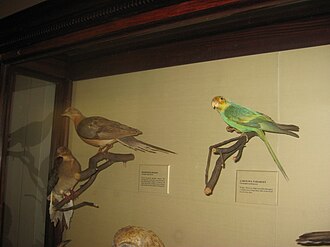
Once one of the most abundant birds in North America—potentially accounting for 40% of all birds on the continent—the passenger pigeon was driven to extinction by a combination of massive overhunting and habitat loss. The invasive chestnut blight also destroyed the American chestnut trees they relied upon. Despite late attempts at legislation and captive breeding, the last survivor, Martha, died in the Cincinnati Zoo in 1914. Today, this species is a candidate for "de-extinction" via genome engineering.
The Carolina Parakeet and Tasmanian Emu
The Carolina parakeet was native to the eastern United States but was hunted by farmers who viewed them as agricultural pests and by collectors wanting their colorful feathers. The last individual, Incas, died in 1918. Similarly, the Tasmanian emu—a smaller, darker subspecies of emu—vanished from Tasmania between the 1830s and 1850s due to a variety of anthropogenic pressures.
Regional Insights: Australia
Paleontological records provide a glimpse into ancient extinctions. In Australia, fossils reveal the existence of giant flamingos that lived for 25 million years before likely succumbing to drought 140,000 years ago. Additionally, penguins reaching 2 meters (6 ft 7 in) in height inhabited the region between 60 and 30 million years ago, eventually dying out during the Oligocene epoch.
| Species | Region | Primary Cause of Extinction | Estimated Extinction Date |
|---|---|---|---|
| Dodo | Mauritius | Hunting & Invasive Species | Late 1600s |
| Great Auk | North Atlantic | Overhunting (Skins/Down) | c. 1844 |
| Passenger Pigeon | North America | Overhunting & Habitat Loss | 1914 |
| Carolina Parakeet | Eastern USA | Agricultural Conflict & Hunting | 1918 |
| Tasmanian Emu | Tasmania | Various Anthropogenic Factors | 1830s–1850s |
Frequently Asked Questions
Why are island birds more likely to go extinct?
Island birds often evolve in isolation without natural predators, leading to traits like flightlessness and a lack of defensive behaviors. This makes them exceptionally vulnerable to invasive predators (like rats and cats) and habitat changes introduced by humans.
What is the difference between extinction and extirpation?
Extinction is the complete elimination of every member of a species globally. Extirpation is the local extinction of a species from a specific geographic area, though the species may still exist elsewhere.
Can the passenger pigeon be brought back?
Scientists have sequenced the entire genome of the passenger pigeon from surviving tissue. There are proposals to use genome engineering and in vitro fertilization to attempt "de-extinction," though this remains a complex scientific challenge.
How do invasive species cause disease in birds?
Invasive species can act as vectors for diseases to which native birds have no immunity. A key example is the southern house mosquito in Hawaii, which spreads avian malaria to native honeycreepers.
What role does morphology play in extinction risk?
Physical traits can influence vulnerability. Smaller species are often more severely impacted by the loss of specific habitats, while larger species are more frequently targeted by human hunting and invasive predators.