Biotope Ecology: Principles, Restoration, and Applications
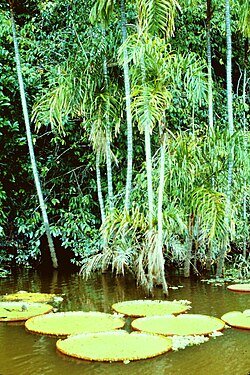
In the study of nature, a biotope is defined as an area of uniform environmental conditions that provides a living space for a specific assemblage of plants and animals. While often used interchangeably with the term "habitat" in English-speaking countries, some scientific contexts distinguish the two: a habitat focuses on a specific population, whereas a biotope focuses on a biocoenosis, or a biological community.
The word is an English loanword from the German Biotop, rooted in the Greek words bios (life) and topos (place). This conceptual framework allows ecologists and urban planners to analyze how environmental factors—such as soil, water, and geography—interact with living organisms to shape a unique ecosystem.
Key Facts
- Origin: The concept was first advocated by German zoologist Ernst Haeckel in his 1866 book General Morphology.
- Scale: Biotopes are typically viewed as microscale phenomena rather than macroscopic ones.
- Connectivity: Effective biotopes usually function as open systems connected via "corridors" to other green spaces.
- Human Integration: Unlike biosphere reserves, biotopes are often integrated into daily human life and urban environments.
- Legal Status: In Germany, the Bundesnaturschutzgesetz (Federal Nature Protection Law) mandates the protection and restoration of biotopes.
The Evolution of Biotope Theory
The foundation of biotope theory began with Ernst Haeckel, who emphasized that a habitat is a prerequisite for an organism's existence. Haeckel linked the biotope to evolutionary theory, suggesting that the biota is shaped by the interaction between living things and their physical environment. This ecological system was later formally referred to as a "biotope" by Professor F. Dahl of the Berlin Zoological Museum in 1908.
Biotope Restoration and Urban Integration
Since the 1970s, the term has moved beyond technical ecology into civic and administrative use, particularly in Europe. Biotope restoration involves the preservation, regeneration, and creation of natural settings within human-dominated landscapes. This approach integrates various fields, including architecture, civil engineering, urban planning, and biology.
Common Restoration Activities
- Creating roof gardens and school ponds.
- Reconstructing rivers to restore natural flow and qualities.
- Maintaining bushes or trees on agricultural farms.
- Developing nature parks along motorways.
- Applying ecological considerations to private gardening.
Core Characteristics of Biotopes
Microscale Approach
Biotopes are generally small-scale. Examples include a backyard, a potted plant, a terrarium, or a fish tank. Because they are microscopic rather than macroscopic, they allow ordinary citizens to participate in the management and creation of biological diversity.
Biotope Networks and Corridors
Except for manmade closed systems, biotopes should not be isolated. To function effectively, they must be connected to surrounding life through corridors—organic traffic courses that allow animals and plants to move. A typical network consists of large central green tracts (such as forests or cemeteries) connected by smaller parcels like roadside trees, gardens, or river belts.
The Role of Artificial Elements
There is no strict opposition between the natural and the artificial in a biotope. Artificial materials are often used to aid regeneration; for example, natural fiber mats that biodegrade over time or uneven surfaces in planting areas that encourage insect nesting.
Biotope Management in Germany
As the birthplace of the term, Germany has a robust legal and planning framework for biotope conservation. The Bundesnaturschutzgesetz (BNUM), established in 1976, requires the protection and restoration of wild animals, plants, and their communities.
Many German states utilize a Landschaftsplan (landscape plan) as part of urban planning. These plans analyze climate, soil, groundwater, and the distribution of species to protect the regional environment while balancing development projects and citizen welfare, such as providing recreational bike paths in reserves.
Specialized Applications of Biotopes
Biotope Aquaria
In the aquarium hobby, a biotope setup simulates the exact natural habitat of a specific group of fish. This involves replicating water parameters, substrate, lighting, and native plants. For instance, a specific biotope might be a "Forest creek tributary of Rio Negro near Barcelos, Brazil," featuring tannin-stained water, dead leaves, and specific species like Nannostomus eques and Paracheirodon axelrodi.
Artificial Closed Ecological Systems (CES)
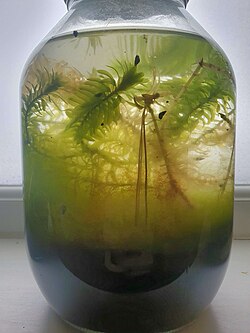
Some biotopes are designed as closed ecological systems, meaning they have no exchange of materials with the outside world. Large-scale examples include the Biosphere 2 project and the Eden Project. On a smaller scale, hobbyists create "jarrariums" or sealed terrariums by collecting soil, plants, and insects from a natural site and sealing them in airtight glass containers to study life-support viability.
Summary of Biotope Types
| Type | Scale | Key Characteristic | Example |
|---|---|---|---|
| Urban Biotope | Micro/Local | Integrated with human life | Roof gardens, school ponds |
| Network Biotope | Regional | Connected via corridors | Green belts, river corridors |
| Biotope Aquarium | Micro | Simulates specific geography | Rio Negro tributary setup |
| Closed System (CES) | Variable | Airtight/No material exchange | Biosphere 2, Jarrariums |
Frequently Asked Questions
What is the difference between a biotope and a habitat?
While often used as synonyms, a habitat generally refers to the environment of a specific population, whereas a biotope refers to the environmental conditions supporting an entire biological community (biocoenosis).
Can a biotope be man-made?
Yes. Biotopes can be artificial, such as roof gardens, biotope aquaria, or closed ecological systems like jarrariums, provided they maintain uniform environmental conditions for a specific assemblage of life.
Why are corridors important in biotope networks?
Corridors prevent biotopes from becoming isolated. By connecting smaller green spaces to larger tracts of land, they allow plants and animals to move, ensuring the system remains open and biologically viable.
What is a Landschaftsplan?
A Landschaftsplan is a German landscape plan used in urban planning to protect the environment. It uses data on soil, climate, and species distribution to guide the preservation and remedy of the regional landscape.
What defines a biotope aquarium?
A biotope aquarium replicates the specific natural conditions of a real-world location, including water chemistry, substrate, lighting, and a community of fish and plants that naturally coexist in that specific area.