Biological Tribe: Taxonomic Rank and Nomenclature
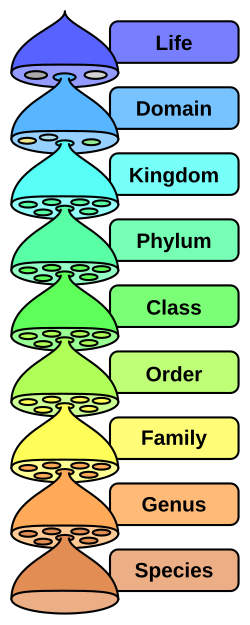
In the complex system of biological classification, scientists use a hierarchical structure to organize living organisms. While most people are familiar with broad categories like Kingdom or specific ones like Species, there are intermediate levels used to refine these groupings. One such level is the tribe, a taxonomic rank that sits above the genus but below the family and subfamily.
A tribe allows biologists to group closely related genera that share a more recent common ancestor than other members of the same subfamily. In some instances, a tribe may be further divided into smaller units known as subtribes. By scientific convention, all taxa ranked above the species level, including both tribes and subtribes, must be capitalized.
Key Facts
- Position: A tribe is ranked above genus and below family/subfamily.
- Subdivisions: Tribes can be further divided into subtribes.
- Capitalization: Tribe and subtribe names are always capitalized.
- Zoology Suffixes: Tribes end in -ini and subtribes end in -ina.
- Botany Suffixes: Tribes end in -eae and subtribes end in -inae.
Nomenclature Across Different Disciplines
The way a tribe is named depends heavily on the field of biology being applied. Different scientific codes dictate specific suffixes to ensure that researchers can identify the rank of an organism simply by looking at its name.
Zoology
In zoology, the standard suffix for a tribe is -ini. Common examples include Caprini (goat-antelopes), Hominini (hominins), Bombini (bumblebees), and Thunnini (tunas). When a zoological tribe is subdivided, the resulting subtribe uses the suffix -ina. For example, the tribe Hominini contains the subtribe Hominina, which comprises humans.
Botany and Bacteriology
Botanical tribes use the suffix -eae, such as Acalypheae and Hyacintheae. If a botanical tribe is further divided, the subtribe takes the suffix -inae (e.g., the subtribe Massoniinae within the tribe Hyacintheae). Bacteriology follows the same naming conventions as botany; for instance, the tribe Pseudomonadeae is named based on the genus Pseudomonas.
Rank Recognition and Suffix Challenges
Identifying a taxonomic rank based solely on its suffix can be straightforward in some fields but complex in others. In zoology, the suffixes are unique: -ini always denotes a tribe, -ina a subtribe, and -inae a subfamily.
However, in botany, algae, and fungi, the suffix -eae is used for multiple ranks. It can represent a class (-phyceae), a suborder (-ineae), a family (-aceae), a subfamily (-oideae), or a tribe (-eae). To correctly identify a botanical tribe, researchers must first rule out these longer suffixes that also end in -eae.
| Field | Tribe Suffix | Subtribe Suffix | Other Relevant Suffixes |
|---|---|---|---|
| Zoology | -ini | -ina | Subfamily: -inae |
| Botany | -eae | -inae | Family: -aceae; Subfamily: -oideae |
| Bacteriology | -eae | N/A | Follows botanical form |
Frequently Asked Questions
Where does a tribe fit in the biological hierarchy?
A tribe is an intermediate rank located above the genus level but below the subfamily and family levels.
How do you distinguish a zoological tribe from a subtribe?
In zoology, tribes are identified by the suffix -ini, while subtribes are identified by the suffix -ina.
Why is identifying botanical tribes more difficult than zoological ones?
Identification is more complex in botany because the suffix -eae is shared across several ranks, including class, suborder, family, and subfamily, whereas zoological suffixes are more unique to their specific ranks.
Are tribe names capitalized?
Yes, by scientific convention, all taxonomic ranks above the species level, including tribes and subtribes, are capitalized.
Does bacteriology use its own naming system for tribes?
Bacteriology generally follows the botanical system for tribe names, utilizing the -eae suffix, as seen in Pseudomonadeae.