Biological Life Cycles: Mechanisms of Reproduction and Development
In biology, a life cycle is the sequence of stages an organism passes through from its beginning as a zygote—often contained within an egg—to its maturity as an adult capable of reproduction. This process is inherently cyclic; the adult produces offspring in the form of a new zygote, restarting the sequence for the next generation. While closely related to concepts like ontogeny (the development of an individual organism) and life history, the life cycle specifically emphasizes the renewal of the species.
These transitions can involve growth, asexual reproduction, or sexual reproduction. In many species, the life cycle is characterized by an alternation of generations, where different multicellular forms succeed one another. This is particularly common in plants and algae.
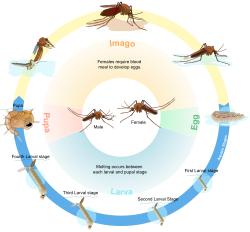
Key Facts
- Ploidy refers to the number of sets of chromosomes in a cell: haploid (n) has one set, and diploid (2n) has two.
- Meiosis is the specialized cell division required to return a diploid cell to a haploid state.
- Mitosis is the process of cell growth and duplication that maintains the current ploidy level.
- Life cycles are categorized as haplontic, diplontic, or haplodiplontic based on which stage is multicellular.
- Parasitic life cycles can be direct (one host) or indirect (multiple hosts).
Types of Sexual Life Cycles
Life cycles involving sexual reproduction must manage the shift between haploid (n) and diploid (2n) stages. Depending on when meiosis and mitosis occur, these cycles fall into three primary categories.
Haplontic Life Cycle
In a haplontic cycle, the multicellular stage is haploid. The only diploid cell in the entire cycle is the zygote. Immediately after karyogamy (the fusion of two nuclei), the zygote undergoes zygotic meiosis to produce haploid cells. These cells then grow via mitosis into multicellular individuals or larger cell groups.
Common haplonts include most fungi, many dinoflagellates, and certain green algae like Chlamydomonas.
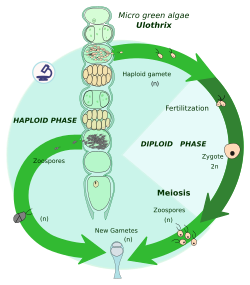
Diplontic Life Cycle
In a diplontic cycle, the multicellular stage is diploid. The zygote divides mitotically to grow into a diploid individual. Meiosis occurs only during the production of gametes (gametic meiosis), meaning the haploid phase is very brief and typically limited to the gametes themselves.
Animals and some brown algae are primary examples of diplonts.

Haplodiplontic Life Cycle
Also known as diplohaplontic, this cycle features multicellular stages in both the diploid and haploid phases. The zygote grows into a diploid sporophyte, which produces spores via sporic meiosis. These spores then grow via mitosis into haploid gametophytes, which eventually produce gametes through mitosis.
This cycle is characteristic of land plants and most brown algae.
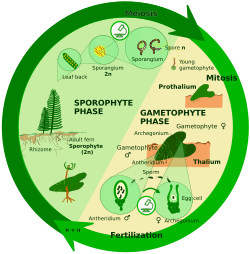
Comparison of Life Cycle Types
| Cycle Type | Multicellular Stage(s) | Meiosis Type | Mitosis Phase | Example Organisms |
|---|---|---|---|---|
| Haplontic | Haploid (n) | Zygotic | Haploid phase | Most fungi, some green algae |
| Diplontic | Diploid (2n) | Gametic | Diploid phase | Animals, some brown algae |
| Haplodiplontic | Both (n) and (2n) | Sporic | Both phases | Land plants, red algae |
Specialized Biological Phenomena
Vegetative Meiosis and Diploidization
Some algae exhibit rare processes such as vegetative meiosis (or somatic meiosis), where non-reproductive diploid cells undergo meiosis to generate haploid cells that eventually produce gametes. Conversely, vegetative diploidization occurs when haploid cells spontaneously duplicate their chromosomes to create diploid tissue, a form of apomixis.
Parasitic Life Cycles
Parasites are categorized by their host requirements. Those with direct life cycles infect only one host species (e.g., the canine hookworm). Those with indirect (complex) life cycles must infect multiple host species to mature. For example, the heartworm (Dirofilaria immitis) requires a mosquito to reach its infective larval stage before it can infect an animal host.
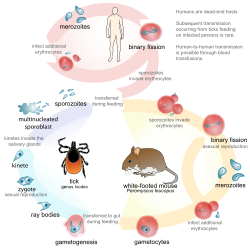
Evolution and Cellular Immortality
Primitive life cycles likely consisted of haploid individuals reproducing asexually, a trait still seen in bacteria and archaea. While many eukaryotes have evolved complex sexual cycles, some have lost these abilities or utilize asexual reproduction facultatively.
From an evolutionary perspective, individual cells are not immortal, but cell lineages are. The continuity of a lineage depends on the maintenance of cell division potential and the accurate repair of DNA damage. In sexual organisms, homologous recombination during meiosis provides a critical mechanism for repairing DNA damage in the germline, ensuring the survival of the species across billions of years.
Frequently Asked Questions
What is the difference between a haplont and a diplont?
A haplont is an organism where the dominant, multicellular stage of the life cycle is haploid (n), whereas a diplont is an organism where the dominant, multicellular stage is diploid (2n).
What is the role of meiosis in a life cycle?
Meiosis is the process of cell division that reduces the chromosome number by half, allowing a diploid cell (2n) to produce haploid cells (n). This is essential for maintaining a constant chromosome number across generations during sexual reproduction.
What defines an indirect parasitic life cycle?
An indirect life cycle is one in which a parasite must infect more than one species of host to complete its development and reach adulthood.
What is the alternation of generations?
Alternation of generations is a life cycle pattern, common in plants and algae, where the organism alternates between a multicellular haploid stage (gametophyte) and a multicellular diploid stage (sporophyte).
How does vegetative meiosis differ from standard meiosis?
Standard meiosis typically occurs in reproductive cells to produce gametes or spores. Vegetative meiosis occurs in non-reproductive (somatic) diploid cells to generate haploid cells.