Biography History: The Evolution of Life Writing from Antiquity to the Digital Age
For centuries, the act of recording a person's life was seen merely as a branch of history—a way to document individuals of significant historical importance. However, what began as simple commemorative inscriptions has evolved into a sophisticated independent genre. From the sacred texts of the Middle Ages to the psychological deep-dives of the 20th century, biography has mirrored humanity's changing understanding of identity, fame, and truth.
Key Facts
- Earliest Origins: Biographical writing dates back to the 26th century BC in Egyptian funerary inscriptions.
- Genre Shift: Biography emerged as a distinct genre from general history in the 18th century.
- Modern Foundation: James Boswell's 1791 work on Samuel Johnson established the modern research-based biographical formula.
- 20th Century Pivot: Lytton Strachey revolutionized the field by replacing hagiography with critical, witty, and concise analysis.
- Digital Transition: Modern biography has expanded into multimedia databases, documentary films, and online archives.
Ancient Foundations of Life Writing
Biography is one of the oldest literary genres. Egyptologist Miriam Lichtheim notes that literature first took shape through private tomb funerary inscriptions in the 26th century BC, which recounted the careers of high royal officials. This tradition of recording a life continued in Mesopotamia with the 21st-century BC accounts of Gilgamesh, and later in Hebrew traditions focusing on Abraham and his descendants.
In the Classical era, Greek and Roman writers refined the form. Xenophon wrote about Cyrus, the founder of the Persian Empire, while Cornelius Nepos published Excellentium Imperatorum Vitae in 44 BC. Plutarch's Parallel Lives (c. 80 AD) introduced a comparative approach, pairing famous Greeks with Romans, such as Alexander the Great and Julius Caesar. Later, Suetonius provided detailed accounts of Roman leaders in De vita Caesarum (c. 121 AD), while the Gospels documented the life of Jesus.
The Middle Ages and the Rise of Hagiography
Following the decline of classical culture in Europe, the Roman Catholic Church became the primary custodian of records. This era saw the rise of hagiography—biographies of saints, martyrs, and popes designed to inspire faith and conversion. While most works were religious, some secular examples existed, such as Einhard's account of the life of Charlemagne.
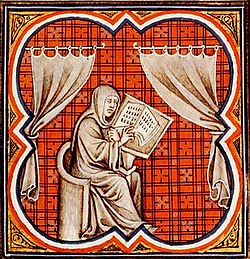
Parallel developments occurred in other civilizations. In Medieval Western India, Jain scholars wrote Prabandhas—semi-historical narratives in colloquial Sanskrit. The earliest titled collection, Jinabhadra's Prabandhavali, appeared in 1234 CE. Similarly, Islamic civilization developed a rich tradition of Prophetic biography focusing on Muhammad, later expanding into biographical dictionaries like Ibn Sa'd al-Baghdadi's The Book of The Major Classes, which provided valuable social data on a wide range of personalities.
Renaissance and the Shift Toward Secularism
By the late Middle Ages, European biography began to move beyond the church. Works like Sir Thomas Malory's Le Morte d'Arthur focused on knights and kings. The Renaissance further accelerated this shift toward humanism, emphasizing artists and poets. Giorgio Vasari's Lives of the Artists (1550) became an early bestseller, transforming its subjects into celebrities.
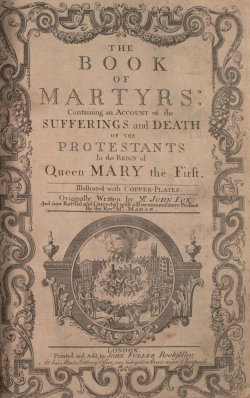
The invention of the printing press and rising literacy rates expanded the reach of these stories. In England, John Foxe's Actes and Monuments (1563), known as the Book of Martyrs, served as an early biographical dictionary.
By the 18th century, works like Charles Johnson's A General History of the Pyrates (1724) shaped popular perceptions of outlaws, while William Oldys' Biographia Britannica documented eminent British figures. In America, biography took on a didactic tone, using the lives of great individuals to shape national character.
The Birth of Modern Biography
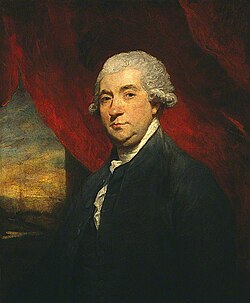
The turning point for the genre arrived in 1791 with James Boswell's The Life of Samuel Johnson. Boswell moved beyond mere eulogy, utilizing archival research, interviews, and eye-witness accounts to provide an honest, comprehensive depiction of Johnson's character.
While the 19th century saw a temporary return to hagiographical praise, the era also witnessed a boom in autobiographies. Figures such as Charles Dickens, John Stuart Mill, and P.T. Barnum wrote their own stories, fueled by a growing culture of celebrity and cheaper printing methods.
Psychology and the 20th Century Revolution
At the turn of the 20th century, the influence of sociology and psychology dismantled the "great man" theory of history. Biographers began applying Darwinian theories and psychoanalysis, placing greater emphasis on childhood and environmental influences. This shift turned autobiography into a form of psychological exploration and therapy.
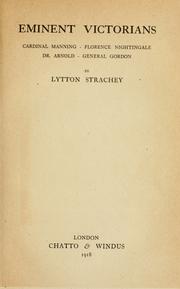
In 1918, Lytton Strachey revolutionized the field with Eminent Victorians. He rejected the "two fat volumes" of tedious detail common in Victorian writing, opting instead for a witty, concise, and irreverent style that debunked the myths surrounding national heroes.
This "debunking" trend was followed by writers like Robert Graves. Meanwhile, in the United States, professional historiography began to balance political biography with deeper social and cultural analysis. The feminist movement also transformed the genre; scholars like Carolyn Heilbrun noted that by the 1970s, women's biographies (such as Nancy Milford's Zelda) and autobiographies (such as May Sarton's Journal of a Solitude) began to openly address pain, rage, and the desire for power.
Biography in the Digital and Academic Age
Today, biography has expanded into multimedia formats. Documentary films and dedicated TV channels (A&E, The History Channel) have popularized the form, while online archives and CD-ROMs allow users to navigate a subject's life through non-linear databases of video, text, and photos.
Academically, "Biography Studies" is emerging as an independent discipline, particularly in the Netherlands, where it utilizes microhistory to move toward a more scholarly approach. Modern debates now question whether any biography can be entirely factual, with scholars like Hermione Lee arguing that biographical truths shift based on the perspective of the contemporary society writing them.
| Era | Primary Focus | Key Characteristic | Example/Figure |
|---|---|---|---|
| Ancient | Royal/Divine Figures | Commemorative/Funerary | Plutarch |
| Middle Ages | Saints/Religious Leaders | Hagiographic (Inspirational) | Church Fathers |
| Renaissance | Artists/Secular Figures | Humanist/Vernacular | Giorgio Vasari |
| 18th-19th Century | Intellectuals/Great Men | Research-based/Didactic | James Boswell |
| 20th Century | Psychological Profiles | Critical/Analytical/Debunking | Lytton Strachey |
| Modern | Diverse/Multimedia | Database-driven/Perspective-based | Digital Archives |
Frequently Asked Questions
What is hagiography?
Hagiography refers to the writing of the lives of saints. In the early Middle Ages, these biographies were used by the church as inspirational tools to encourage conversion to Christianity.
How did James Boswell change biographical writing?
Boswell introduced a modern research methodology involving archival study, interviews, and eye-witness accounts, providing a balanced and honest depiction of his subject rather than a simple eulogy.
What was Lytton Strachey's contribution to the genre?
Strachey moved away from the long, tedious, and overly respectful biographies of the Victorian era, introducing a concise, witty, and critical style that challenged the myths of national heroes.
How has feminism influenced biography?
Feminist activism led to a shift in women's life writing, moving from narratives of spiritual acceptance to the open admission of rage, pain, and the desire for personal power and control.
Is modern biography considered a science or an art?
It is both. While it uses research methods (biographical research) to analyze social life and structural actions, it also involves artistic prose and the interpretation of shifting historical perspectives.