Bengal Army
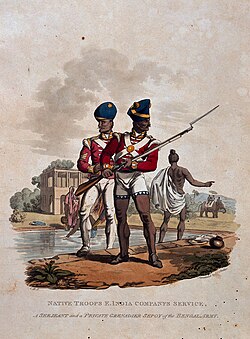
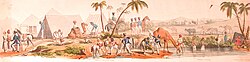
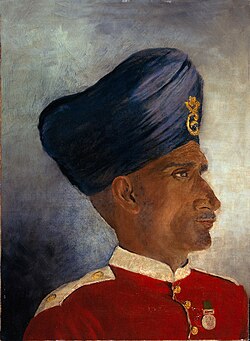
The Bengal Army was a cornerstone of military power in South Asia, operating from 1756 until 1895. Initially established under the East India Company, it served as one of the three Presidency armies that maintained British control over the subcontinent. Over its long history, the force evolved from a regionally focused militia into a massive command, reaching a size of 105,000 personnel by 1876.
Originally, the army relied heavily on recruitment from high-caste Hindus, particularly from the provinces of Awadh, Buxar, Bhojpur, and Arrah. For example, records from 1810 indicate that 4,680 men from Shahabad and 12,000 from the Bhojpur district had joined the ranks. However, the aftermath of the 1857 Indian Rebellion led to a significant shift toward a more diverse ethnic composition to ensure greater stability and loyalty.
Key Facts
- Active Period: 1756–1895 as the Bengal Army; 1895–1908 as the Bengal Command.
- Allegiance: East India Company (1756–1895) and British India (1895–1908).
- Peak Size: 105,000 personnel in 1876.
- Headquarters: Based in Nainital from 1895 to 1908.
- Recruitment: Shifted from primarily high-caste Hindus to a more diverse force after 1857.
Organizational Structure and Composition
The Bengal Army was a complex organization comprising various arms, including cavalry, artillery, engineers, and infantry. By the mid-19th century, it had developed a sophisticated system of regular and irregular units.
Cavalry and Artillery
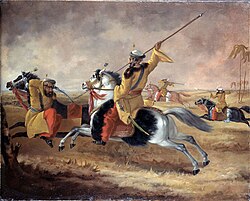
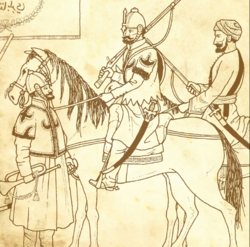
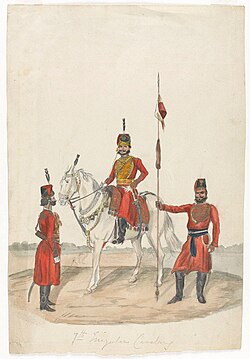
The cavalry was split between the Bengal Regular Cavalry (consisting of 10 regiments of Light Cavalry) and the Bengal Irregular Cavalry, which expanded to 18 regiments. Specialized units like Skinner's Horse and the 7th Irregular Cavalry provided critical mobility and reconnaissance.
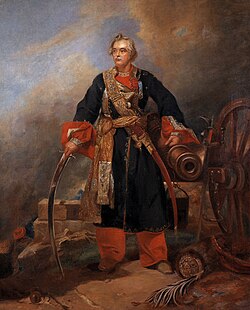
The artillery was divided into the Bengal Horse Artillery, the Bengal European Foot Artillery, and the Bengal Native Foot Artillery. These units provided the heavy firepower necessary for both field engagements and garrison duty.
Infantry and Specialized Corps
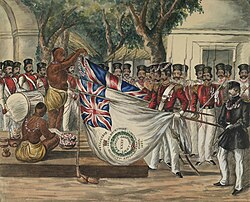
The infantry was the largest component, consisting of European regiments, Native Infantry, and Local Infantry. The Bengal Native Infantry was vast, featuring over 70 regiments, including specialized units like the 26th and 35th Bengal Light Infantry and the 66th (Goorkha) Regiment.
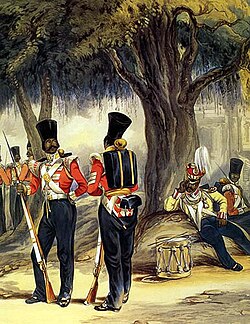
Beyond the standard line infantry, the army utilized Local Infantry such as the Hill Rangers, the Sirmoor Rifle Battalion, and the Kemaoon Battalion. Additionally, the Punjab Irregular Force—including the Punjab Cavalry, Punjab Infantry, and the Sikh Corps—played a vital role in frontier security.
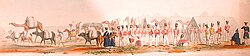
Evolution After the 1857 Rebellion
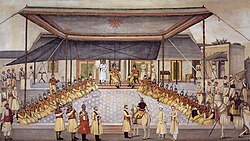
The Indian Rebellion of 1857 served as a turning point for the Bengal Army. To suppress the uprising and reorganize the military, several new units were raised, including five regiments of Bengal European Light Cavalry and numerous Sikh Irregular Cavalry units. The Punjab Infantry also expanded significantly, adding regiments 7 through 25.
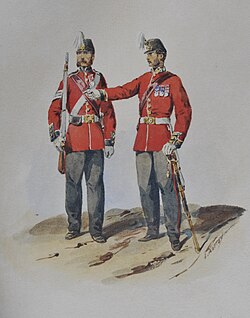
By 1864, the army had been restructured. The cavalry was reorganized into 19 regiments of Bengal Cavalry, and the infantry was streamlined into Native Infantry regiments and specialized Goorkha regiments. The Royal Artillery and Royal Engineers also integrated into the command structure to provide professional technical support.
Military Organization Table
The following table outlines the typical personnel structure for various units within the Bengal Army command.
| Unit Type | British Personnel | Indian Officers | Other Ranks | Total Strength |
|---|---|---|---|---|
| Native Cavalry Regiment | Commandant, 4 Sqdn Commanders, 5 Sqdn Officers, Adjutant, Medical Officer | Risaldar-Major, 3 Risaldars, 5 Ressaidars, 8 Jamadars | 8 Kot-Daffadars, 54 Daffadars, 519 Sowars, etc. | 637 |
| Corps of Guides | Commandant | Risaldar Major, Subadar Major, 2 Risaldars, 4 Ressaidars, 7 Subadars, 14 Jamadars | 40 Havildars, 42 Daffadars, 40 Naiks, 402 Sowars, 800 Sepoys | 1402 |
| Mountain Artillery Battery | Captain, 4 Subalterns | Subadar, 3 Jamadars | Havildar Major, 10 Havildars, 114 Gunners, 191 Drivers | 373 |
| Native Infantry Regiment | Commandant, 4 Double-company Commanders, 4 Double-company Officers, Adjutant, QM, Medical Officer | Subadar Major, 7 Subadars, 8 Jamadars | 40 Havildars, 40 Naiks, 800 Sepoys, 16 Drummers | 924 |
Frequently Asked Questions
When was the Bengal Army active?
The Bengal Army was active from 1756 to 1895. After 1895, it continued to exist as the Bengal Command of the British Indian Army until 1908.
Who were the primary recruits for the Bengal Army?
Initially, the army recruited primarily from high-caste Hindus in provinces such as Awadh, Buxar, Bhojpur, and Arrah. Following the 1857 Rebellion, the recruitment policy was changed to introduce more ethnic diversity.
What was the difference between Regular and Irregular Cavalry?
The Regular Cavalry consisted of a smaller number of standardized Light Cavalry regiments (10 in 1856), while the Irregular Cavalry was a larger force (18 regiments in 1856) often used for more flexible or frontier operations.
What role did the Punjab Irregular Force play?
The Punjab Irregular Force, which included the Sikh Corps and Punjab Infantry, was essential for maintaining security and managing the volatile frontier regions of the empire.
How did the 1857 Rebellion change the army's composition?
The rebellion led to the creation of new European cavalry and infantry units, an increase in Sikh and Punjab regiments, and a strategic move away from relying solely on high-caste recruits from specific regions.