Ben Peach: Pioneering the Geology of the Scottish Highlands
Ben Peach was a distinguished British geologist and palaeontologist whose meticulous mapping and research fundamentally reshaped our understanding of the Earth's crust. Born on September 6, 1842, in Gorran Haven, Cornwall, to Jemima Mabson and Charles William Peach—himself an amateur naturalist and geologist—Peach was destined for a life of scientific inquiry.
After receiving his education at the Royal School of Mines in London, Peach joined the Geological Survey in 1862. By 1867, he had transitioned to the Scottish branch, where he would spend the most productive years of his career unraveling the complex structural mysteries of the Scottish landscape.
Key Facts
- Career: Spent over 30 years with the Geological Survey, specializing in the North West Highlands of Scotland.
- Major Achievement: Co-discovered and mapped the structural complications of the Moine Thrust.
- Honors: Recipient of the Wollaston Medal (1921) and an honorary Doctor of Laws from the University of Edinburgh (1903).
- Leadership: Served as President of the Geological Society of Glasgow (1905–1908) and Vice President of the Royal Society of Edinburgh (1912–1917).
Scientific Contributions and Research
Peach is most renowned for his work in the North West Highlands, where he served as the District Surveyor. Alongside his colleague John Horne, Peach spent years mapping some of the most complicated geological districts in Scotland. Their collaborative efforts were instrumental in identifying the Moine Thrust, a massive fault line where older rocks were pushed over younger ones, a discovery that provided critical insights into tectonic movements.
Beyond structural geology, Peach was a prolific researcher in palaeontology—the study of prehistoric life through fossils. He published extensive papers on various prehistoric organisms, including crustaceans and scorpions from Carboniferous rocks, as well as myriapods from the Old Red Sandstone of Forfarshire.
His expertise also extended to stratigraphical geology (the study of rock layers) and the effects of glaciation. He co-authored seminal reports on the glaciation of the Shetland Isles, the Orkney Islands, and Caithness, as well as the volcanic rocks of Shetland.
Professional Recognition and Legacy
Peach's contributions were recognized by the highest scientific bodies of his time. He was elected a Fellow of the Royal Society of Edinburgh in 1881 and a Fellow of the Royal Society in 1892. His accolades include the Neill Prize (1883–86) and the prestigious Wollaston Donation Fund of the Geological Society in 1887.
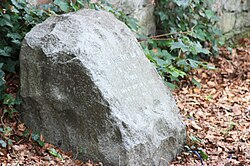
In 1921, he was awarded the Wollaston Medal, the highest honor bestowed by the Geological Society. His legacy is physically commemorated at Inchnadamph, where a monument stands near the Moine Thrust. Erected in 1930, the monument serves as an international tribute to the work of Peach and Horne in decoding the geological structure of the North West Highlands between 1883 and 1897.
| Year | Achievement / Role | Organization |
|---|---|---|
| 1862 | Joined as Geologist | Geological Survey |
| 1881 | Elected Fellow | Royal Society of Edinburgh |
| 1892 | Elected Fellow | Royal Society |
| 1903 | Honorary LL.D. | University of Edinburgh |
| 1905–1908 | President | Geological Society of Glasgow |
| 1912–1917 | Vice President | Royal Society of Edinburgh |
| 1921 | Wollaston Medal | Geological Society |
Personal Life and Passing
Peach's personal life was marked by two marriages. His first wife, Jeanie Bannatyne, was the mother of his four daughters and two sons. He later married Margaret Anne MacEwen, with whom he had two more sons. In his later years, he resided at 72 Grange Loan in Edinburgh.
Ben Peach passed away on January 29, 1926, due to a cerebral thrombosis while staying at his niece's home on Comiston Drive. He was laid to rest in the Morningside Cemetery in Edinburgh.
Frequently Asked Questions
What was Ben Peach's most significant geological discovery?
Ben Peach, along with John Horne, is most famous for unraveling the complex geological structure of the North West Highlands of Scotland, specifically the Moine Thrust.
Which scientific societies was Ben Peach affiliated with?
He was a Fellow of both the Royal Society and the Royal Society of Edinburgh, and he served as President of the Geological Society of Glasgow.
What types of fossils did Ben Peach study?
Peach published research on various palaeontological subjects, including fossil scorpions, crustaceans, and myriapods found in Carboniferous and Old Red Sandstone rocks.
Where can you find a monument dedicated to Ben Peach?
A monument honoring Ben Peach and John Horne is located at Inchnadamph, near the Moine Thrust, where they conducted their most famous research.
What is the Wollaston Medal?
The Wollaston Medal is a prestigious award from the Geological Society, which Ben Peach received in 1921 for his contributions to the field.