Beirut Arab University: A Leading Center for Higher Education in Lebanon
Founded in 1960 by the Lebanese Waqf El-Bir wal Ihsan Society, Beirut Arab University (BAU) is a prestigious private institution that has spent over six decades shaping the intellectual landscape of the Middle East. With a commitment to academic excellence and international standards, BAU serves a diverse student body of over 16,000 individuals across multiple campuses in Lebanon.
The university operates primarily in English, though it maintains its cultural roots by offering specific courses in Arabic and French. Its global standing is reflected in the QS World University Rankings 2026, where it is ranked 676th, and the 2025 Arab Region Rankings, where it holds the 29th position. Furthermore, BAU has earned International Institutional Accreditation from the Foundation for International Business Administration Accreditation (FIBAA), a German foundation registered in the European Quality Assurance Register (EQAR).
![Beirut Campus with a view of the Hariri Building.[1]](/images/aa/6d/aa6d04faeed5d5b2d26856c3af9572d907a96d387e266d817c27687d0dc3fa3c.jpg)
Key Facts
- Established: 1960
- President: Wael Salam
- Student Population: Over 16,000
- Academic Staff: 1,000 faculty members and 313 administrative staff
- Accreditation: FIBAA (International Institutional Accreditation)
- Primary Language: English
Academic Structure and Faculties
BAU provides a comprehensive educational experience through 10 specialized faculties, ensuring a wide breadth of study from the sciences to the humanities:
- Faculty of Medicine
- Faculty of Dentistry
- Faculty of Pharmacy
- Faculty of Health Sciences
- Faculty of Engineering
- Faculty of Science
- Faculty of Architecture – Design and Built Environment
- Faculty of Business Administration
- Faculty of Law & Political Science
- Faculty of Human Sciences
Campus Overview
The university is distributed across four distinct locations, blending urban accessibility with suburban tranquility.
Beirut Campus
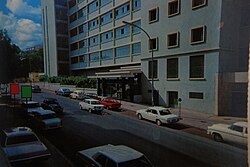
Established in 1960 in Tarik El Jadida, the main campus spans 41,107 m². It features two primary structures: the main building, which houses the administration and the faculties of Dentistry and Business Administration, and the 12-story Hariri Building. The Hariri Building hosts the faculties of Medicine, Pharmacy, Health Sciences, Law and Political Science, and Human Sciences. Facilities include a 300-seat event hall, the “Al Multaqa” cultural and art center, and a gymnasium.
Debbieh Campus
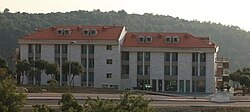
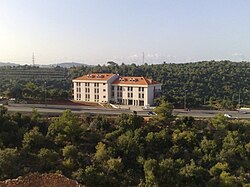
Launched in 2006, this suburban campus is the largest by land area, covering 1,353,000 m². It is the hub for the faculties of Science, Engineering, and Architecture – Design & Built Environment. The campus is well-equipped with an astronomical observatory, an open theater, a mosque, and dedicated residential facilities.
Tripoli and Bekaa Campuses
The Tripoli Campus, established in 2010 in the Mina Region, offers programs in Business Administration, Engineering, Science, Health Sciences, and Architecture. The Bekaa Campus, founded in 2011 in Jdeita and Taalbayah, focuses on specialized facilities including the Alumni Club and the Research Center for Environment and Development.
Admissions and Student Life
The academic year at BAU runs from September to June. Undergraduate applicants must hold a relevant Lebanese Secondary School Certificate (or equivalent) and pass the university's admission examinations.
English Language Proficiency
Since English is the primary medium of instruction, students must demonstrate proficiency. This can be achieved by scoring at least 60% on the BAU English admission exam, or by providing qualifying scores from TOEFL (minimum 500) or IELTS (minimum 6.5). GCE program graduates and transfer students with two years of English-medium instruction are also exempt.
Financial Aid and Scholarships
BAU supports academic merit and financial need through various schemes:
- Merit Scholarships: Four annual scholarships for top-ranking Lebanese Secondary School Certificate students.
- Departmental Awards: Scholarships for the top three students in each department based on a Semester Grade Point Average (SGPA) of 3.00 or higher.
- Tuition Deductions: Top-performing students can receive tuition exemptions ranging from 15% to 80% based on their rank.
- Honor Lists: The President's Honor List (SGPA 3.8+) and Dean's Honor List (SGPA 3.5+).
University Summary
| Feature | Details |
|---|---|
| Type | Private |
| Main Campus | Beirut, Lebanon |
| Satellite Campuses | Debbieh, Tripoli, Bekaa |
| Total Faculties | 10 |
| Global Ranking (QS 2026) | 676 |
| Arab Region Ranking (2025) | 29 |
Notable Alumni and Research
BAU has produced influential leaders across the Middle East, including former Lebanese Prime Minister Rafik Hariri, Qatari Prime Minister Abdullah bin Nasser bin Khalifa Al Thani, and various high-ranking jurists and ministers from Jordan and the UAE.
The university also contributes to global scholarship through six peer-reviewed journals covering life sciences, physical sciences, and humanities. This academic output evolved from the university's earlier periodical, Al Zamil.
Frequently Asked Questions
What are the English language requirements for admission to BAU?
Applicants must pass the BAU English admission exam with a minimum score of 60%. Exemptions are granted to those with a TOEFL score of 500+, an IELTS score of 6.5+, or those who have completed the GCE program.
Does BAU offer on-campus housing?
On-campus dormitories for both boys and girls are available specifically at the Debbieh Campus. Students at the Beirut and Tripoli campuses typically arrange private rentals in the local area.
What is the SGPA required for the President's Honor List?
Students must achieve a Semester Grade Point Average (SGPA) of 3.8 or above to be included on the President's Honor List.
Which international accreditation does BAU hold?
BAU has attained International Institutional Accreditation from the Foundation for International Business Administration Accreditation (FIBAA), which is registered in the European Quality Assurance Register (EQAR).
How many campuses does Beirut Arab University have?
BAU has four campuses: the main campus in Beirut and three satellite campuses located in Debbieh, Tripoli, and the Bekaa region.