Bee Brood: The Lifecycle and Management of Honeybee Development
In the world of apiculture, the term brood refers to the developing stages of honeybees, encompassing their eggs, larvae, and pupae. This biological process is the engine of the hive, driving the population growth necessary for honey production and pollination. Understanding how these stages progress and how beekeepers manage them is essential for maintaining a healthy colony.
In modern beekeeping, particularly when using removable frame hives like the Langstroth hive, the brood is contained within specific brood frames. These frames are often found in the bottom box of a hive, which serves as the primary nursery. While the majority of a brood frame is dedicated to developing bees, it is common to find small amounts of pollen, nectar, or honey in the upper corners. As bees emerge from their cells, the colony shows remarkable flexibility, often repurposing those empty cells for new brood or for storing food resources.
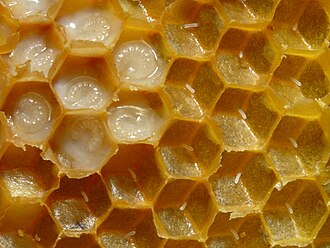
Brood Chamber Management
The brood chamber is the specialized area of the hive where the queen lays her eggs. As the season progresses from late winter into spring, the queen begins laying eggs near existing honey stores to ensure the developing brood has immediate access to nutrition. As the colony grows, the brood chamber expands.
Beekeepers use several techniques to manage the location of the brood:
- Queen Excluders: These are screens with precisely sized openings that allow worker bees to pass through but prevent the larger queen from entering the upper boxes, known as supers (or honey supers).
- Honey Barriers: Some beekeepers rely on a layer of capped honey to act as a natural barrier, as the queen is typically reluctant to cross it.
- Natural Mimicry: In feral (wild) hives, bees naturally place brood at the bottom center of a cavity with honey stored to the sides and above. Modern beekeepers often attempt to mimic this natural arrangement.
During the mid-to-late spring, when a hive is preparing to swarm, beekeepers may create nucleus colonies (or "nucs"). These are starter hives created by removing several frames of brood and adhering bees. A typical nuc includes two to three frames of brood and one frame of honey to ensure the new colony has enough food and enough adult bees to maintain the necessary warmth. Without sufficient adult bees to regulate temperature, the colony may suffer from chilled brood, where the larvae die due to overnight cold.
The Stages of Bee Development
The development of a honeybee is a highly structured process. It begins when the queen lays an egg, gluing it to the bottom of a honeycomb cell, usually in a circular or oval pattern. Depending on the time of year, a queen may lay eggs so rapidly that the brood on a single frame appears to be of a uniform age.
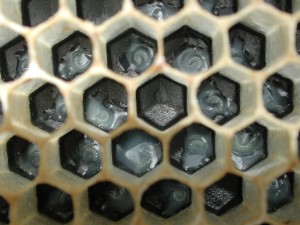
Once the egg hatches, worker bees provide royal jelly—a nutrient-rich secretion from their head glands. For most larvae, royal jelly is provided for only the first three days, after which their diet shifts to a mixture of nectar, diluted honey, and pollen. However, if certain female larvae are selected to become queens, they are placed in special queen cups and fed royal jelly for six days. This intensive nutrition allows them to develop fully mature ovaries, making them sexually mature.
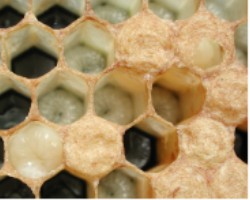
As larvae grow, they initially eat in a circular pattern before stretching out lengthwise within the cell. Eventually, they spin a cocoon, and their older sisters cap the cell with wax. This stage is known as capped brood.
Developmental Timeline Comparison
| Type | Egg Stage | Larva Stage | Cell Capped | Pupal Stage | Emergence | Fertility Status |
|---|---|---|---|---|---|---|
| Queen | Until day 3 | Until day 5.5 | Until day 7.5 | Until day 8 | From day 16 | Approx. 23rd day |
| Worker | Until day 3 | Until day 6 | Until day 9 | Until day 12 | From day 21 | N/A |
| Drone | Until day 3 | Until day 6.5 | Until day 10 | Until day 14.5 | From day 24 | Approx. 38th day |
Brood as a Resource
Beyond hive management, bee brood is a significant resource. In the beekeeping industry, hives are often rated for pollination purposes based on the number of brood frames they contain. Additionally, in many cultures, bee brood is harvested as food. The pupae are particularly notable for their high protein content, which is comparable to beef or poultry. Brood is a dense source of carbohydrates, B vitamins, vitamin C, vitamin D, and various essential fatty acids.
Key Facts
- Brood components: Includes eggs, larvae, and pupae.
- Queen nutrition: Queen larvae receive royal jelly for six days, whereas worker larvae receive it for only three.
- Drone development: Drones develop from unfertilized eggs and inhabit larger cells.
- Chilled brood: A condition where larvae die because adult bees cannot maintain adequate warmth.
- Nutritional value: Bee pupae contain protein levels equivalent to beef or poultry.
Frequently Asked Questions
What is the difference between a worker and a queen larva?
The primary difference lies in their diet. Queen larvae are fed royal jelly for six days, which facilitates the development of fully mature ovaries, whereas worker larvae are transitioned to nectar and pollen after three days.
How do beekeepers prevent the queen from entering honey supers?
Beekeepers typically use a queen excluder, which is a screen with small gaps that allow workers to pass but block the larger queen, or they create a honey barrier that the queen is reluctant to cross.
What is a nucleus colony (nuc)?
A nucleus colony is a small starter hive created by removing frames of brood and bees from a larger colony. It usually consists of two to three brood frames and a frame of honey to ensure the new colony can survive and maintain temperature.
Why is protein important in bee brood?
Brood is highly nutritious; specifically, the pupae stage is very high in protein, offering levels comparable to poultry or beef, along with essential vitamins and minerals.
What causes chilled brood?
Chilled brood occurs when there are insufficient adult bees to provide the necessary warmth to the combs, causing the developing larvae to die from low temperatures overnight.