Beans: A Comprehensive Look at Legumes, Production, and Global Diversity
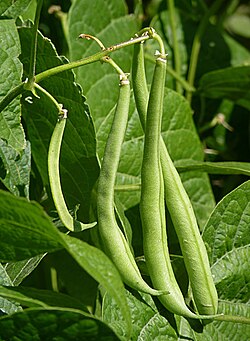
Beans are the seeds of various plants within the Fabaceae (legume) family. Valued globally for their versatility, they serve as essential vegetables for human consumption and as high-protein feed for livestock. Whether sold fresh or preserved through drying—in which case they are referred to as pulses—beans are a cornerstone of food security across the planet.
The history of bean cultivation is ancient, stretching back to the seventh millennium BCE in Thailand, and appearing in Europe and Peru by the second millennium BCE. Most bean varieties are summer crops, with the notable exception of peas. From an ecological standpoint, these plants are vital because they perform nitrogen fixation, a process where they convert atmospheric nitrogen into a form usable by plants, thereby enriching the soil.
Key Facts
- Largest Producer: India is the world's leading producer of beans.
- Most Consumed: Phaseolus vulgaris (the common bean) is the most widely eaten species globally.
- Nutritional Value: Legumes are characterized by their high protein content.
- Conservation: The Svalbard Global Seed Vault stores over 40,000 accessions of Phaseolus species to protect genetic diversity.
- Industrial Use: Guar beans are specifically utilized for the production of guar gum.
Diversity and Taxonomy
Beans encompass a vast taxonomic range, with different genera adapted to various climates and regions. The common bean, Phaseolus vulgaris, originated in the Americas and was domesticated approximately 8,000 years ago in Mexico, Central America, and the southern Andes.
Global Bean Varieties
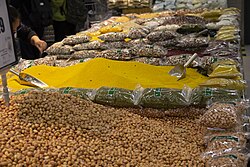
The diversity of beans is immense, ranging from the protein-rich soybeans of East Asia to the hardy lentils of the Near East. Below is a detailed breakdown of the primary genera and their common varieties.
| Genus | Common Varieties | Probable Origin | Climate/Distribution |
|---|---|---|---|
| Phaseolus | Kidney, Pinto, Navy, Black, Lima, Runner | The Americas | Tropical to Warm Temperate |
| Vigna | Mung, Urad, Cowpeas, Adzuki | South Asia | Equatorial to Hot Temperate |
| Cajanus | Pigeon pea | Indian Subcontinent | Pantropical, Equatorial |
| Lens | Red, Green, and Puy lentils | Near East / Levant | Temperate to Cool Tropical |
| Cicer | Garbanzo beans (Chickpeas) | Turkey / Levant | Temperate to Cool Tropical |
| Glycine | Soybean | East Asia | Subtropical to Cool Tropical |
| Cyamopsis | Guar bean | Africa or South Asia | Tropical, Semi-arid |
Global Production and Agronomy
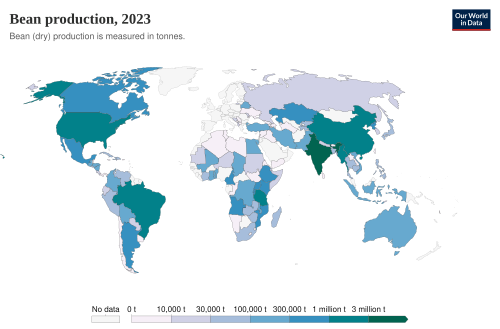
Bean production is measured in millions of tons annually. According to FAO data, there has been a significant increase in the production of dry pulses and oil crops like soybeans since 1961. While total production has risen, per capita production has actually decreased due to rapid global population growth.
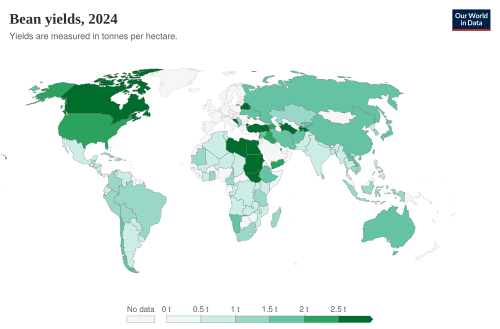
India remains the dominant force in production, followed by countries such as Canada, Myanmar, and China. The industry faces a challenge in germplasm conservation; modern breeding often favors a few high-yield varieties, threatening the biodiversity of older, traditional cultivars.
Culinary and Industrial Uses
Beans are prepared in a multitude of ways depending on the variety and culture. Dried beans are typically soaked and boiled for use in soups, salads, and stews, such as chili con carne. Some varieties are processed into soy-based products like tofu (curded soy milk) or fermented to create tempeh.
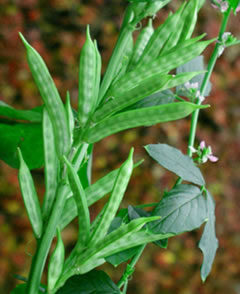
Beyond dried seeds, the unripe pods of certain species are consumed fresh as green beans or edamame. Some are sprouted to create beansprouts, while others, like the guar bean, are harvested for industrial gum.
The cultural significance of beans is also reflected in art, as seen in works like Annibale Carracci's The Beaneater.

Frequently Asked Questions
Why do beans cause flatulence?
Beans contain complex carbohydrates (oligosaccharides) that human digestive enzymes cannot break down in the upper intestine. When these reach the colon, resident bacteria ferment them, producing gas as a byproduct.
What is the difference between a bean and a pulse?
While "bean" is a general term for the seeds of the legume family, a "pulse" specifically refers to the dried seed of these plants.
Which country produces the most beans?
India is the largest producer of beans globally.
What are the environmental benefits of growing beans?
Beans are legumes, meaning they can fix nitrogen from the air into the soil, which reduces the need for synthetic nitrogen fertilizers and improves soil health.
What is the most consumed bean species in the world?
The common bean, known scientifically as Phaseolus vulgaris, is the most consumed species worldwide.