The Evolution of the BBC: A Legacy of British Broadcasting
From its humble beginnings as a private company to its current status as a global media powerhouse, the British Broadcasting Corporation (BBC) has shaped the cultural landscape of the United Kingdom and the world. As a chartered corporation and public broadcaster, the BBC operates under a unique mandate to inform, educate, and entertain, serving audiences across the globe through television, radio, and online platforms.
This article explores the rich history, organizational structure, and cultural impact of one of the world's most influential media institutions.
Key Facts

- Type: Chartered corporation and public broadcaster.
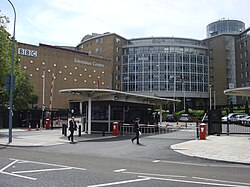
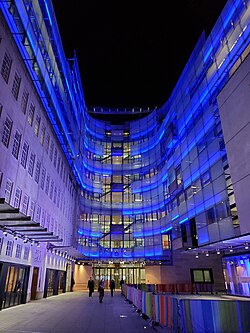
- Headquarters: Broadcasting House, London, UK.
- Founded: Originally established as the British Broadcasting Company.
- Revenue (2024): £5.389 billion.
- Global Reach: Serves audiences worldwide via various digital and broadcast services.
- Motto: "Nation shall speak peace unto Nation."
A Journey Through History
The Early Years: 1920–1939
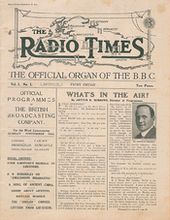
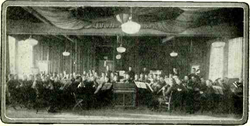
The foundations of British broadcasting were laid in the early 1920s. What began as the British Broadcasting Company eventually transitioned into a public service corporation. During this era, the Radio Times became an essential companion for listeners, first appearing in September 1923.
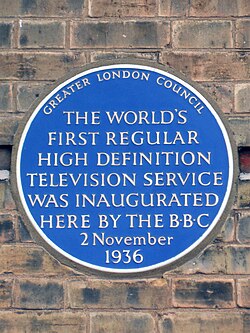
The 1930s saw a massive leap in technology with the advent of television. Pioneers like John Logie Baird were instrumental in these early developments, including the first televised drama and live outside broadcasts. By 1936, the world's first high-definition television service was launched at Alexandra Palace.
![Television pioneer John Logie Baird (seen here in 1917) televised the BBC's first drama, The Man with the Flower in His Mouth, on 14 July 1930, and the first live outside broadcast, The Derby, on 2 June 1931.[24][25]](/images/c4/c7/c4c719f3696e754eef58cc88d07146caa62e6e6afed824660c1e863f2900cf11.jpg)
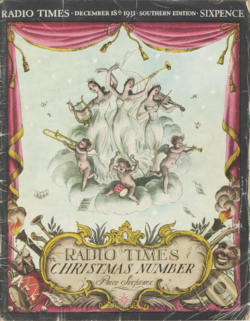
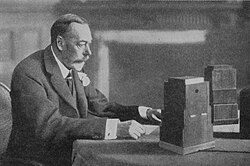
Radio remained a central pillar of the BBC's identity, providing vital connections during major national events, such as Royal Christmas messages.
The Modern Era: 2000 to Present
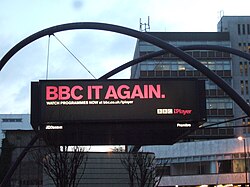
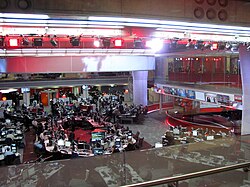
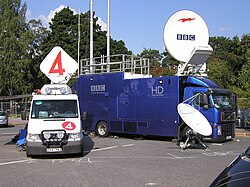
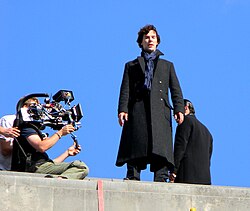
As technology shifted from analogue to digital, the BBC adapted by expanding its online presence and developing services like BBC iPlayer. The corporation has moved through various branding evolutions, settling on its current logo used since 2021. Today, the BBC is a multi-platform entity, managing everything from high-definition outside broadcasts to massive digital newsrooms.
Organizational Structure and Services
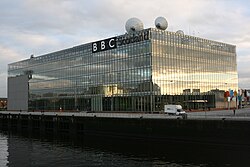
The BBC is a massive operation, employing over 21,000 people as of 2024. It is organized into several specialized divisions that manage its vast output.
In-House and Operational Divisions
The corporation maintains several core divisions to ensure high-quality content across all mediums:
- BBC Television: Covering a wide range of channels and programming.
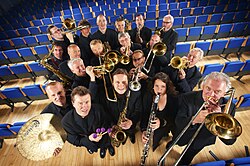
- BBC Radio: Including national stations and specialized music/news services.
- BBC News: Providing global and domestic reporting.
- BBC Sport: Delivering live coverage and analysis.
- BBC Online & BBC Sounds: Managing digital content and audio streaming.
- BBC Studios: The commercial arm responsible for production.
Commercial and Regional Presence
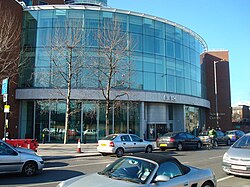
While much of the BBC is funded by the licence fee (collected from UK householders), it also operates commercial divisions. Furthermore, the BBC maintains a strong regional presence, with dedicated services for Scotland, Wales, and Northern Ireland, as well as international bureaus such as the one in Nairobi, Kenya.
![The BBC's East Africa bureau in Nairobi, Kenya. It is the broadcaster's biggest bureau outside of the UK.[225]](/images/0e/17/0e17cc0d3727c17d80ebd971b07371d3a31c8d4e27b6efb0249d018fc385ef53.jpg)
Financial Overview (2024)
The BBC's financial health is a combination of public funding and commercial revenue. Below is a summary of the key financial figures reported for 2024.
| Category | Value |
|---|---|
| Total Revenue | £5.389 billion |
| Operating Income | £199 million |
| Net Income | £229 million |
| Total Assets | £1.976 billion |
Cultural Impact and Symbols
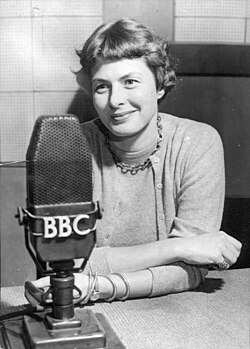
The BBC is more than just a broadcaster; it is a cultural icon. From the legendary BBC-Marconi Type A microphone to the natural history documentaries produced by the BBC Studios Natural History Unit, the corporation's influence is felt globally.
![Produced between 1934 and 1959, the BBC-Marconi Type A microphone is regarded as an iconic symbol of the BBC, alongside the channel's rotating globe emblem introduced in 1963.[55]](/images/c8/95/c89596892267ef1cbcb231fbc8775f7564b9fe152e4d4b48bef00b75098afb65.jpg)
The BBC's natural history unit is recognized as the largest wildlife documentary production house in the world, producing landmark series like Planet Earth and Blue Planet.
![The nature documentaries of David Attenborough, such as The Blue Planet, Planet Earth and Life on Earth, are produced by the BBC Studios Natural History Unit, the largest wildlife documentary production house in the world.[239]](/images/d7/be/d7be3ec4eaf397d928ad84d891fc47290bcae928df8f924b92ec62bf6635c7c6.jpg)
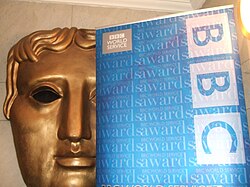
The corporation also plays a significant role in the arts, broadcasting major ceremonies such as the BAFTA awards.
Frequently Asked Questions
![Weekly reach of the BBC's domestic services from 2011 to 2012.[165][166] Reach is the number of people who use the service at any point for more than 15 minutes in a week.[166]](/images/74/f2/74f293f7863f273a5836231907c848fa90506a37851ecc525ec87ea6881d84af.png)
![Weekly reach of the BBC's domestic television channels 2011–12[165]](/images/5a/c2/5ac23bb42ff1b8771c089da2796d7f903ff3a7d0f4cbe52e7058099d210cf771.png)
![Weekly reach of the BBC's national radio stations, on both analogue and digital (2012)[166]](/images/1d/31/1d314c69639f86df5269a4c40ba31489dc1d18ed93a69d8d05b82f18354c42ca.png)
![Some of the BBC Micro team in 2008. Developed by Acorn, the Micro computer dominated the educational computer market in the UK during the 1980s.[209]](/images/9d/04/9d04176e39bfd0d585a7cc1dc59a9219a9d8f654bb50d3519c56aed86dde2f2c.jpg)
![Ceefax page (showing football news) in 2009. A teletext service provided by the BBC from 1974 to 2012, it was a popular method to check score updates.[214]](/images/93/71/93717c27eed816dae4cd9baf39b023175c687e326537b53ed708b5ddc8314d6a.jpg)
What is the BBC's main source of funding?
A significant portion of the BBC's revenue comes from licence fees collected from UK householders, supplemented by commercial businesses and government grants.
What does "reach" mean in BBC statistics?
Reach refers to the number of people who use a specific service at any point for more than 15 minutes within a single week.
Where is the BBC headquartered?
The BBC is headquartered at Broadcasting House in London, England.
Who leads the BBC?
As of the current leadership structure, the BBC is led by Samir Shah (Chair) and Matt Brittin (Director-General).
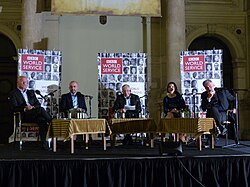
What is the BBC World Service?
The BBC World Service is a global broadcasting service that provides news and information to audiences worldwide, operating in various languages and regions.