Bayou Sauvage National Wildlife Refuge
Nestled within the city limits of New Orleans, Louisiana, the Bayou Sauvage National Wildlife Refuge stands as a testament to the resilience of nature in an urban environment. Spanning approximately 22,770 acres, it holds the distinction of being the largest urban wildlife refuge in the United States. This expansive sanctuary provides a critical haven for diverse species amidst the surrounding metropolitan landscape.
Key Facts
- Location: Eastern New Orleans, Louisiana.
- Size: Approximately 22,770 acres (92.1 km²).
- Status: IUCN category IV (habitat/species management area).
- Management: Governed by the U.S. Fish and Wildlife Service.
- Biodiversity: Supports 340 different bird species.
- Established: 1990.
Location and Urban History
Bayou Sauvage is situated in the eastern portion of Eastern New Orleans. Much of the refuge is enclosed by massive hurricane protection levees, which are designed to maintain water levels and protect the low-lying city from storm surges.
The land's history is marked by failed urban ambitions. For decades, the area was planned for a massive master-planned community known by names such as "Pontchartrain," "Orlandia," and "New Orleans East." Evidence of these plans remains today in the form of three I-10 interchanges; two of these were never utilized and are now known as "ghost exits" to passing motorists.
Diverse Habitats and Ecosystems
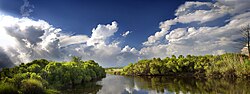
The refuge is a complex mosaic of wetlands and forests. It features brackish marshes (water that is saltier than freshwater but less so than seawater) and freshwater marshes, alongside bottomland hardwood forests, lagoons, canals, and borrow pits. The landscape also includes chenieres—ancient beach fronts—and natural bayous.
These environments serve vital ecological functions. The marshes bordering Lakes Pontchartrain and Borgne act as estuarine nurseries, providing essential breeding and growth grounds for shrimp, crabs, and various fish species. Meanwhile, the freshwater ponds, bayous, and lagoons are productive habitats for bluegill, crappie, catfish, and largemouth bass.
Wildlife and Avian Populations
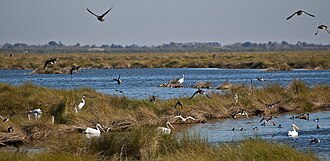
The variety of habitats makes Bayou Sauvage a critical stop for birds. During the fall, winter, and early spring, peak waterfowl populations can reach as many as 75,000 individuals. From May until July, the swamps host an enormous wading bird rookery, a colonial nesting site for various species.
The brown pelican, a year-round resident of southeast Louisiana, is a frequent visitor to the refuge, with nesting numbers increasing despite the general loss of habitat. Additionally, the refuge is visited annually by bald eagles, a threatened species.
Beyond birds, the refuge supports a wide array of fauna, including:
- Mammals: Marsh rabbits and other small mammals.
- Reptiles: Alligators and various other reptiles.
- Others: Amphibians, raptors, and various game species.
Refuge Summary
| Feature | Detail |
|---|---|
| Total Area | 22,770 acres |
| Primary Habitats | Freshwater/Brackish marshes, Hardwood forests, Bayous |
| Bird Species Count | 340 |
| Governing Body | U.S. Fish and Wildlife Service |
| Coordinates | 30°05′N 89°51′W |
Frequently Asked Questions
What makes Bayou Sauvage unique compared to other refuges?
It is the largest urban wildlife refuge in the United States, located entirely within the city limits of New Orleans.
What are "ghost exits" in the context of the refuge?
They are two of the three I-10 interchanges that were built to serve a planned community that was never developed, leaving the exits unused.
Which bird species are most prominent in the refuge?
The refuge is known for brown pelicans, bald eagles, and large populations of waterfowl, which can peak at 75,000 during winter months.
What is the ecological importance of the marshes in Bayou Sauvage?
The marshes along Lakes Pontchartrain and Borgne serve as estuarine nurseries for shrimp, crabs, and various fish species, supporting the local aquatic food chain.
When is the best time to see wading birds nesting?
The enormous wading bird rookery is typically active in the refuge swamps from May until July.