Battle of Lusail: Argentina vs Netherlands 2022 World Cup Quarter-Final
The 2022 FIFA World Cup quarter-finals witnessed one of the most intense encounters in football history, famously dubbed the Battle of Lusail. On December 9, 2022, Argentina and the Netherlands clashed at the Lusail Stadium in Qatar in a match defined by high stakes, deep-seated rivalry, and extraordinary drama.
This fixture was more than just a path to the semi-finals; it was a continuation of a long-standing rivalry. Prior to this meeting, the two nations had faced each other nine times, with the Netherlands holding four wins and Argentina one, alongside four draws. Their World Cup history included a 4–0 Dutch victory in 1974 and an Argentine triumph in the 1978 final. Only three figures from their previous 2014 semi-final clash—Lionel Messi, Daley Blind, and manager Louis van Gaal—remained involved in this high-voltage encounter.
Key Facts
- Date: December 9, 2022
- Venue: Lusail Stadium, Qatar
- Final Score: 2–2 (Argentina won 4–3 on penalties)
- Attendance: 88,235 spectators
- Man of the Match: Lionel Messi
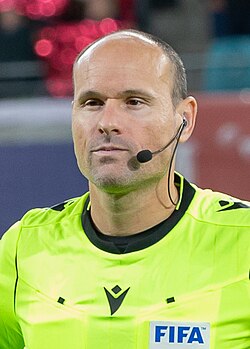
- Referee: Antonio Mateu Lahoz (Spain)
Match Analysis: A Tale of Two Halves
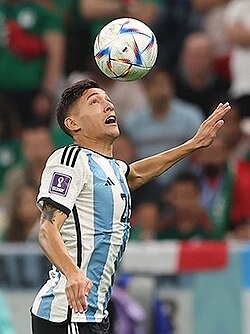
The match began with a tactical struggle that eventually broke open in the first half. Argentina took the lead in the 35th minute when right back Nahuel Molina scored off a precise assist from Lionel Messi.
The second half saw the intensity escalate. Around the 70th minute, Marcos Acuña was fouled at the edge of the box, resulting in a penalty. Lionel Messi converted the spot-kick, giving Argentina a 2–0 lead and marking his tenth career World Cup goal—tying the record for the most goals scored by an Argentine player, previously held by Gabriel Batistuta.
Messi's celebration, which involved cupping his hands to his ears in front of the Dutch bench, was widely interpreted as a jibe toward Netherlands manager Louis van Gaal. This gesture echoed a celebration used by Juan Roman Riquelme, whose relationship with Van Gaal had soured during their time at Barcelona.
As regulation time expired, the Netherlands were awarded a free kick in the 100th minute of stoppage time. In a clever tactical move, Teun Koopmeiners played a delicate pass to Wout Weghorst, who slipped through the wall to score. Weghorst would later score again to equalize, sending the match into extra time.

The Decisive Penalty Shoot-out
With the score tied at 2–2 after extra time, the match moved to a penalty shoot-out. The sequence began with Argentina goalkeeper Emiliano Martínez making an athletic save against Netherlands captain Virgil van Dijk.
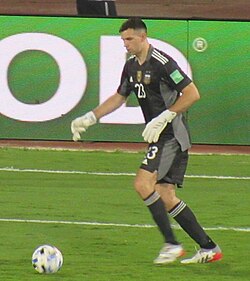
Messi opened the scoring for Argentina, and Martínez continued to use psychological tactics—including gamesmanship and delays—to unsettle the Dutch shooters. He successfully saved Steven Berghuis' effort, allowing Argentina to build an early lead. While Teun Koopmeiners and Wout Weghorst managed to score for the Netherlands, Gonzalo Montiel put Argentina ahead 3–1.
The tension peaked as the Netherlands attempted their own intimidation tactics. Dutch players verbally harassed Enzo Fernández, whose shot went wide. After Luuk De Jong scored to make it 3–3, the pressure fell on Lautaro Martínez. Despite being harassed by Denzel Dumfries (who received a yellow card for unsporting behavior) and goalkeeper Andries Noppert, Lautaro Martínez scored the final penalty to secure a 4–3 victory for Argentina.
Controversy and Officiating
The match was as much noted for its volatility as its skill. The game saw a record number of yellow cards as tempers flared between players like Memphis Depay and Lisandro Martínez. The officiating by Antonio Mateu Lahoz became a central talking point, with the referee facing significant criticism for his handling of the chaotic atmosphere.
| Category | Argentina | Netherlands |
|---|---|---|
| Final Score (AET) | 2 | 2 |
| Penalty Shoot-out | 4 | 3 |
| Goal Scorers | Molina, Messi | Weghorst (2) |
| Manager | Lionel Scaloni | Louis van Gaal |
| Outcome | Advanced to Semi-finals | Eliminated |
Frequently Asked Questions
Who was the Man of the Match in the Battle of Lusail?
Lionel Messi was named the Man of the Match for his goal and assist during the encounter.
How did the match end after regular and extra time?
The match ended in a 2–2 draw after extra time, with goals from Nahuel Molina and Lionel Messi for Argentina, and two goals from Wout Weghorst for the Netherlands.
What was the final result of the penalty shoot-out?
Argentina won the penalty shoot-out 4–3, securing their place in the semi-finals.
Why was the match called the "Battle of Lusail"?
The nickname refers to the extreme intensity, the high number of yellow cards, and the psychological warfare and animosity displayed by both teams during the game.
Which Argentine player tied the record for most World Cup goals during this match?
Lionel Messi tied Gabriel Batistuta's record for the most World Cup goals scored by an Argentine player by scoring his tenth goal in the match.