Barry Town United: A History of Triumph, Turmoil, and Resilience
The story of Barry Town United is one of the most dramatic arcs in Welsh football. From its humble beginnings in the late 19th century to a period of absolute dominance in the 1990s, and a subsequent descent into administrative chaos, the club has mirrored the volatility of the sport itself. Based at the historic Jenner Park, the club has evolved from a local association side into a professional powerhouse and, eventually, a symbol of fan-led resilience.
The Early Years and Formation
The club's origins trace back to 1892 with the formation of Barry and Cadoxton District. The early era was marked by instability, with the team playing across five different grounds and adopting various names, including Barry Unionist Athletic, Barry United Athletic, and Barry District. Despite this upheaval, the club attracted high-caliber talent, including Ted Vizard and Billy Jennings, both of whom later played in the famous 'White Horse' FA Cup Final.
A pivotal moment occurred in November 1912 at The Windsor public house, where local residents decided to seek membership in the Southern League as Barry AFC. This led to the acquisition of land from the Jenner family and the community-led construction of Jenner Park. The club played its first Southern League fixture on September 6, 1913, against Mid-Rhondda, drawing a crowd of 4,000.
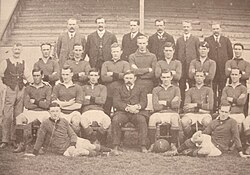
Southern League Success and Early Glory
The 1920–21 season stands as a landmark achievement, with Barry becoming champions of the Southern League's Welsh section. This was a grueling campaign in which a small squad played over 100 matches across the Southern, Welsh, and Western Leagues. The club remained in the Southern League for over six decades, peaking with a fourth-place finish in the 1930s. Legendary figures of this era included Johnny Gardner, who made over 500 appearances, and prolific scorers Dai Ward and Fred Whitlow.
Barry's ambitions extended to the FA Cup, where they reached the second round in the late 1920s after defeating Dagenham Town. In 1949–50, Jenner Park became a pioneer in the game by installing floodlights, one of the first grounds in the country to do so. The pinnacle of this early era arrived in May 1955, when Barry won the Welsh Cup for the first time, defeating Chester City 4–3 at Ninian Park thanks to a late free-kick by Charlie Dyke.
Continental Influence and the 1980s
In the late 1950s, chairman John Bailey used his overseas business connections to bring Scandinavian talent to Jenner Park, including Finland's Hannu Kankkonen and Swedish World Cup finalist Bengt 'Folet' Berndtsson. This international outlook led to a 1960 tour of Malta, where the club played Sliema Wanderers, Hibernians, and Valletta.
By 1982, Barry shifted its focus toward the Welsh League, winning six titles before the end of the decade, driven by the goals of Steve Williams. However, the club faced infrastructure challenges; insufficient floodlighting hindered their Southern League status for much of the 1980s, though they still managed a high-profile FA Cup clash against Reading in 1984.
Exile and the 'Irate Eight'
The creation of the League of Wales (now the Cymru Premier) in 1992 caused a major rift. A decree stated that Welsh-based clubs could no longer compete in the English pyramid. Barry joined a group of rebel clubs known as the "Irate Eight," leading to a period of exile. For one season, the first team played as Barri AFC at Worcester City's ground while the reserves remained at Jenner Park.
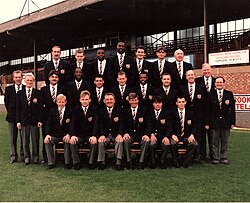
A Decade of Absolute Dominance
The return to Jenner Park in 1993 sparked the most successful era in the club's history. Barry achieved a unique quadruple, winning the Welsh League championship, Welsh League Cup, FAW Trophy, and the Welsh Cup. Their Welsh Cup victory was particularly notable for an upset of Cardiff City in front of 16,000 fans at the National Stadium.
Barry became the first fully professional club in the League of Wales, winning the championship in 1995–96. This period was marked by both tragedy—the deaths of chairman Neil O'Halloran and player Matthew Holtham—and unprecedented European success. They became the first League of Wales side to progress beyond the opening round of a European competition, defeating Budapest Vasutas before facing Scottish giants Aberdeen.
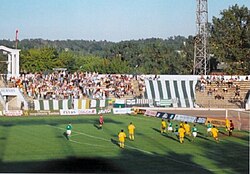
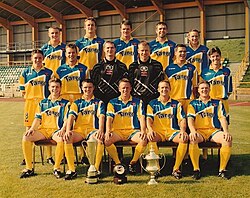
The club's dominance continued into the early 2000s. In 2001–02, Barry became the first League of Wales team to win a Champions League tie, defeating FC Shamkir. Although they lost the first leg against FC Porto 8–0, they secured a legendary 3–1 home victory against a Porto side featuring future stars like Ricardo Carvalho.
Financial Collapse and the Fight for Survival
The bubble burst in the summer of 2003 when the club entered administration. The professional squad vanished, replaced by an amateur side from the South Wales Amateur League. The club plummeted from European competition to losing 8–0 to Caernarfon Town within a month. Stuart Lovering purchased the club in December 2003, but his tenure was marked by controversy, budget cuts, and a dispute over rent that saw the senior team forced to play at the White Tips Stadium in Treforest from 2005 to 2006.
During this turmoil, dedicated supporters formed a breakaway club, Barry FC, after disputes with Lovering. However, the seeds of recovery were sown in 2007 with the appointment of Gavin Chesterfield, who led the team back toward promotion.
The Fan-Led Resurgence
By 2010, the "Stand Up For Barry" campaign utilized social media to mobilize support. When Lovering threatened to withdraw the team from the league, the Barry Town Supporters' Committee (BTSC) took control of football operations, ushering in the "DIY Football" era. This fan-run model saw the club reach the Welsh Cup semi-finals in 2013 as a fully amateur side.
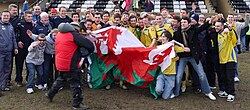
Despite a period of "recreational football" mandated by the FAW Council in 2013, the club refused to fold. They eventually won two consecutive league titles to return to the second tier and finally reclaimed their place in the Welsh Premier in 2017. By 2019, Barry had completed a remarkable transformation, qualifying for the UEFA Europa League after a third-place finish in the JD Cymru Premier.
Though relegated to the Cymru South in 2022, the club bounced back immediately. Under manager Lee Kendall, Barry secured the Cymru South championship to return once again to the top flight. Following Kendall's resignation in July 2023, former Wales international Steve Jenkins was appointed to lead the club forward.
Key Facts
- Founded: 1892 (as Barry and Cadoxton District).
- Home Ground: Jenner Park.
- Major Honors: Multiple League of Wales titles, Welsh Cups, and the FAW Premier Cup.
- European Milestone: First League of Wales team to win a Champions League tie (vs FC Shamkir).
- Resilience: Successfully transitioned from a professional powerhouse to a fan-run amateur side and back to the top flight.
| Era | Key Achievement/Event | Notable Detail |
|---|---|---|
| 1912–1950s | Southern League Success | Won Welsh section of Southern League (1920–21) |
| 1955 | First Welsh Cup | Defeated Chester City 4–3 |
| 1990s | Professional Dominance | First fully professional club in League of Wales |
| 2001–02 | Champions League History | Defeated FC Shamkir; beat FC Porto 3–1 at home |
| 2003–2013 | Administration & Fan Control | Transition to BTSC (Supporters' Committee) management |
| 2017–Present | Modern Resurgence | Return to Cymru Premier and Europa League qualification |
Frequently Asked Questions
What is the 'Irate Eight'?
The 'Irate Eight' was a group of eight Welsh clubs, including Barry Town, that rebelled against the formation of the League of Wales in 1992 because they wished to continue competing in the English football pyramid.
Who is the most successful manager in Barry's recent history?
While several have contributed, Gavin Chesterfield is credited with starting the recovery process in 2007, and Lee Kendall recently guided the team to the Cymru South championship.
What was Barry Town's most famous European result?
Their 3–1 victory over FC Porto in the 2001–02 Champions League is widely considered their most legendary result, especially given Porto's subsequent success in European football.
How did the fans save the club?
Through the Barry Town Supporters' Committee (BTSC) and the "Stand Up For Barry" campaign, fans took over the funding and operational control of the football team during a period of ownership disputes and financial instability.
When did Barry Town first win the Welsh Cup?
Barry Town won their first Welsh Cup in May 1955, defeating Chester City 4–3 at Ninian Park.