Barrio: The Evolution and Meaning of Hispanic Neighborhoods
The term barrio (Spanish pronunciation: [ ˈbarjo ]) literally translates to "quarter" or "neighborhood." While it is commonly used to describe a residential area, its meaning varies significantly depending on the geographical and political context. From official administrative divisions in the Philippines and Puerto Rico to cultural enclaves in the United States, the barrio represents a complex intersection of social, architectural, and functional identity.
Etymologically, the word is an Arabism, derived from the Arabic word barriyy, meaning "wild" or "exterior." This origin hints at the historical development of these areas as spaces existing outside the primary city center.
Key Facts
- Etymology: Derived from the Arabic barriyy, meaning "wild" or "exterior."
- Administrative Use: Serves as an official municipal subdivision in Spain, Cuba, El Salvador, and Puerto Rico.
- Philippines: Historically called barrios, these were officially renamed barangays in 1974, though both terms are still used.
- United States: Often refers to inner-city neighborhoods with high concentrations of first-generation Spanish-speaking immigrants.
- Social Variation: Can range from exclusive gated communities (barrio cerrado) to informal shanty towns (barrio de invasión).
Regional Definitions and Usage
Spain, Cuba, and El Salvador
In these regions, the barrio is an official administrative subdivision of a municipio (municipality). To further organize these areas, each barrio is typically divided into smaller units called sectores (sectors).
Argentina and Uruguay
Here, a barrio is a municipal division delineated by local authorities. While some maintain a distinct character—such as the barrios of Buenos Aires—the term generally lacks a socioeconomic connotation unless contrasted with the centro (city center). However, the term barrio cerrado specifically describes exclusive, walled gated communities for the upper class.
Colombia, Venezuela, and the Dominican Republic
In Colombia, a barrio is any urban neighborhood with locally determined limits, applicable to all social classes. In contrast, in Venezuela and the Dominican Republic, the term is frequently used to describe slums on the outskirts of major cities like Caracas and Santo Domingo, as well as middle- and lower-class neighborhoods.
Puerto Rico
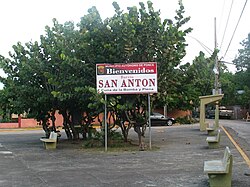
In the U.S. territory of Puerto Rico, the barrio is the smallest officially recognized administrative unit of a municipio. Unlike some other regions, a Puerto Rican barrio possesses no political authority. While they are often informally divided into urbanizaciones or communities, these further subdivisions are not official.
The Philippines
In the Philippines, a barrio can refer to a rural village or a self-governing community subdivision. A 1974 decree officially replaced the term with barangay, the basic administrative unit of government with an average population of 2,500 people. Despite this, barrio (sometimes spelled baryo) remains in common use.
The Mainland United States
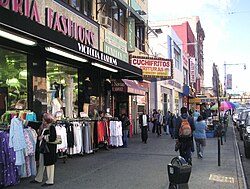
In the U.S., the term describes inner-city areas primarily inhabited by first-generation Spanish-speaking immigrants who have not yet assimilated into mainstream American culture. Notable examples include East L.A. in Los Angeles, Segundo Barrio in Houston, and Spanish Harlem in New York City. Residents often refer to these areas simply as "El Barrio."
Historical Evolution of the Barrio
Colonial Hispanic American cities grew as a mosaic of barrios surrounding a central administrative core. These neighborhoods functioned as miniature versions of the city, providing essential occupational, social, and spiritual spaces. As a merchant class emerged, some barrios became economically diverse, though the poorest groups remained on the city's periphery.
Historically, barrios were often specialized; one neighborhood might be known for shoemaking while another focused on cheese production. This functional separation was mirrored in religious life, where a single parish or convent might serve several neighboring barrios.
During the period of independence in Mexico and Latin America, the urban pattern typically consisted of a central plaza surrounded by a ring of barrios and emerging suburbs. Governance was handled by a mayor and city council, though land distribution was often inequitable. Local authorities frequently granted peripheral lands to individuals, even if the land was intended for collective grazing or farming, which paved the way for modern suburbanization.
Over time, the traditional social and functional attributes of the barrio have faded. In many modern Latin American cities, the term has shifted from a meaningful cultural identity to a generic descriptive category.
Summary of Barrio Characteristics by Region
| Region | Official Status | Primary Meaning/Connotation |
|---|---|---|
| Spain, Cuba, El Salvador | Official | Municipal subdivision divided into sectors. |
| Puerto Rico | Official | Lowest administrative unit; no political authority. |
| Philippines | Formerly Official | Rural village or barangay. |
| United States | Unofficial | Spanish-speaking immigrant enclaves. |
| Argentina/Uruguay | Official | Municipal division; "barrio cerrado" means gated community. |
| Venezuela/Dom. Rep. | Unofficial | Often refers to slums or lower-middle class areas. |
Frequently Asked Questions
What is the origin of the word barrio?
The word is an Arabism derived from the Arabic word barriyy, which means "wild" or "exterior," reflecting the historical location of these neighborhoods outside the city center.
Is a barrio the same as a barangay?
In the Philippines, yes. While a 1974 decree officially changed the name of the basic administrative unit to barangay, the term barrio is still widely used interchangeably.
Do barrios in Puerto Rico have their own government?
No. In Puerto Rico, a barrio is an official government designation for a geographic subdivision, but it is not vested with its own political authority.
What is a barrio cerrado?
Used primarily in Argentina and Uruguay, a barrio cerrado is a "closed neighborhood," which is a planned, exclusive residential settlement for the upper class, typically enclosed by walls.
How did colonial barrios function economically?
Colonial barrios often specialized in specific trades, such as cheese or shoe production, providing distinct products and services to the wider city.